What Gives a Chow Chow Its Broad Skull
A Chow Chow’s broad skull comes from its underlying head structure, but the breed’s thick coat and compact facial features make that width look even more pronounced. If you have wondered whether the round, substantial head is all fur, a normal breed feature, or a sign of a health problem, this guide explains what contributes to the look and what changes deserve attention.
What makes a Chow Chow’s skull look broad
Bone structure sets the basic shape
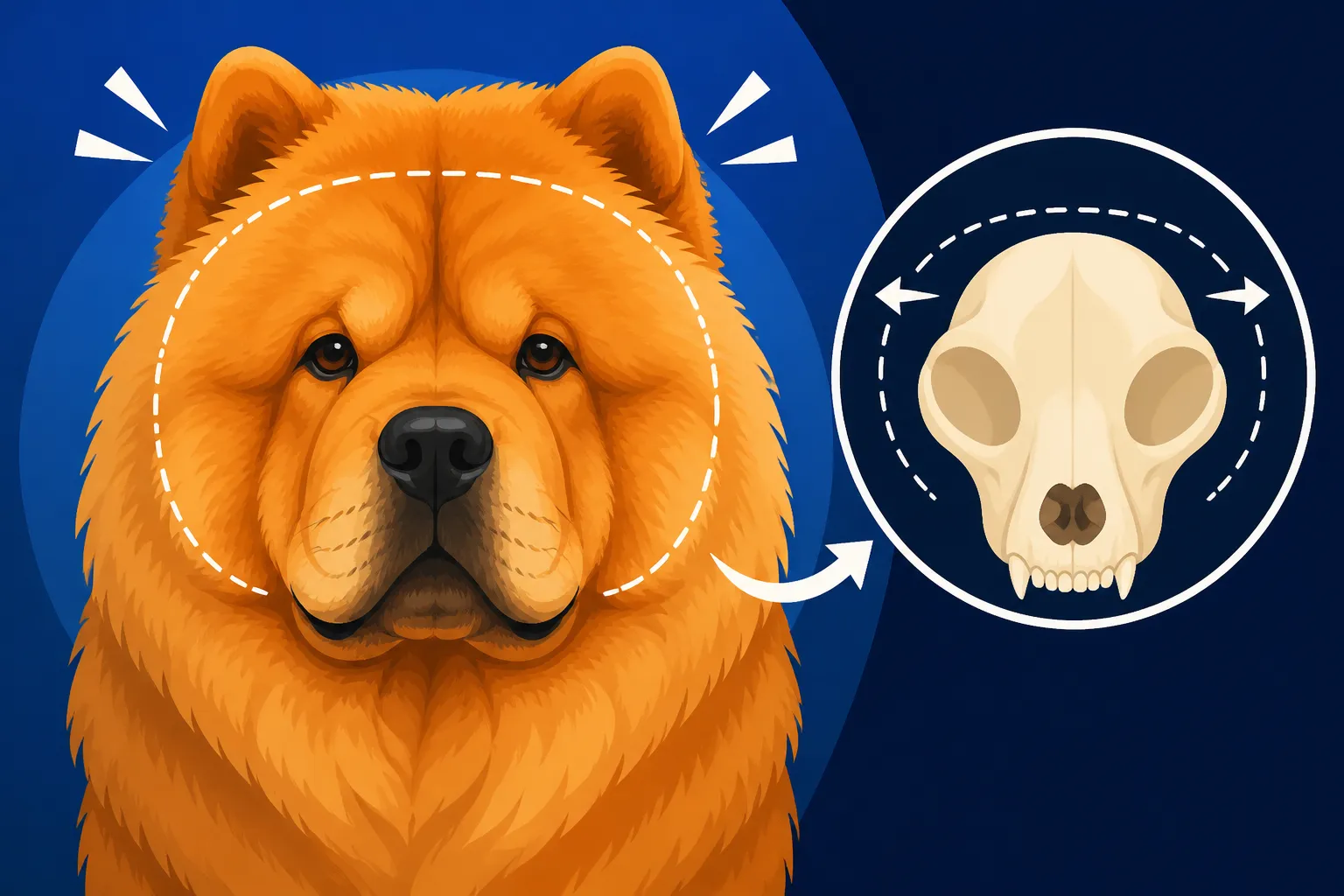
The Chow Chow is built with a broad, substantial head rather than a narrow, fine one. The skull is wide across the top and between the ears, and the cheeks and muzzle contribute to the impression of a solid, compact face. That overall shape is part of the breed’s recognizable appearance, not simply a hairstyle created by the coat.
“Broad,” though, does not mean that every Chow Chow has an identical head. Individual dogs vary, and age, sex, proportions, and family lines can all affect how a particular head looks. A puppy’s proportions change as it grows, while the surrounding coat can make two dogs with similar underlying structure seem quite different.
The skull is also only one part of the picture. A broad top of the head, a relatively short muzzle, small upright ears, and deep-set eyes combine to create the expression people often recognize as a Chow Chow’s scowl. The impression comes from the arrangement of features as a whole, not from one unusually wide bone or a single facial wrinkle.
The coat adds visual volume
A Chow Chow’s dense double coat frames the head, especially around the cheeks, neck, and ruff. In a rough-coated dog, longer hair around the head and neck can make the face seem wider and more lionlike. A smooth-coated Chow Chow has shorter, close-lying hair, so the outline of the head may look clearer, though the dog still has the same general breed type.
This is one reason photos can be misleading. A freshly groomed dog, a dog shedding its undercoat, and a dog with a full ruff may appear to have different head proportions even when their underlying skull shape has not changed. Camera angle matters, too: a close-up taken slightly from below can make the head look especially imposing.
If you are comparing a Chow Chow’s appearance with a breed description, try to look past the coat. Notice the width of the skull, the shape of the muzzle, and how the ears and eyes sit in relation to the head. For more on the expression created by these features, see What Gives a Chow Chow Its Scowl.
How the skull, muzzle, ears, and eyes work together
A broad skull is not the same as a broad muzzle
It is easy to use “head” and “muzzle” as if they mean the same thing, but they describe different areas. The skull is the bony portion that surrounds the brain and extends across the top and back of the head. The muzzle is the front portion around the nose and jaws. A Chow Chow’s head can look broad overall without the muzzle being equally wide or long.
The relationship between these parts helps create the breed’s compact face. A muzzle that looks short beside a wide skull can make the head seem especially solid. The coat and facial folds may further soften the boundary between the cheeks and muzzle, so the face can look like one broad shape rather than several distinct sections.
That appearance should not be confused with a sudden change in facial shape. A naturally broad head is a stable breed feature. New swelling, one-sided enlargement, pain when touched, or a sudden difference between the two sides of the face is not something to explain away as “just the Chow Chow look.” Those changes call for veterinary advice.
Small ears and deep-set eyes affect the expression
The small, rounded, upright ears sit high on the head and can appear modest against the width of the skull. They help emphasize the broad space between them, especially when the dog’s coat is full. Their shape and placement are part of the breed’s overall outline; they do not mean that the skull is still growing or that the ears are hidden by abnormal swelling. See Why a Chow Chow's Ears Are Small and Rounded for more on this feature.
The eyes are also set deep beneath the brow and facial structure. This can make them look smaller or less visible than the eyes of a dog with a less substantial head. It contributes to the Chow Chow’s distinctive serious expression, but it also means owners should pay attention to eye comfort and visibility rather than assuming every squint or watery eye is normal. Why a Chow Chow's Eyes Are Set So Deep explains that feature in more detail.
| Feature | What it contributes to the broad-headed look | What to watch for |
|---|---|---|
| Wide skull | Gives the head its substantial base shape | New swelling or an uneven change |
| Cheeks and muzzle | Make the face look compact and full | Pain, difficulty eating, or a sudden shape change |
| Dense coat and ruff | Add visible volume around the head and neck | Mats, damp skin, or irritation hidden under the coat |
| Small upright ears | Emphasize the width between the ears | Redness, discharge, odor, or persistent head shaking |
| Deep-set eyes | Add to the breed’s characteristic expression | Squinting, cloudiness, redness, or unusual discharge |
Breed type versus signs that need attention
How to tell normal structure from a possible problem
A Chow Chow’s head may look broad from puppyhood, and the outline can become more striking as the adult coat develops. Normal variation tends to be gradual and broadly symmetrical: the head is simply the dog’s shape, rather than a new lump or swelling appearing on one side. Comparing photographs taken over time can help you notice whether the outline has changed, although photos cannot diagnose a problem.
Pay attention to function as well as appearance. A dog whose head shape is normal for them should generally be able to eat, drink, breathe, and use their jaw comfortably. If you notice trouble chewing, reluctance to open the mouth, facial tenderness, sudden drooling, or a change in how the dog holds their head, contact a veterinarian instead of trying to assess the skull by feel.
The same caution applies around the eyes. A Chow Chow’s facial structure can make the eyes less easy to see, and coat or folds may conceal irritation. Persistent squinting, repeated pawing at the face, redness, or a sudden increase in discharge merits professional attention. For a closer look at how facial structure can affect the eye area, read How a Chow Chow's Face Folds Push the Lid In and How a Chow Chow's Deep Set Eye Limits Its Vision.
Grooming helps you see what is happening underneath
The coat around a Chow Chow’s cheeks and neck can hold loose hair, dirt, and moisture close to the skin. Regular, gentle brushing helps keep the hair from matting and makes it easier to notice changes in the skin or facial outline. Work carefully around the eyes and ears, where pulling or poking with a comb can hurt. If your dog resists handling, take small steps and reward calm cooperation instead of forcing a long grooming session.
For basic supplies, Chewy is one retailer where owners may compare combs and brushes suited to a dense double coat. A suitable tool should reach through the coat without scraping the skin, and brushing should be slow enough that you can check the area beneath the hair. Chewy also carries pet wipes, but avoid putting a general-purpose wipe near the eyes unless its label specifically says it is appropriate for that use. When eye discharge is persistent or changes in appearance, a wipe is not a substitute for an examination.
If brushing reveals a new lump, tenderness, a patch of irritated skin, or a persistent odor, make a note of when you first noticed it and arrange veterinary guidance. Chewy may be useful for comparing routine grooming items, but questions about swelling, pain, or changes in vision belong with a veterinary professional. The goal of grooming is not to alter the Chow Chow’s broad-headed appearance; it is to keep the coat manageable and make changes easier to spot.
Understanding the look across Chow Chow types
Rough and smooth coats create different outlines
The rough-coated Chow Chow has longer hair that stands away from the body, including a pronounced ruff around the neck and shoulders. That coat can visually blend into the cheeks and make the head seem especially wide. Regular brushing is important because dense hair can mat in places that are easy to miss, including behind the ears and beneath the collar.
The smooth-coated variety has a shorter coat that lies closer to the body. Its head outline may look less framed by long hair, but the broad skull and characteristic facial proportions remain. Neither coat type changes the basic explanation for the head shape: the skeleton provides the structure, while the coat affects how large and rounded the head appears from the outside.
When looking at two Chow Chows, try to compare them from a similar angle and consider their coat condition. A full coat can exaggerate width; a coat in a seasonal shed may make the same dog look less rounded. The breed’s distinctive outline is easier to understand when you separate the head’s bone structure from the hair that surrounds it.
The broad head is one part of a larger breed profile
A Chow Chow’s head should be considered alongside the rest of its body and movement. The breed is compact and sturdy, with a distinctive posture and gait. Looking only at the face can make it easy to overstate one feature or treat a normal variation as a problem. For broader context on the breed’s structure, How a Chow Chow Differs From an Akita offers a useful comparison between two dogs that can both appear substantial but have different characteristic proportions.
A broad skull alone does not tell you whether a dog is healthy, well bred, or a good match for a particular home. Temperament, comfort with handling, sound movement, health history, and everyday care all matter. If you are choosing a puppy, ask the breeder about the parents’ health and temperament, and observe how the puppies behave and respond to ordinary handling. A striking head shape should not distract from those practical questions.
For an adult dog already in your care, the most helpful approach is simple: learn what their face normally looks like, keep the coat around it clean and brushed, and take new or uncomfortable changes seriously. A Chow Chow’s broad skull is a normal and defining part of the breed’s appearance. Sudden changes in shape or signs of discomfort are a separate matter and deserve individual attention.
Disclaimer
This article is for general informational purposes only and does not constitute professional advice. Laws, prices and regulations vary by location and change over time. Consult a qualified professional for guidance on your specific situation.