When a Chow Chow Should Be Walked in Summer
The summer months, while wonderful for many, often bring a unique kind of dread for Chow Chow owners. The sheer joy of taking your fluffy companion for a stroll clashes dramatically with the brutal reality of their physiological makeup and the dangers of high temperatures. It’s a constant tightrope walk, fraught with worry that a simple walk could turn into a life-threatening emergency. This guide is here to help you navigate those sweltering months, offering clear advice on when, and even if, it's safe to walk your Chow Chow in summer.
Why Summer Walks Are a Real Danger for Chow Chows
Let's be brutally honest: the Chow Chow was not designed for the scorching heat of an American summer. This breed hails from much colder climates, and their unique physical traits, while beautiful, become significant liabilities when the mercury rises. Understanding why they struggle so much is the first step to keeping them safe.
The Chow Chow's Double Coat: A Built-In Furnace
Imagine wearing a heavy wool coat, designed for a Siberian winter, on a humid 90-degree day. That’s essentially what your Chow Chow experiences. Their magnificent double coat, a defining characteristic that gives them their plush, lion-like appearance, is a fantastic insulator – for cold. It consists of a dense, soft undercoat and a coarser, longer outer coat. This combination effectively traps air, creating a barrier against the elements.
In winter, this is a lifesaver, keeping them warm and cozy. In summer, however, it turns into a heat trap. That beautiful insulation works both ways, preventing body heat from escaping efficiently. While some might think shaving helps, it actually compromises their natural cooling system and can lead to sunburn or improper coat regrowth. So, even on a day that feels mild to you, your Chow Chow is battling a personal sauna under all that fur. It's not just "warm" for them; it's genuinely suffocating. You can learn more about how this works in Why a Chow Chow's Double Coat Traps Heat.
Brachycephalic Features: Struggling to Breathe and Cool
Beyond their coat, a Chow Chow’s distinctive facial structure, classified as brachycephalic (meaning "short-headed"), adds another layer of danger. Their short muzzle and compact airway mean they cannot pant as effectively as longer-nosed breeds. Panting is a dog's primary method for regulating body temperature. As they pant, air passes over the moist surfaces of their tongue and respiratory tract, evaporating moisture and dissipating heat.
With a restricted airway, a Chow Chow simply cannot move enough air to cool down efficiently. They have to work much harder to achieve the same cooling effect, which in turn generates more body heat, creating a vicious cycle. This isn't just about discomfort; it's about a fundamental inability to perform a vital physiological function under stress. Even a seemingly short walk can quickly overwhelm their system, pushing them towards overheating. Understanding Why a Chow Chow's Short Muzzle Cools Poorly is crucial for any Chow owner.
The Hidden Threat: Hot Pavement and Heat Absorption
It's easy to focus on the air temperature, but many owners overlook the ground beneath their Chow Chow's paws. Asphalt and concrete absorb and retain heat far more than the air does, becoming scorching hot in direct sunlight. Imagine walking barefoot on a blacktop parking lot in July – that's what your dog's paw pads are experiencing.
Their paw pads, though tough, are not impervious to burns. Severe burns can occur quickly, causing immense pain, blistering, and potential infection. Beyond direct injury, hot pavement also radiates heat directly up into your Chow Chow's body, contributing significantly to their overall body temperature. It's a double whammy: burning their feet while simultaneously making them hotter from the ground up. This silent threat can quickly turn a quick outdoor potty break into a serious risk.
Identifying Safe Walking Times in Summer
Given the inherent risks, it's not enough to simply "go for a walk" in summer. Chow Chow owners must become amateur meteorologists, constantly assessing conditions to ensure their beloved companion's safety. This means being strategic, often sacrificing your preferred walking times for theirs.
The Coolest Hours: Early Morning and Late Evening
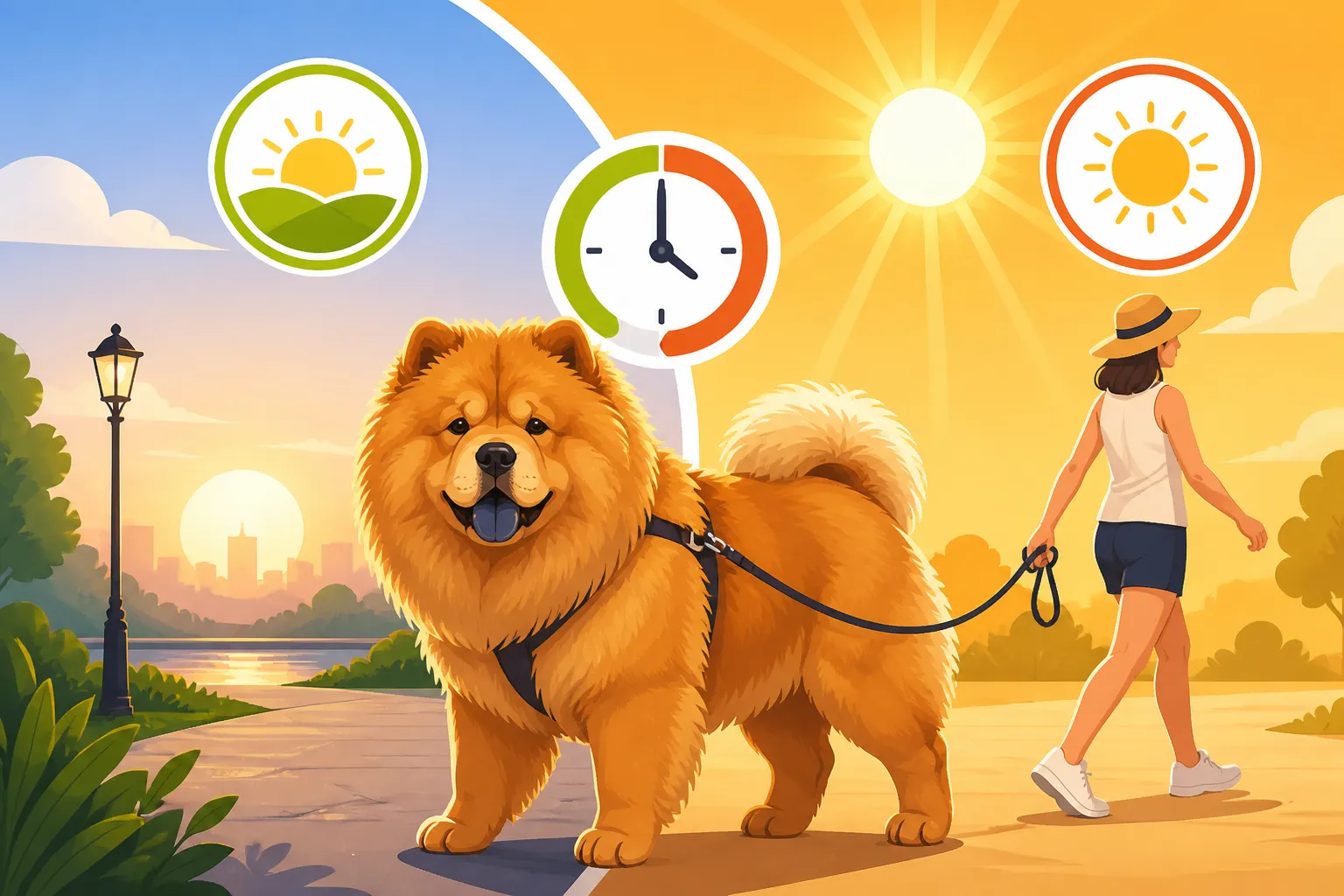
For a Chow Chow, summer walks are almost exclusively reserved for the very early morning or late evening. Think sunrise or after sunset. These are the precious windows when the sun’s intensity is at its lowest, and importantly, when the ground has had a chance to cool down.
Ideally, you're looking for temperatures below 75°F (24°C), and even then, humidity needs to be considered. High humidity makes it even harder for dogs to cool themselves through panting. A humid 70°F can be just as dangerous as a dry 80°F because the evaporative cooling process is hindered. So, set your alarm for dawn, or plan a peaceful twilight stroll. These times offer the best chance for a brief, safe outdoor excursion. You might be surprised at What Temperature Is Too Hot for a Chow Chow.
Checking Pavement Temperature and Air Quality
Before you even consider stepping outside, you need to perform the "five-second rule" test. Place the back of your hand or your bare foot flat on the pavement for five seconds. If it's too hot for you to hold it there comfortably, it's far too hot for your Chow Chow's paw pads. This simple test is non-negotiable, even if the air feels mild. The pavement temperature can easily be 20-30 degrees hotter than the ambient air.
Beyond temperature, consider air quality. Summer often brings smog and increased pollutants, especially in urban areas. For a brachycephalic breed already struggling to breathe efficiently, poor air quality can exacerbate respiratory distress and add further strain. Check local air quality reports, often available through weather apps. If the air quality is poor, even if the temperature is acceptable, it might be best to keep your Chow Chow indoors.
Monitoring Your Chow Chow for Early Signs of Discomfort
Chow Chows are known for their stoicism and can be quite adept at hiding discomfort until it becomes severe. This means you, as their owner, need to be hyper-vigilant and know the subtle signs that they're starting to overheat. Don't wait for obvious distress.
Look for increased panting that seems more labored than usual, excessive drooling, or a reddish tint to their tongue and gums. They might also become less enthusiastic, lagging behind, or actively seeking out patches of shade. If they start to look unfocused, their movements become a bit wobbly, or they're more insistent on stopping, these are all urgent signals to end the walk immediately and find a cool spot. It's far better to cut a walk short and err on the side of caution than to push them to the brink. Keep a close eye on Signs a Chow Chow Is Overheating on a Walk.
Essential Precautions for Summer Walks
When you do manage to find those fleeting safe windows for a summer walk, preparation is key. You can't just grab the leash and go; you need a strategy and the right tools to maximize safety and comfort for your Chow Chow.
Hydration and Cooling Aids are Non-Negotiable
Every single summer walk, no matter how short, absolutely must involve water. Carry a portable water bottle and a collapsible bowl for your Chow Chow. Offer them water frequently, even if they don't seem overly thirsty. Proactive hydration is critical.
Beyond water, consider investing in cooling aids. Cooling vests, which you soak in water and then wring out, can help dissipate heat from their core. Cooling mats placed in shady spots for resting can also be beneficial. Some owners even use specialized dog booties, not just for protection against hot pavement, but also to cool their paws if kept damp. You can find a good selection of these on platforms like Amazon, offering practical solutions to help manage the heat. These aren't luxuries; they're essential tools for responsible summer Chow Chow ownership. For more general tips, see How to Cool a Chow Chow Down Fast.
Short and Purposeful: The Nature of Summer Walks
Forget long, meandering adventures in the summer. For a Chow Chow, a "walk" during these months is a functional exercise, not a marathon. Think short, purposeful excursions primarily for bathroom breaks and perhaps a few minutes of sniffing to engage their minds. We're talking 10-15 minutes, maximum, even during those cooler twilight hours.
The goal isn't to burn off energy; it's simply to provide a change of scenery and allow them to relieve themselves outdoors. Avoid any strenuous activity like running, jumping, or intense play. If your Chow Chow starts to pant heavily or show any signs of discomfort, turn back immediately. Most of their exercise and mental stimulation will need to come from indoor activities during the summer.
Alternative Exercise and Mental Stimulation
Since outdoor walks are so limited, you'll need to get creative with how you exercise and entertain your Chow Chow indoors. Mental stimulation can be just as tiring as physical exertion, and it's much safer. Puzzle toys, where they have to work to get treats, are excellent for engaging their minds. Hide-and-seek with treats or toys can turn your home into an exciting adventure.
Consider teaching new tricks or practicing obedience cues in short, fun sessions. This strengthens your bond and keeps their brain active. Scent work, where you hide treats and encourage them to sniff them out, taps into their natural instincts. Programs like BAXTER & Bella offer virtual training resources that can be fantastic for keeping your Chow Chow engaged and learning new skills from the safety and comfort of your air-conditioned home, without putting them at risk in the summer heat. Indoor activities are key to a happy and healthy Chow Chow when the outdoors is too dangerous. What Tires a Chow Chow Out Indoors has more suggestions.
What to Do in an Emergency
Despite all precautions, accidents can happen. It's absolutely critical to know the difference between a dog that's just a bit warm and one that's suffering from heat stroke. Recognizing the signs early and acting swiftly can literally be the difference between life and death.
Recognizing Heat Stroke: Beyond Just Being Warm
Heat stroke is a severe medical emergency that can rapidly lead to organ failure, brain damage, and death. It's not just "being hot"; it's when their body temperature rises to a dangerously high level, and their internal systems start to shut down. The signs of heat stroke are more severe than simple overheating.
Look for uncontrollable panting, struggling to breathe, bright red gums that might turn bluish as oxygen deprivation sets in, thick ropey saliva, vomiting, or diarrhea. They might stagger, appear disoriented, or even collapse. Their eyes might seem glassy, and their body temperature will be noticeably hot to the touch. Any combination of these symptoms means your Chow Chow is in critical condition and needs immediate intervention. It’s a terrifying experience for any owner, and understanding Signs a Chow Chow Is in Heat Stroke is paramount.
Immediate First Aid and Veterinary Care
If you suspect heat stroke, every second counts. Your immediate actions can save their life.
- Move them to a cooler environment immediately: Get them into air conditioning, into the shade, or even inside a car with the AC blasting.
- Begin cooling them: Do NOT use ice water, as this can cause blood vessels to constrict and actually hinder cooling by preventing heat from escaping. Instead, use cool (not icy) water to wet their coat, especially focusing on their belly, groin, and armpits where large blood vessels are close to the surface. A damp towel placed on these areas can also help. Use a fan if available to increase evaporative cooling.
- Offer small amounts of water: If they are conscious and able to drink, let them have a few sips of cool water, but don't force it.
- Get to a vet immediately: As you're providing first aid, call your veterinary clinic or the nearest emergency vet hospital to let them know you're coming and that you suspect heat stroke. This allows them to prepare for your arrival. Your Chow Chow will need professional medical attention, including intravenous fluids and monitoring, to recover from heat stroke. The cost of treating heat stroke can be significant, as detailed in What Heat Stroke Costs to Treat in a Chow Chow, but it's a necessary expense to save their life.
| Condition / Time of Day | Risk Level for Chow Chow | Recommended Action |
|---|---|---|
| Pavement Temperature | ||
| Too hot for your hand | Very High | Do NOT walk, stay indoors |
| Comfortable for your hand | Low to Moderate | Proceed with caution, short walk |
| Air Temperature | ||
| Above 85°F (29°C) | Extremely High | Absolute indoor day, no walks |
| 75-85°F (24-29°C) | High | Only very early morning/late evening, short and functional |
| Below 75°F (24°C) | Moderate to Low | Still monitor closely, short walk |
| Humidity | ||
| High humidity | Increases Risk | Reduce walk duration further, extra vigilance |
| Low humidity | Reduces Risk | Still exercise caution with temperature |
| Time of Day | ||
| Mid-day (10 am – 4 pm) | Extremely High | Avoid entirely |
| Early Morning (pre-8 am) | Lowest Risk | Best window for outdoor time |
| Late Evening (post-8 pm) | Lowest Risk | Best window for outdoor time |
| Dog Behavior | ||
| Excessive panting, drooling | High | Stop walk, seek cool, hydrate |
| Lethargy, wobbling, disorientation | Emergency | Immediate first aid & vet trip |
Disclaimer
This article is for general informational purposes only and does not constitute professional advice. Laws, prices and regulations vary by location and change over time. Consult a qualified professional for guidance on your specific situation.