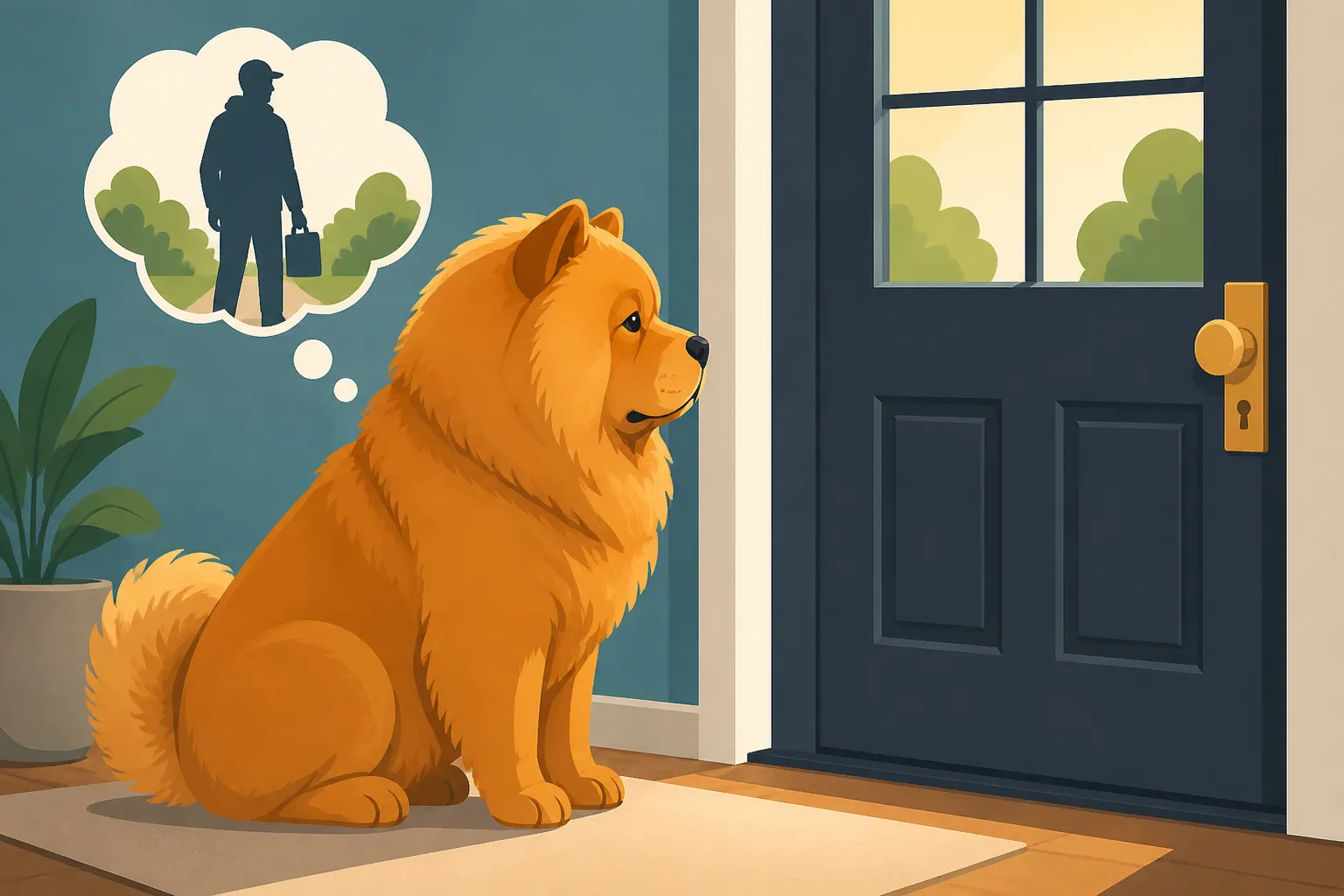
Why a Chow Chow Watches the Door
If you're a Chow Chow owner, you've probably noticed it: that intense, unwavering gaze fixed on the front door, or any door, really. It’s not just a casual glance; it's a dedicated surveillance operation that can leave you wondering what exactly they're looking for, or if they're simply bored. This focused door-watching is a common, often perplexing, Chow Chow trait, and understanding the roots of this behavior can help you manage it and appreciate the unique complexities of your furry companion.
The Chow Chow's Innate Guarding Instincts
Let's be real, Chow Chows weren't bred to be your average, tail-wagging greeters at the door. Their history is deeply rooted in vigilance and protection, and that instinct is still very much alive, even in the most pampered modern Chow. This historical role plays a huge part in why they seem to treat every doorway like a critical security checkpoint.
A History of Vigilance
Think about the Chow Chow's origins. They come from ancient China, where they served in roles ranging from hunting to guarding temples and property. This wasn't a breed meant to be everyone's friend; they were chosen for their independence, their keen observation skills, and their inherent protectiveness. When you see your Chow Chow staring intently at the door, you're witnessing generations of this hardwired sentinel behavior. They’re not just sitting there; they’re on duty. They are constantly assessing who might enter or leave their perceived domain, even if it's just the mail carrier. This strong protective drive is a hallmark of the breed, a big part of What a Chow Chow Guards and Why.
This historical context also explains their often-aloof nature. Unlike breeds bred for constant human interaction and cooperation, a Chow Chow was expected to make its own decisions about perceived threats. This independence means they often don't need or seek reassurance from you while they're "on guard." They trust their own judgment, which can be a double-edged sword when it comes to managing their responses to unexpected guests or sounds outside.
Defining Their Territory
For a Chow Chow, their home isn't just a place they live; it's their castle, and every entrance is a gate that must be monitored. They have a very clear concept of their personal space and their family's territory. The door, whether it leads outside or just to another room, represents a boundary. This strong sense of territory means they're not just watching for a specific person; they're watching for any breach of their perceived perimeter. This isn't necessarily aggressive, but it is certainly proprietary.
Imagine a squirrel scurrying by a window, or a neighbor walking down the street. For many dogs, these are fleeting distractions. For a Chow, especially one positioned near a door, these external events can trigger a deep-seated need to observe and, if necessary, to act. They might not bark, but their posture, their fixed gaze, and the slight tension in their body language all communicate: "I see you. I'm aware. And I'm guarding this space." This territoriality is one of the key reasons How Territorial a Chow Chow Is.
The Silent Sentinel
One of the most fascinating, and sometimes unsettling, aspects of a Chow Chow's door-watching is how quietly they often do it. While some dogs might bark their heads off at every creak or shadow, many Chows operate with a stoic silence. They prefer to observe, analyze, and only react if they deem it absolutely necessary. This can be misleading because their lack of overt noise doesn't mean they aren't fully engaged and alert.
They might be perfectly still, ears slightly perked, nose twitching almost imperceptibly as they sift through the myriad scents and sounds from beyond the door. This quiet vigilance means you might not even realize how focused your Chow is until something truly triggers a response. It's not a relaxed quiet; it's the intense quiet of a predator or a guard assessing its environment. This makes them excellent natural guardians, which is why some people still consider Whether a Chow Chow Makes a Good Guard Dog. However, it also means you might not get a clear warning before they decide to act on their observations, which can be a surprise for unwitting visitors or even family members.
Understanding Their Limited Peripheral Vision
Beyond their ancient instincts, there's a very physical reason why your Chow Chow might seem so glued to the door: their unique eye structure. It’s something that most owners don't even consider, but it profoundly impacts how they perceive their environment and why they often hyper-focus on direct lines of sight.
The Deep-Set Eye Challenge
Take a moment to really look at your Chow Chow's eyes. They are deep-set, often appearing somewhat recessed within their facial structure, and sometimes obscured by those characteristic facial folds and thick fur. While this gives them their distinctive "scowl" and contributes to their magnificent appearance, it also significantly limits their peripheral vision. They simply cannot see as wide an arc as many other breeds can.
Imagine trying to navigate a crowded room or a busy street with tunnel vision. You'd have to turn your head constantly, and you'd naturally focus more on what's directly in front of you. This is somewhat akin to a Chow Chow's experience. Their restricted field of vision means that anything happening to their sides or behind them is largely invisible unless they physically turn their head to bring it into view. This is a critical factor in Why a Chow Chow's Deep Set Eye Limits What It Sees. This physical trait isn't a defect; it's simply a characteristic of the breed that influences their behavior and how they interact with the world around them.
Compensation Through Hyper-Focus
Because their peripheral vision is limited, Chow Chows often compensate by engaging in hyper-focus. When they're watching the door, they're not just casually glancing; they are channeling their visual attention directly down that narrow corridor of sight. For them, the door becomes the primary, and sometimes only, point of interest in that moment, because it's the clearest and most direct line of sight they can maintain without constant head movements.
This hyper-focus isn't necessarily a sign of obsession, but rather an efficient way for them to monitor a critical area without expending excess energy. If they couldn't rely on their direct gaze, they'd constantly be swiveling their head, which would be exhausting. By fixing their gaze, they can process visual cues more effectively within their limited scope. It's their way of keeping tabs on things, a silent radar pointed directly at potential entry and exit points. This intense concentration is part of their inherent nature, a trait that makes Why a Chow Chow Turns Its Whole Body to Look so common.
The Startle Factor
Another consequence of limited peripheral vision is that Chow Chows can be easily startled by sudden movements or approaches from their blind spots. Someone walking up behind them, or even a child darting in from the side, can elicit a sharp, defensive reaction that might seem out of proportion to the stimulus. This isn't aggression for aggression's sake; it's often a startle response born of not having seen the approach. This is why Why a Chow Chow Snaps at Someone It Did Not See can happen.
By watching the door so intently, your Chow Chow is, in a way, proactively trying to avoid being surprised. The door is a predictable place where movement will eventually occur, and by focusing on it, they minimize the chance of something unexpectedly appearing in their restricted field of vision. It's a defensive mechanism, giving them precious seconds to process who or what is entering their space before they're caught off guard. Understanding this can help you teach family members and guests How to Introduce a Chow Chow to a Stranger safely, always approaching from the front where your Chow can see them clearly.
Environmental Triggers and Learned Behaviors
While instinct and physical attributes play a huge role, Chow Chows are also creatures of habit and highly observant of their environment. They quickly learn to associate certain sounds, times of day, or routines with activity at the door, further cementing its place as a focal point in their world.
Anticipating Arrival or Departure
Chow Chows are smart dogs, even if they sometimes pretend they don't understand you. They are masters of routine and will quickly pick up on patterns. If you always leave for work at a certain time, or if your partner comes home around the same hour, your Chow will learn this. The door becomes a visual cue for these anticipated events. They might begin their door-watching ritual long before you even pick up your keys or hear a car in the driveway.
Think about a delivery driver. They come to the door, deposit a package, and leave. Your Chow Chow observes this pattern. Even if the delivery is not for them, the repeated action of someone approaching and then retreating from their door reinforces the idea that the door is a place of activity. Similarly, they learn that the jingle of keys or the sound of your particular footsteps means departure or arrival. This anticipation isn't just about curiosity; it’s about their desire to manage and understand the movements within their territory.
Sounds Beyond the Threshold
A Chow Chow's senses are highly attuned, especially their hearing. Even with their deep-set eyes, they often rely heavily on sound to detect what's happening outside their immediate visual range. The door acts as a kind of audio portal, allowing them to pick up on subtle cues that you might completely miss.
They hear the faint rustle of leaves on the porch, the distant rumble of a car, the distinctive jingle of keys from a neighbor, or even the subtle shift in pressure against the house from wind. These sounds, which often originate at or near the door, draw their attention to that spot. They are listening for context, trying to interpret what the sounds mean for their household and their role as a guardian. This can make them seem hyper-vigilant, as they might be reacting to stimuli that are practically inaudible to human ears.
Resource Guarding the Exit
Sometimes, the door-watching behavior can also stem from a form of resource guarding, but not necessarily of a tangible item like a toy or food. Instead, it might be guarding the access itself. A Chow Chow, being an independent and sometimes controlling breed, might perceive the door as a resource to be managed. This can manifest in different ways.
Perhaps they don't want you to leave, particularly if they are bonded deeply to one person. The door becomes the barrier you must cross, and they might position themselves to block or deter your departure. Conversely, they might guard the door to prevent others from entering their space without their approval. This isn't usually an aggressive stance right away, but rather a subtle assertion of control over who comes and goes. Observing their body language can tell you a lot: are they tense, low-growling, or simply alert? If it's the latter, they're likely just being their typical vigilant selves. However, if you notice signs of tension or possessiveness, it's worth addressing this behavior with consistent training and clear boundaries.
Managing Door-Watching Behavior
While a Chow Chow's door-watching is deeply ingrained, it doesn't mean you're powerless to manage it. Understanding why they do it allows you to implement strategies that promote a calmer household and a less stressed dog. The goal isn't to eliminate their natural instincts, but to channel them in a healthy way.
Strategic Setup and Management
One of the simplest ways to reduce obsessive door-watching is to physically manage their access and sightlines. If your Chow has a favorite spot to conduct their surveillance, consider whether that spot allows them too much opportunity to become overstimulated.
- Create a "Chill Zone": Designate a comfortable, calming space away from the immediate vicinity of the door. This could be a dog bed in a quiet corner, or even a crate covered with a blanket. Encourage them to use this spot with positive reinforcement.
- Limit Visual Access: If possible, use curtains, blinds, or even frosted window film on sidelights or door windows to block their view of external activity. What they can't see, they are less likely to obsess over.
- Sound Masking: Play classical music, white noise, or a podcast to mask some of the external sounds that might pique their interest and draw them to the door. This can create a more peaceful environment.
- Use a Baby Gate: For Chows that are truly obsessive, a baby gate can be a game-changer. It allows them to be in the same room as you but prevents them from staking out a position directly at the door. Brands like Amazon offer a wide range of sturdy baby gates that can work for larger breeds.
Training for Calmness
Training is key to helping your Chow Chow develop a more measured response to door activity. Remember, Chows respond best to positive reinforcement and a clear, consistent approach. They rarely react well to harsh corrections or force. A Chow Chow Trains by Agreement, Not Obedience, so make it a partnership.
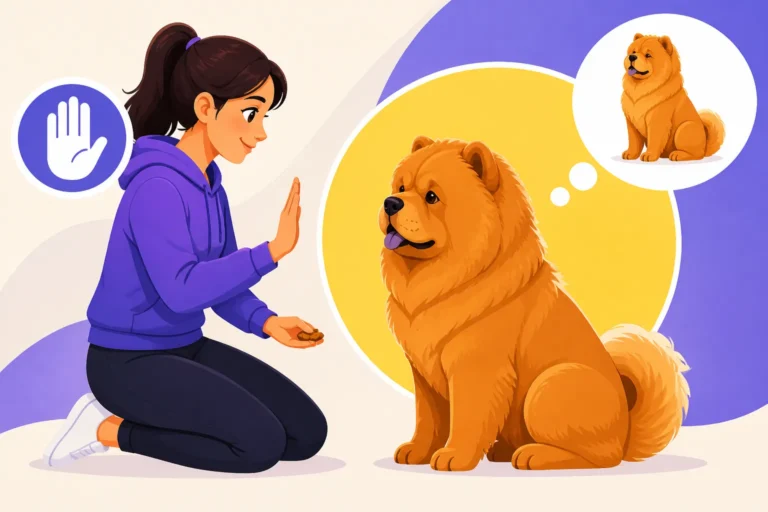
- "Go to Your Place" Command: Teach your Chow a "place" command, directing them to their designated calm zone when there's door activity. Reward them heavily when they go to their place and stay there quietly while someone approaches the door or enters. Start with easy distractions and slowly build up to real-life scenarios.
- Desensitization to Door Sounds: Recreate typical door sounds (knocking, doorbell) at a very low volume while your Chow is relaxed. Reward calm behavior. Gradually increase the volume over many sessions, always pairing the sound with treats and praise for not reacting.
- Controlled Greetings: When guests arrive, put your Chow on a leash or behind a gate. Have your guest stand calmly a few feet away. Reward your Chow for remaining calm and quiet. Slowly, as they demonstrate composure, allow for closer introductions. This teaches them that calm behavior earns rewards. This can also help when thinking about How a Chow Chow Greets Visitors.
- Practice "Wait" at the Door: Teach your Chow to sit and wait patiently at the door before you open it or before they go out for a walk. This reinforces your leadership and teaches them impulse control. Teaching a Chow Chow to Wait at a Door is a valuable skill for many reasons.
Enrichment to Redirect Focus
A bored Chow Chow is a Chow Chow more likely to invent its own "job," which might involve intense door surveillance. Providing adequate mental and physical enrichment can redirect their focus and reduce obsessive behaviors.
- Puzzle Toys and Chews: Offer puzzle toys filled with treats or long-lasting chews when you anticipate door activity (e.g., when you leave for work, or expect a delivery). This gives them a positive, engaging task to focus on instead of the door.
- Structured Exercise: While Chow Chows aren't typically high-energy dogs, they still need regular, moderate exercise. A couple of short, brisk walks a day can help burn off excess energy and provide mental stimulation through new scents and sights. How Much Exercise a Chow Chow Actually Needs is often less than people think, but it needs to be consistent.
- Training Sessions: Short, engaging training sessions throughout the day can provide mental stimulation. Chows are smart but can get bored with repetition. Keep sessions brief, fun, and varied.
- Safe Chewing Alternatives: Many Chows enjoy chewing. Providing appropriate and safe chew items can help alleviate stress and redirect their attention. Chew toys from brands like BAXTER & Bella can offer long-lasting engagement.
Remember, patience and consistency are paramount when working with a Chow Chow. Their independent nature means they might take longer to grasp new concepts or change established behaviors. Celebrate small victories and build on them, and you'll foster a calmer, more balanced relationship with your vigilant companion.
Disclaimer
This article is for general informational purposes only and does not constitute professional advice. Laws, prices and regulations vary by location and change over time. Consult a qualified professional for guidance on your specific situation.