Whether a Dremel Suits a Chow Chow’s Nails
Few things are as universally dreaded by Chow Chow owners as nail trimming. That thick, luxurious coat is wonderful, but those notoriously dark, thick nails? They’re a whole different story, often leading to wrestling matches, frayed nerves, and a fear of "quicking" our beloved floofs. If you've been wondering if there's a gentler, safer way to keep those claws in check, then a Dremel rotary tool might just be the game-changer you need. This guide will walk you through everything you need to know about using a Dremel for your Chow Chow's nail care.
The Unique Challenges of Chow Chow Nails
Let’s be honest, getting a Chow Chow to willingly submit to having their paws handled, let alone their nails clipped, can feel like trying to negotiate with a particularly stubborn cloud. Their independent spirit, combined with some physical characteristics, makes this routine chore exceptionally tricky.
Why Traditional Clippers Can Be So Difficult
One of the biggest hurdles for Chow Chow owners is the color of their nails. Most Chows, with their deep pigmentation, have black or very dark nails. This means the quick—the sensitive, blood-filled part of the nail—is completely invisible to the naked eye. Trying to gauge where the quick ends with traditional clippers is a terrifying guessing game. Cut too short, and you hit the quick, causing pain, bleeding, and instantly eroding any trust your Chow Chow might have in the process. Once they've had a bad experience, getting them to tolerate clippers again becomes an uphill battle, reinforcing their natural resistance to being handled in sensitive ways.
Beyond the color, many Chow Chows simply don't appreciate having their paws squeezed or their nails clipped. Their unique temperament means they often have strong opinions, and being held tightly or experiencing a sudden, sharp clipping sensation can be met with anything from stoic refusal to outright protest. It's not uncommon for Chow Chow owners to end up with a dog who pulls their paw away, growls, or even snaps, not out of malice, but out of discomfort and a lack of understanding of what’s happening. This makes a seemingly simple task incredibly stressful for both dog and owner.
The Importance of Regular Nail Care for a Chow Chow
Despite the difficulties, regular nail care isn't just about aesthetics; it's absolutely crucial for your Chow Chow's long-term health and comfort. When a dog's nails grow too long, they push back into the nail bed, causing significant discomfort and even pain with every step. Imagine walking around with pebbles constantly jammed into your shoes – that’s a bit like what long nails feel like for a dog. This pain can lead to them altering their gait, trying to walk on the sides of their paws, or shifting their weight unnaturally.
Over time, this altered gait can put undue stress on their joints, especially their elbows and hips, which are already areas of concern for the breed. You might have noticed that distinctive, somewhat "stilted" gait common to Chows, and long nails only exacerbate any existing structural issues. Why a Chow Chow Moves With a Stilted Gait is related to their unique straight rear leg, and improper nail length can worsen the strain on their joints. Furthermore, excessively long nails can splay their toes, leading to deformed feet and even ingrown nails that can become infected. It’s a cascading problem that starts with something as seemingly small as an untrimmed nail, making proper and consistent care vital for their overall well-being and mobility as they age. This is why neglecting nail care can contribute to issues like How a Chow Chow's Gait Wears Its Joints.
Introducing the Dremel: A Different Approach to Nail Trimming
If the thought of traditional clippers fills you with dread, you're certainly not alone. Many Chow Chow parents have found themselves looking for an alternative, and for good reason. Enter the Dremel, a rotary tool that offers a fundamentally different method for keeping those nails in shape.
How a Dremel Works for Dog Nails
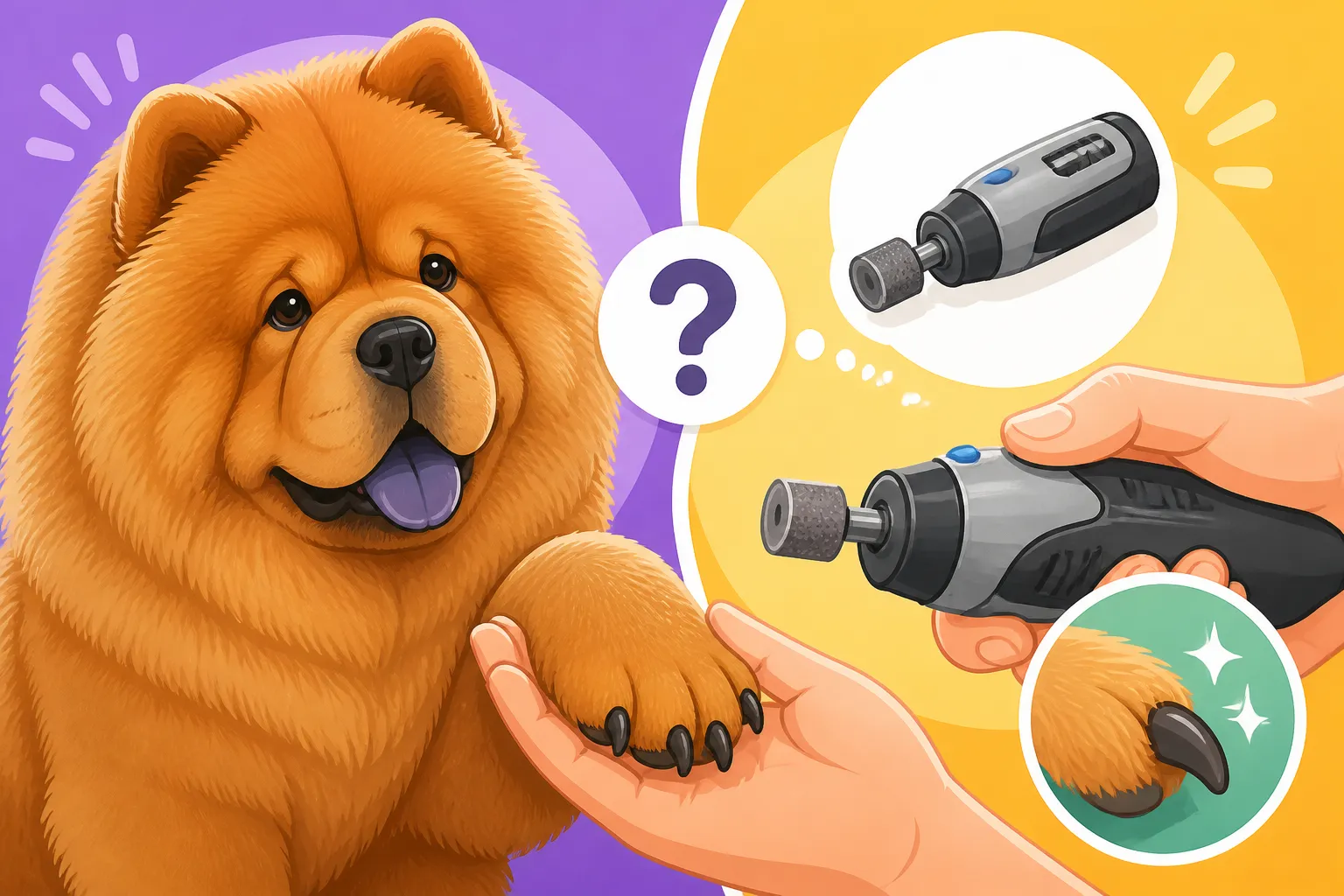
Unlike traditional clippers that snip or cut the nail, a Dremel uses a rotating sanding drum or grinding stone to gradually file down the nail. Think of it like a very precise, fast-spinning emery board for your dog's paws. The abrasive surface gently grinds away small layers of the nail, allowing you to slowly shorten it without the sudden impact or squeezing sensation of clippers. This controlled removal means you have much finer control over how much nail is taken off at a time, significantly reducing the risk of accidentally hitting the quick.
The process involves touching the spinning abrasive head to the tip of each nail, moving it in a circular motion, and removing small amounts of material. You'll typically use a low to medium speed setting to start, graduating to higher speeds as your Chow Chow becomes more comfortable and you become more proficient. Dremels usually come with various grit bands, allowing you to choose a finer grit for finishing or a coarser one for more aggressive removal on thicker nails. This methodical approach is often much less traumatic for dogs, especially those with past negative experiences with clippers.
Advantages of Using a Dremel for Chow Chows
The primary advantage of using a Dremel for your Chow Chow is the drastically reduced risk of "quicking." Since you're removing layers incrementally, you can often see the distinct change in the nail's cross-section – from dense, opaque black to a lighter, more translucent center – indicating you're getting close to the quick. This visual cue, even on dark nails, provides a much-needed safety margin that clippers simply can't. For a breed like the Chow Chow, where patience and positive experiences are paramount, this benefit alone can transform nail care from a battle into a manageable routine.
Another significant benefit is the smooth finish a Dremel provides. Clippers can sometimes leave sharp edges or even splinter the nail, which can snag on carpets, furniture, or cause discomfort for your dog. A Dremel, by contrast, smooths the nail down, leaving a rounded, blunt edge that's much safer and more comfortable. Furthermore, the grinding action applies less direct pressure to the paw compared to the crushing force of clippers. Some Chows are particularly sensitive to having their paws squeezed, and the gentler vibration of a Dremel can be more tolerable. Over time, consistent positive reinforcement with the Dremel can even help to recede the quick, allowing you to gradually achieve shorter, healthier nails for your Chow Chow. The principles of desensitization used here are very similar to How to Desensitize a Chow Chow to Clippers.
Potential Drawbacks and Considerations
While Dremels offer many advantages, they aren't without their considerations, especially when dealing with the unique sensibilities of a Chow Chow. One of the most common issues owners encounter is the noise and vibration generated by the tool. For some Chows, particularly those sensitive to sounds or unfamiliar sensations, the buzzing and slight vibration can be startling or unsettling. This requires a dedicated desensitization process, which we’ll discuss shortly, but it's a hurdle many owners face initially.
Another potential drawback is heat. If the grinding drum is held against one spot on the nail for too long, friction can generate heat, which can be uncomfortable or even painful for your dog. It's crucial to use quick, intermittent touches, moving from nail to nail to allow each one to cool. The process also tends to be slower than clipping, at least initially. While an experienced Dremel user can be quite efficient, new users, or those with highly resistant Chows, might find sessions taking longer, requiring more patience and shorter, more frequent training opportunities. Finally, handling technique is different. It requires a steady hand, the ability to manipulate the paw, and good lighting, all of which can be challenging with a dense-coated, sometimes opinionated Chow Chow.
Training Your Chow Chow to Accept the Dremel
Success with a Dremel, especially with a Chow Chow, hinges almost entirely on patient, positive training. You can’t just spring a noisy, vibrating tool on them and expect cooperation. It's a gradual process built on trust and positive associations.
Starting with Desensitization and Positive Reinforcement
The first and most critical step is pure desensitization. Before you even think about touching a nail, your Chow Chow needs to be comfortable with the Dremel's presence, sound, and vibration. Start by simply having the Dremel in the room, turned off. Let your Chow Chow sniff it, investigate it, and then immediately reward them with a high-value treat. Do this several times over a few days until they show no apprehension towards the tool itself.
Next, introduce the sound. Turn the Dremel on for a brief moment (away from your dog), then immediately turn it off and offer a treat. Repeat this many times, gradually increasing the duration the Dremel is on. The goal is for them to associate the sound of the Dremel with something positive – delicious treats! Once they're unfazed by the sound, you can progress to introducing the vibration. Turn the Dremel on and gently touch the back of your own hand or arm with it, then immediately offer your Chow Chow a treat. This helps them understand it's not painful. Only when they are completely relaxed with the sound and vibration, showing no fear or aversion, should you consider moving towards touching their paws. Remember that Which Treat a Chow Chow Will Work Hardest For can make or break your training success – choose wisely!
Step-by-Step Training Protocol
Once your Chow Chow is comfortable with the Dremel's sound and vibration, you can begin the actual training, but remember to take it incredibly slow. Start by just touching the turned-off Dremel to their paw and nails, rewarding them. Gradually move to turning the Dremel on (away from them), then turning it off, then touching their paw and nails (still off). The idea is to build a positive association with the tool touching them. Then, with the Dremel on a low setting, lightly touch one nail for literally a second, then immediately turn it off and give a high-value treat. This is often the hardest step, as it introduces the actual grinding sensation.
Keep your initial sessions extremely short – literally grinding one nail for a second, then stopping. Praise lavishly and reward generously. If your Chow Chow shows any signs of stress or discomfort, stop immediately and revert to an earlier, easier step. The key is to never push them beyond their comfort level. Over successive sessions, you can gradually increase the duration on each nail and the number of nails you attempt in one sitting. Consistency is vital, as is patience. You are building a lifetime of positive association, not just getting nails done today. This systematic approach is also crucial for basic paw handling, as described in Teaching a Chow Chow to Have Its Feet Handled.
Essential Safety Tips and Best Practices
When you start Dremeling, safety is paramount. Always ensure you have styptic powder readily available, just in case you accidentally touch the quick. While less likely with a Dremel, it can still happen, especially on very dark nails. Always hold your Chow Chow's paw firmly but gently, ensuring their fur is completely out of the way of the spinning head. Long fur can easily get tangled and cause pain or injury. For Chow Chows with their dense coats, you might even consider using a grooming hammock or having a second person gently hold their paw and keep the fur clear.
Use a low to moderate speed setting initially. Higher speeds generate more heat and can be more startling. Grind in short, intermittent bursts, touching the nail for 1-2 seconds, then lifting the Dremel to allow the nail to cool before repeating. This prevents heat buildup. Focus on grinding from the underside of the nail and rounding the edges. For black nails, watch for the center of the nail to show a darker, shiny, almost wet-looking spot; this indicates you are very close to the quick and should stop. If you're ever unsure or uncomfortable, don't hesitate to seek guidance from a professional groomer or veterinarian. If regular Dremeling at home proves too stressful or challenging, alternatives like professional grooming or even sedated nail trims at the vet (check What Sedating a Chow Chow for a Nail Trim Costs) are options, but the goal is always comfort for your Chow.
Choosing the Right Dremel and Supplies
Selecting the right tools can make a significant difference in your success and your Chow Chow's comfort during nail care sessions. There’s a variety of Dremel tools available, and some are more suited for dog nails than others.
Types of Dremel Tools Suitable for Dogs
When looking for a Dremel for your Chow Chow, you'll generally encounter two main types: corded and cordless. Corded Dremels typically offer more consistent power and don't run out of battery mid-grind, which can be a huge plus if you have multiple dogs or particularly thick nails to tackle. However, the cord itself can be a tripping hazard or simply get in the way, especially with a wiggly Chow Chow. Cordless Dremels, on the other hand, offer excellent maneuverability and freedom of movement. Their battery life is a key consideration; some higher-end models hold a charge well and offer plenty of power, while cheaper versions might bog down or die quickly.
Many manufacturers, including Dremel itself, offer specific pet-friendly models, such as the Dremel PawControl. These often come with features like quieter motors, lower vibration, and sometimes even a safety guard attachment designed to minimize hair entanglement and guide the angle of the grind. While any rotary tool can technically be used, these pet-specific versions are generally designed with a dog's comfort and safety in mind. You can find a good range of options on platforms like Amazon, comparing features and reviews to find the best fit for your Chow Chow and your budget.
Essential Accessories and How to Use Them
Beyond the Dremel tool itself, a few essential accessories will significantly enhance your nail care routine. The grinding bands or drums are crucial; they come in various grits, from coarser for initial shaping to finer for smoothing and finishing. It’s wise to have a selection on hand. These are usually consumable items and will need to be replaced periodically as they wear down. Some Dremel kits include a safety guard attachment, which is a small cap that goes over the grinding drum. This guard helps contain the nail dust, prevents hair from getting caught, and provides a barrier between the spinning head and your dog's paw.
Of course, no Dremel kit for dogs is complete without styptic powder. This magical powder quickly stops bleeding if you accidentally hit the quick. Always have it within arm's reach before you begin. And don't forget the most important accessory of all: high-value treats! As we discussed, these are your primary tools for positive reinforcement and making the experience a rewarding one for your Chow Chow. You might want to stock up on some gourmet treats from a reputable brand like Ollie or Chewy, ensuring you have something truly irresistible to keep your Chow's attention and cooperation. While we’re talking about grooming tools, remember that other essential items like What an Undercoat Rake for a Chow Chow Costs are equally important for their overall coat health.
Incorporating Dremeling into a Holistic Grooming Routine
Learning to Dremel your Chow Chow's nails is a fantastic step toward a more comprehensive and positive grooming routine. Nail care shouldn't be an isolated event but rather a regular part of their overall upkeep. Consistent, short Dremel sessions, perhaps weekly or bi-weekly depending on your Chow's nail growth and activity level, will keep their nails at an optimal length, preventing the discomfort and joint issues associated with overgrown claws.
Think of it as part of a larger picture that includes regular brushing to tackle their dense double coat – a task that can be a workout in itself! How Often a Rough Coated Chow Chow Needs Brushing is a common question, and it's a significant commitment. Learning to handle their paws gently during Dremeling can also make other aspects of grooming easier, like trimming paw pad fur or checking for debris. This consistent, positive handling of their feet directly complements the effort you put into tasks like Brushing a Chow Chow's Mane Down to the Skin. By integrating Dremeling, you’re not just trimming nails; you’re building trust, enhancing their comfort, and contributing to their overall health and happiness, which is what every Chow Chow parent truly wants. Regular vet check-ups, as outlined in How Often a Chow Chow Needs a Wellness Exam, will also ensure their feet and overall health are monitored, providing opportunities for professional guidance if you have any concerns about your Dremeling technique or your Chow's paw health.
| Feature | Traditional Clippers | Dremel Rotary Tool |
|---|---|---|
| Method | Snips/cuts the nail | Grinds/files the nail |
| Quick Risk | High, especially with dark nails; easy to cut too short | Low, allows for incremental removal; easier to avoid |
| Finish | Can leave sharp edges, potential for splintering | Smooth, rounded edges; less snagging |
| Dog Comfort | Squeezing sensation can be uncomfortable or startling | Vibration/noise can be a factor; less direct pressure |
| Speed | Generally faster per nail (if dog cooperates) | Slower, more methodical; requires patience |
| Learning Curve | Easier to pick up quickly | Requires practice, desensitization for dog |
| Cost | Lower initial cost for clippers | Higher initial cost for tool and replacement bands |
| Maintenance | Keep blades sharp | Replace grinding bands regularly |
| Visibility | Hard to see quick on dark nails | Easier to "read" the nail as you grind |
Disclaimer
This article is for general informational purposes only and does not constitute professional advice. Laws, prices and regulations vary by location and change over time. Consult a qualified professional for guidance on your specific situation.