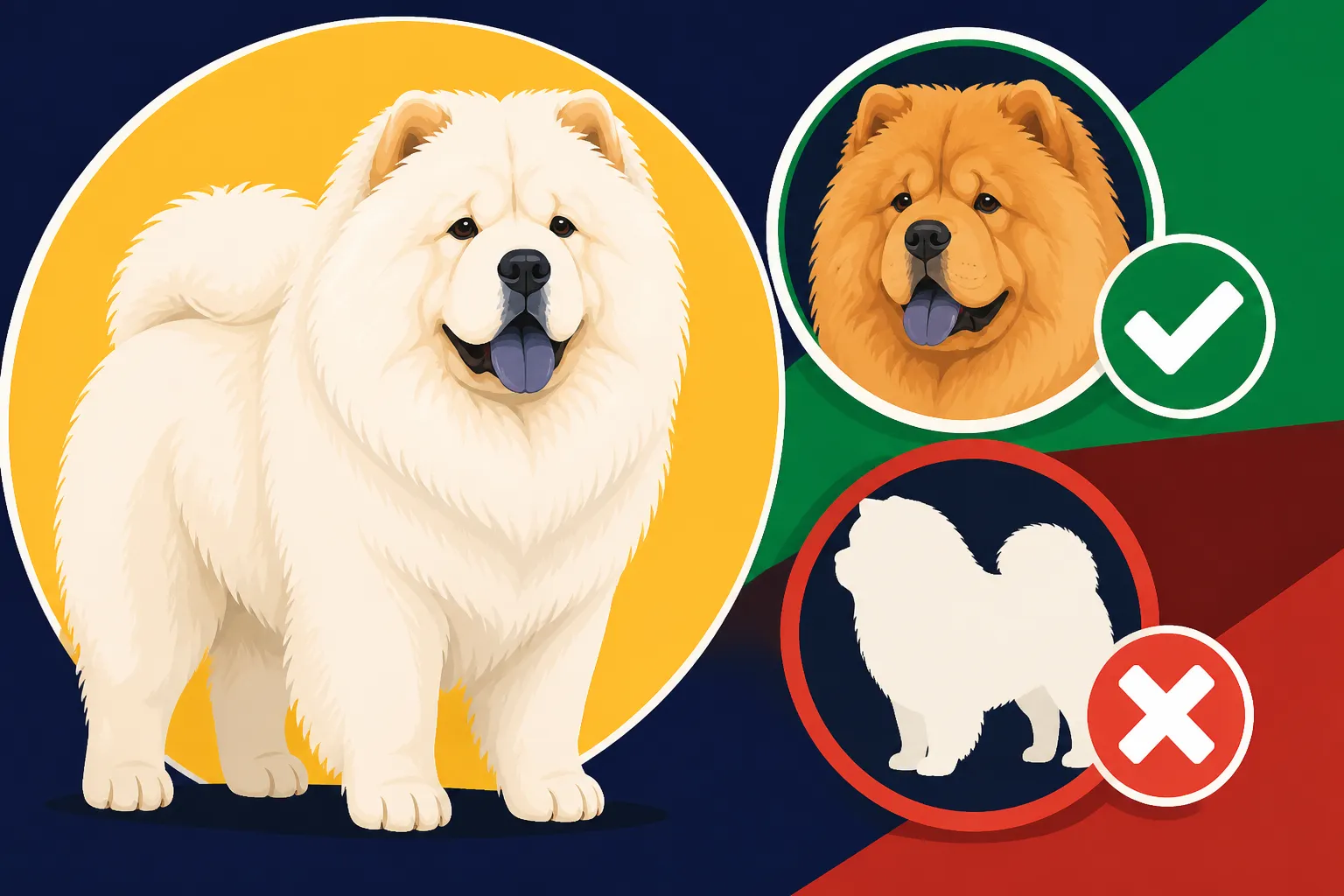
Whether a White Chow Chow Is Standard
There's often a bit of a buzz, and sometimes a lot of confusion, when people talk about "white" Chow Chows. It's a common topic, especially when you see a particularly light-colored fluffball and wonder if it's truly white or if it falls into another category. This guide is here to clear up the mystery, delve into the official breed standards, and help you understand what defines a Chow Chow's coat color, separating fact from online hype.
Understanding the Chow Chow Breed Standard for Color
When we talk about a dog breed, "standard" isn't just a suggestion; it's a meticulously crafted description that governs what an ideal specimen should look like, how it should move, and even aspects of its temperament. For the Chow Chow, these standards are set by major kennel clubs around the world, like the American Kennel Club (AKC) or The Kennel Club (KC) in the UK. Color is a significant part of that standard, defining what is considered acceptable for show quality and what reflects the breed's historical appearance.
The Official Five Colors of the Chow Chow
The Chow Chow breed standard recognizes a very specific palette of colors, and it’s actually quite narrow compared to many other breeds. There are five, and only five, standard colors: red, black, blue, cinnamon, and cream.
Let's break them down a little:
- Red: This is perhaps the most classic and widely recognized Chow Chow color. It can range from a deep mahogany to a lighter golden red. Often, you'll see shading, with lighter markings on the ruff, tail, and britches. These natural variations within the red spectrum are perfectly acceptable.
- Black: A striking and regal color, black Chows should ideally be a solid, dense black from tip to tail. Some may have lighter undertones or reddish highlights when the sun hits their coat, but the overall impression is profound black.
- Blue: This is a dilute color, meaning it's a softened version of black. Blue Chows appear as a slate grey, often with a metallic sheen. Like reds, they can have lighter shading, but the base color remains a distinct grey-blue. It's a beautiful, less common color that really stands out.
- Cinnamon: Sometimes confused with a very light red, cinnamon is a unique, subtle shade. It's often described as a fawn, tan, or even a dilute red. It's warmer than blue but distinct from the deeper reds. Like blues, What a Cinnamon Chow Chow Looks Like can be quite striking and is often admired for its softer appearance.
- Cream: This is where our discussion about "white" usually begins. Cream Chows are a lovely, pale color that can range from a rich honey cream to an incredibly light, almost colorless shade. While they might look white to the untrained eye, genetically and by standard, they are creams. They often have darker pigment on their nose and around their eyes, contrasting beautifully with their light coats.
It's important to remember that these colors are the ones accepted for showing and for meeting the breed's formal description. Other colors might exist, or appear as variations, but they don't fall within the recognized standard.
What "Standard" Truly Means in the Dog World
The term "standard" carries a lot of weight in the world of purebred dogs. It's not just about aesthetics; it's a blueprint for the breed. Kennel clubs establish these standards to maintain the breed's distinctive characteristics, ensuring that a Chow Chow looks, moves, and even behaves like a Chow Chow, generation after generation. For breeders, the standard serves as a guide for selecting breeding pairs and evaluating their offspring.
A dog that adheres closely to the standard is considered an excellent example of the breed, which is particularly important in conformation dog shows. However, it's crucial to understand that a dog being "non-standard" in color or any other feature doesn't mean it's any less of a wonderful pet or a healthy, happy companion. It simply means it might not be suitable for the show ring, or that a breeder prioritizing the standard might choose not to breed it. For most pet owners, the "standard" of color is far less important than health, temperament, and the joy their furry friend brings into their home.
The Reality of "White" Chow Chows: Cream vs. White
So, if there are only five standard colors, and white isn't one of them, what are people seeing when they encounter a "white" Chow Chow? The answer almost always lies in the glorious, often misunderstood, cream Chow Chow.
The Cream Chow Chow: A Closer Look
The cream Chow Chow is an absolutely stunning variation of the breed. Their coats can be so pale, so light, that they genuinely appear white in certain lighting conditions or in photographs. Imagine a fluffy cloud or a scoop of vanilla ice cream, and you're getting close to the visual impact of a very light cream Chow. This beautiful paleness is why they are so often mistaken for "white" Chows.
What exactly defines a cream Chow? It's a genetic dilution that results in a yellow-based pigment becoming extremely light, often described as an off-white or ivory color. A cream Chow Chow can vary from a deep, rich gold-cream to a very light, almost bleached-out cream. The lighter end of this spectrum is where the confusion with white dogs typically arises. Despite their almost-white appearance, genetically, they are still considered cream and fit within the breed standard for color. They are distinct from a true white dog, which would lack any yellow or cream pigment whatsoever.
Why Pure White Isn't a Standard Color
Genetically, true white in many dog breeds is often linked to specific genes that completely suppress pigment production in the coat, sometimes associated with health issues like deafness or vision problems (though not always). For the Chow Chow, the genetic makeup doesn't produce a true white coat. Any Chow Chow that appears white is, in almost all cases, a very light cream. There's no separate "white" gene recognized in the breed's genetics or standard.
The distinction might seem subtle to the casual observer, but for breeders and those deeply familiar with the breed standard, it's clear. A Chow Chow, even the lightest cream, will still have some underlying yellow or ivory tint to its fur, particularly noticeable in certain lights or next to a truly white object. The concept of a "pure white" Chow Chow is largely a misnomer, a visual trick caused by the extreme lightness of the cream coat. Photographers especially know how easily lighting can wash out colors, making a very light cream appear stark white.
Distinguishing a True Cream from a Faux White
Understanding the official colors is one thing, but how can you, as an owner or enthusiast, tell the difference between a truly light cream Chow Chow and what some might mistakenly call a "white" one? It largely comes down to examining the finer details of their pigmentation.
Examining Pigmentation: Nose, Eye Rims, and Lips
One of the most telling indicators of a Chow Chow's true color, especially when dealing with light coats, is the pigmentation of their nose, eye rims, and lips. These areas should almost always be black, regardless of the coat color.
For a cream Chow Chow, even the palest one, you should expect to see:
- A solid black nose: No pink spots, no liver-colored fading (unless the dog is a blue, which would have a self-colored slate nose). A true cream Chow will sport a distinct black nose.
- Black eye rims: The skin around their eyes should be black. This helps to define their deep-set eyes and provides a beautiful contrast.
- Black lips: The edges of their lips should also be black.
These dark pigment points are crucial. In some breeds, true white coats can be associated with "snow noses" (pinkish noses) or lighter eye rims. However, a Chow Chow, even a very light cream, is expected to maintain these strong black pigment markers. If you encounter a Chow Chow that appears white but has a pink nose, lighter eye rims, or any significant reduction in this dark pigmentation, it's worth questioning its lineage and if it truly adheres to the breed's established traits. While such a dog might still be a beloved pet, it wouldn't meet the standard requirements for a cream Chow.
The Role of the Blue-Black Tongue
The unique blue-black tongue of the Chow Chow is one of its most distinctive and iconic features. It's often compared to a blueberry or an ink blot. This feature is so central to the breed that it's a mandatory part of the standard, regardless of coat color. Why a Chow Chow's Tongue Is Blue Black is due to extra pigmentation in the tissue, and it's something every purebred Chow Chow should possess.
So, when you're looking at a supposedly "white" Chow Chow, check its tongue. If it's pure pink, or mostly pink with just a few dark spots, that's a serious deviation from the breed standard. A standard Chow Chow, whether it's red, black, blue, cinnamon, or cream, must have a solid blue-black tongue. Sometimes, puppies are born with pink tongues that gradually darken, but by the time they are a few months old, the full blue-black color should be evident. A pink-spotted tongue is considered a disqualifying fault in the show ring, indicating a departure from a core breed characteristic. It doesn't mean the dog is unhealthy or not a good pet, but it certainly clarifies that it isn't a show-quality cream Chow.
Implications for Owners and Breeders
Understanding the nuances of Chow Chow colors and standards has different implications depending on your role. For pet owners, it's about appreciation and realistic expectations. For breeders, it's about responsibility and upholding the integrity of the breed.
If You Have a "White" Chow Chow Pet
If you own a beautiful Chow Chow that looks white to you, or that was advertised as "white," the most important thing to remember is that their coat color, whether it's a very light cream or something else, has no bearing on their wonderful personality, loyalty, or overall health. Your dog is a cherished member of your family, and that's what truly matters. Whether they meet a specific show standard is largely irrelevant to their role as a companion.
What does matter is ensuring they live a happy, healthy life. This means providing them with proper nutrition (you can find a great variety of specialized foods and treats on sites like Chewy), regular grooming to keep that dense coat in top condition, and plenty of mental and physical stimulation (even if it's just short, cool walks, as Chows aren't endurance athletes). Focusing on their well-being, training, and socialization is far more beneficial than fixating on a color descriptor. Whether a Chow Chow Suits a First Time Owner often depends more on understanding their unique personality and needs than on their exact shade of cream.
Considerations for Breeding and Showing
For anyone involved in breeding or showing Chow Chows, adherence to the breed standard is paramount. A Chow Chow that is truly white (meaning, lacking any cream pigment) or has significant pink pigmentation on its nose or tongue would not be eligible for conformation shows. This is not about being "lesser" but about maintaining the specific traits defined for the breed. Responsible breeders make decisions based on health, temperament, and adherence to the standard across all aspects, not just color.
Breeders who are dedicated to the breed's preservation will always prioritize health testing and genetic soundness. This means screening for conditions common in Chows, such as hip and elbow dysplasia, eye issues like entropion, and thyroid problems. What a Chow Chow Breeder Should Have Tested involves a comprehensive approach, and a reputable breeder will be transparent about these results. Marketing a dog as "rare white" is often a red flag, as it can suggest a focus on novelty rather than on healthy breeding practices that align with established breed goals.
Common Misconceptions and Ethical Breeding
The allure of a "rare" color can sometimes lead prospective owners down a less-than-ideal path. It's vital to be aware of common misconceptions and to prioritize ethical breeding practices when searching for a Chow Chow.
The "Rare White Chow" Myth
One of the most persistent myths in the dog world, particularly with breeds that have distinct color standards, is the idea of the "rare white" variation. For Chow Chows, this often applies to those extremely light creams. Unfortunately, the term "rare white Chow" is frequently used as a marketing gimmick by disreputable breeders or puppy mills to justify inflated prices. They prey on the desire for something unique, often at the expense of the dog's health and genetic background.
The truth is, while a very light cream Chow might be less common than a red or black, it is not "rare" in a way that implies special value or unique genetic lineage beyond being a standard cream. Responsible breeders do not typically market their puppies based on "rarity" of color, but rather on health clearances, temperament, and adherence to the overall breed standard. If you encounter someone selling a "rare white Chow" at an exorbitant price, it should be a warning sign. Why a Cheap Chow Chow Puppy Signals a potential problem is often that these breeders cut corners on health testing and proper care, leading to higher vet bills later on.
Finding a Reputable Breeder
Finding a reputable Chow Chow breeder is arguably the most crucial step when bringing one of these magnificent dogs into your home. A good breeder will be passionate about the breed, prioritize the health and well-being of their dogs, and adhere strictly to the breed standard, not just for color, but for all aspects.
Here's what to look for:
- Health Clearances: They should readily provide proof of health screenings for the parent dogs, including OFA certifications for hips and elbows, CERF eye clearances, and thyroid panels. Which Health Tests a Chow Chow Breeder Should Run are non-negotiable for responsible breeding.
- Transparency: A reputable breeder will be open about their breeding practices, allow you to meet the puppy's dam (and sometimes the sire), and answer all your questions thoroughly. They'll also ask you plenty of questions to ensure their puppies go to good homes.
- Knowledge of the Standard: They will be well-versed in the Chow Chow breed standard, including the recognized colors, and can explain why their creams are indeed creams, not "white."
- No "Rare" Claims: They won't use marketing language like "rare white" or "unique color" to sell puppies.
- Support: They will offer lifelong support and be there to answer questions long after you've taken your puppy home.
- Contract: They will have a clear, written contract that outlines health guarantees, spay/neuter agreements, and return policies. What a Chow Chow Breeder Contract Requires varies but should always protect both the buyer and the dog.
You can also prepare for your new puppy by gathering supplies from trusted retailers like Chewy, ensuring you have everything from appropriate food bowls to grooming tools, even before your Chow Chow comes home.
Living with a Light-Colored Chow Chow
Having a cream (or what some call "white") Chow Chow certainly comes with its own set of charming characteristics and a few practical considerations, especially regarding their beautiful, dense coat.
Special Grooming Considerations for Light Coats
Chow Chows, regardless of color, require significant grooming due to their thick double coats. For light-colored Chows, cleanliness becomes even more of a visual priority because dirt, dust, and stains can be much more noticeable against a pale backdrop.
- Tear Staining: Many Chows, especially those with deep-set eyes or allergies, can experience tear staining. This dark, reddish-brown discoloration is particularly prominent on light cream fur around the eyes. Regular gentle wiping with a damp cloth or specialized eye-safe wipes, available on Chewy, can help manage this.
- Food Stains: Their magnificent ruff around their neck and face can easily become discolored from food and water, especially if they are messy eaters or drinkers. Consider using elevated bowls or wider, shallower bowls to minimize contact, and make sure to wipe their muzzle after meals.
- Overall Coat Brightness: To keep that beautiful cream coat looking its best, regular Bathing and Drying a Chow Chow's Dense Coat is important. Using a whitening or brightening shampoo (specifically formulated for dogs and safe for their skin) can help prevent yellowing and maintain their pristine appearance. Always ensure the coat is thoroughly dried down to the skin to prevent skin issues.
- Mats and Dirt: Mats, which are common in dense Chow Chow coats, can trap dirt and debris, making them more visible on a light coat. Consistent line brushing to the skin is essential to prevent mats from forming and keep the coat clean and airy.
Maintaining a light coat is a labor of love, but the results—a pristine, fluffy Chow Chow—are absolutely worth the effort.
Sun Sensitivity and Skin Care
While all dogs can be susceptible to sunburn, light-colored dogs, including very pale cream Chow Chows, can sometimes be more prone to sun sensitivity, especially in areas where their fur might be thinner, like the nose or ear tips. Although a Chow Chow's dense double coat provides a good layer of protection, it's still wise to be mindful of prolonged sun exposure.
- Nose Protection: A light-colored nose, if not perfectly black, can be particularly vulnerable to sunburn. Whether a Chow Chow's Nose Sunburns is a real concern. If your Chow has a pinker nose, consider using a dog-safe sunscreen on it during long periods outdoors.
- Monitoring Skin: Keep an eye on any areas of exposed skin for redness or peeling, which could indicate sunburn.
- Underlying Conditions: While not directly related to color, some autoimmune conditions, like Pemphigus Foliaceus, can be exacerbated by sun exposure. How Sun Worsens a Chow Chow's Pemphigus is a serious consideration, and any suspicious skin lesions should always be checked by a vet.
- Heat Management: Regardless of coat color, Chow Chows are notoriously susceptible to overheating due to their dense coats and brachycephalic (short-nosed) structure. Always provide plenty of shade, fresh water, and avoid walks during the hottest parts of the day, especially in summer.
A light-colored Chow Chow is a stunning dog, and with a little extra attention to grooming and sun safety, they can live a happy, comfortable life.
| Chow Chow Standard Color | General Appearance | Nose/Lip/Eye Rim Pigment | Tongue Color | Notes |
|---|---|---|---|---|
| Red | Mahogany to golden red, often with lighter shading | Black | Blue-black | Classic, widely recognized. |
| Black | Solid, dense black throughout, sometimes with highlights | Black | Blue-black | Striking, regal appearance. |
| Blue | Slate grey with a metallic sheen, dilute black | Self-colored (slate grey) | Blue-black | Less common, distinct grey-blue hue. |
| Cinnamon | Fawn, tan, or dilute red, warmer than blue | Black | Blue-black | Subtle, softer shade, distinct from red. |
| Cream | Rich honey to very pale, almost white ivory | Black | Blue-black | Often mistaken for "white" due to extreme lightness, but genetically cream. |
Disclaimer
This article is for general informational purposes only and does not constitute professional advice. Laws, prices and regulations vary by location and change over time. Consult a qualified professional for guidance on your specific situation.