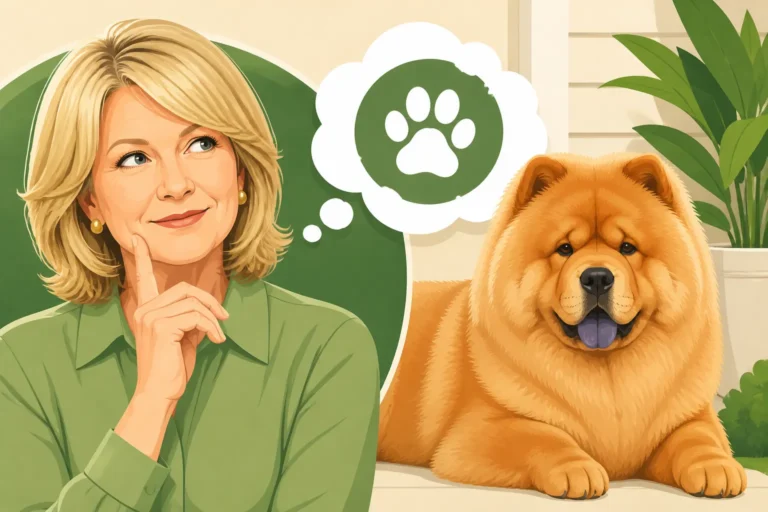
Whether a Chow Chow Mix Keeps the Temperament
A Chow Chow mix may inherit the breed’s reserved, independent nature—or turn out more outgoing, playful, or socially easygoing. The mix’s appearance alone cannot tell you which temperament traits it will develop. This guide explains what influences behavior, how to assess an individual dog, and what you can do to help a Chow Chow mix feel safe and settle into your home.
What temperament traits might a Chow Chow mix inherit
Chow Chows are often independent and reserved with unfamiliar people. Many form strong attachments to their household without seeking constant attention, and some are selective about unfamiliar dogs. But these are tendencies, not guarantees—and a mix may show them to different degrees.
A dog’s behavior reflects more than breed ancestry. Genetics, early experiences, health, training, and the environment all matter. Even puppies from the same litter can have noticeably different personalities. That is why “Chow mix” is a starting point for asking questions, not a dependable personality forecast.
The Chow Chow side is one influence, not a full prediction
A Chow Chow mix may be watchful, self-contained, or cautious in new situations. Some are affectionate with familiar people but prefer not to be handled by strangers. Others are sociable and enjoy meeting people, especially when they have had positive experiences from puppyhood. A Chow ancestry does not, by itself, tell you how a particular dog will behave.
The other parent breed can influence the mix, too, but it does not simply cancel out Chow Chow traits. A Chow-Golden Retriever mix, for example, might enjoy more social contact than some purebred Chows, but you cannot count on that outcome from the label. A dog may inherit a blend of traits, lean toward one parent, or develop a personality that does not closely match either breed stereotype.
The breed of the other parent can help you form useful questions, not supply a sure answer. Compare the breeds’ general histories and tendencies, as in How a Chow Chow Differs From an Akita, then look for evidence about the individual dog: how it responds to handling, how quickly it settles in an unfamiliar place, and whether it can recover after being startled.
Family relationships and sociability vary between individuals
Some Chow Chow mixes bond closely with one person; others share their affection more evenly across a household. A dog that follows one family member everywhere is not necessarily more loving than one that prefers to nap nearby rather than lean against someone. Reserved behavior can simply be part of that individual’s way of relating. For more context, Why a Chow Chow Picks One Person and How a Chow Chow Treats the Rest of the Family describe patterns that may be relevant, but should not be treated as a prediction for every mix.
Other dogs may be a bigger challenge than people. A Chow Chow mix might live peacefully with a familiar dog but feel uncomfortable when unfamiliar dogs approach. Another may be relaxed around dogs yet wary of visitors. The important question is not whether the dog is universally “good with dogs” or “friendly with everyone,” but what situations it can handle comfortably and what support it needs.
Small animals deserve separate consideration. A mix may have a strong interest in chasing cats, squirrels, or other quick-moving animals, especially if it has inherited a high prey drive. That does not automatically make the dog unsafe, but it does mean introductions, supervision, barriers, and leash management matter. Whether a Chow Chow Has a Prey Drive offers helpful background on why chasing tendencies should be assessed rather than assumed away.
What makes a Chow Chow mix’s temperament hard to predict
People often expect a mixed-breed dog to land neatly between its parent breeds. In real life, behavior does not work like averaging two labels. A puppy can inherit certain traits from one parent and different traits from the other, while its early experiences shape how those tendencies show up.
A rescue dog can be especially difficult to assess at first. Stress, unfamiliar surroundings, pain, or a recent move may affect behavior, so the dog you meet at a shelter or foster home may act differently after settling in. Likewise, a confident-looking puppy is not guaranteed to remain outgoing as it matures.
Parent behavior and early experience matter
When a puppy comes from a breeder, ask to meet the mother and, if possible, learn about the other parent’s behavior. Notice how each dog responds to ordinary events: a visitor arriving, a person approaching, gentle handling, or a brief separation. A parent that is consistently fearful or reactive does not prove the puppy will behave the same way, but it is important information to discuss.
Ask what experiences the puppies have had, too. Gentle, varied exposure to household sounds, surfaces, people, and routine handling can help puppies learn that new things are manageable. That is different from forcing a puppy to be touched or passed around by strangers. Thoughtful early experiences and gradual introductions matter more than simply tallying the number of people a puppy has met. The guidance in How to Socialize a Chow Chow Before Vaccinations Finish can help you think about safe, positive exposure during puppyhood.
For an adult dog, ask the rescue or foster caregiver about specific situations rather than accepting a broad label such as “shy” or “protective.” How does the dog behave when someone enters the home? Can it relax after a short walk in a new area? What happens when another dog passes at a distance? Clear examples are more useful than guesses about ancestry.
Health, stress, and maturity can change what you see
Behavior is not always a temperament issue. A dog that suddenly becomes touch-sensitive, withdrawn, irritable, or reluctant to move may be uncomfortable or unwell. A thick coat can make it harder to spot changes in body condition or skin, and a dog may conceal discomfort until it becomes difficult to ignore. If behavior changes abruptly, or handling that was once comfortable becomes upsetting, arrange a veterinary check rather than assuming the dog is being stubborn.
Stress can also make a dog look less sociable than it may be once it feels secure. A newly adopted mix might avoid visitors, eat poorly, or stick close to one safe person during the adjustment period. Give the dog predictable routines, quiet places to retreat, and enough time to observe without pressure. Avoid making a quick judgment about its lasting personality based on a stressful first week.
| What you observe | What it may suggest | A helpful next step |
|---|---|---|
| The dog avoids unfamiliar people but relaxes with family | It may need more distance and time around visitors | Let the dog choose whether to approach; provide a quiet retreat |
| The dog is calm with familiar dogs but tense around new ones | Dog sociability may depend on context | Keep encounters controlled and at a comfortable distance |
| The dog resists touch in a specific area | Fear, discomfort, or pain may be involved | Stop handling that area and consult a veterinarian |
| The dog is curious but startled by new sounds | It may need gradual, positive introductions | Pair mild exposures with treats or another pleasant experience |
| The dog growls or stiffens when approached while resting | It is communicating discomfort or a need for space | Do not punish the warning; manage the situation and seek qualified help if needed |
How to assess a Chow Chow mix before bringing it home
A short meeting can give you clues, but it is not a complete temperament assessment. Dogs behave differently in a kennel, a foster home, a quiet room, and a busy neighborhood. If you are choosing a puppy, adult dog, or rescue, try to gather information across more than one setting and pay attention to how the dog responds—not just whether it performs a particular behavior on demand.
Look for recovery and choice, not forced friendliness
A dog does not have to greet you enthusiastically to be a good companion. Notice whether it can observe you without escalating, whether it relaxes when given space, and whether it shows curiosity on its own terms. A dog that takes a treat, looks away, then returns to investigate may be coping well with a new interaction. A dog that freezes, repeatedly retreats, or cannot settle may need a slower approach or a more careful assessment.
Ask the person caring for the dog what it is like in everyday situations. Does it tolerate brushing? Can people pass its resting spot without trouble? How does it respond to the doorbell, a harness, or a visitor who ignores it? For a dog with an unknown history, ask what is known and what remains uncertain. An honest “we have not seen this situation yet” is more useful than an unsupported assurance that the dog is fine with everything.
If you have children, cats, or another dog, discuss those details before adoption and make a safe introduction plan. Do not use a child or resident pet to test a dog’s reaction. For a dog-to-dog introduction, choose a controlled setting, use capable handlers, and allow space. Some dogs may never enjoy close interaction with unfamiliar dogs, and that can be managed with sensible routines rather than treated as a character flaw. How a Chow Chow Gets Along With Other Dogs provides additional context on why compatibility depends on the individuals and the setting.
Prepare for a gradual, low-pressure transition
For the first days at home, keep the routine simple. Set up a quiet resting area, limit visitors, and let the dog learn the household at its own pace. Avoid leaning over it, reaching into its bed, or insisting that it accept petting. If it chooses to approach, offer calm interaction and pause often to see whether it wants more.
Use rewards to build positive associations with ordinary experiences such as putting on a leash, walking past a visitor at a distance, or hearing a household sound. Keep sessions short, and stop before the dog becomes overwhelmed. A mix may be clever and capable of learning while still disliking repetitive drills or heavy-handed correction. If training feels stuck, a qualified, reward-based trainer can help you set up manageable steps.
Practical tools can make the transition easier, but they are not a substitute for reading the dog. For example, owners who need to assemble a grooming kit may compare brushes and combs through retailers such as Chewy, while choosing tools based on the dog’s coat and comfort. If the dog is uneasy about brushing, introduce the tool gradually and pair brief contact with rewards rather than trying to complete a full grooming session at once.
Helping a Chow Chow mix thrive over time
Temperament is not a fixed score that tells you whether a dog is easy or difficult. A thoughtful routine can help a cautious dog feel safer, while good management can prevent predictable stress from turning into conflict. The aim is not to make every Chow Chow mix enjoy every person or dog. It is to build communication, trust, and safe habits that fit the individual dog.
Build trust through predictable handling and training
Give the dog a consistent way to opt out of interaction. If it walks away, turns its head, or chooses its bed, respect that signal. Invite rather than corner. This is especially important when grooming, checking ears, wiping around the eyes, or handling feet—tasks that may be uncomfortable for a dog that is not yet accustomed to them.
Keep training clear and rewarding. Short practice sessions can teach useful everyday skills such as coming when called, waiting at a door, and moving calmly to a resting place. Reward the behavior you want, and avoid physical corrections or confrontational attempts to “show who is boss.” Pressure can make a wary dog more defensive and can damage trust, particularly when the dog already feels uncertain.
Pay attention to warning signals. A stiff body, closed mouth, hard stare, turning away, or growl can mean the dog needs more space. Do not punish a growl: suppressing a warning does not resolve the discomfort that prompted it. Instead, calmly create distance and work out what made the dog uneasy. For more on reading and responding to a dog’s signals, see Signs a Chow Chow Is Uncomfortable.
Use practical routines to prevent avoidable friction
Management is part of good care, not a sign that training has failed. A gate can give a dog a calm break from visitors; a leash can prevent unwanted approaches on a walk; and a designated resting place can help everyone understand when the dog wants quiet. If the dog is uncomfortable around guests, arrange the space before they arrive rather than waiting for a tense moment to improvise.
For enrichment, choose activities that suit the dog’s confidence and energy. A sniffing walk on a quiet route, a food puzzle, or a short search game can provide mental engagement without requiring close contact with strangers or unfamiliar dogs. If you are comparing food puzzles or other routine supplies, Chewy is one retailer owners may use to browse options; introduce any new activity gradually and supervise to see whether the dog finds it enjoyable.
Grooming deserves the same patient approach. A dense coat can need regular attention, but a dog that dislikes being handled may require grooming to be broken into brief steps. You might begin by rewarding the dog for standing near the brush, then for letting the brush touch one area, and gradually build from there. Chewy may also be a place to compare grooming tools, but the best choice is one that works for the coat and can be used without forcing the dog through a stressful session.
Some Chow Chow mixes become relaxed companions who enjoy familiar people and predictable routines. Others remain reserved or selective, even with thoughtful socialization. A realistic match is not the dog that fits a breed label; it is the dog whose needs, boundaries, and daily habits your household can meet. Chewy can be one option for sourcing everyday supplies, but the most important resources are patience, observation, and a plan that respects the individual dog.
Disclaimer
This article is for general informational purposes only and does not constitute professional advice. Laws, prices and regulations vary by location and change over time. Consult a qualified professional for guidance on your specific situation.