Why a Chow Chow Shuts Down Under Pressure
It’s incredibly disheartening when you’re trying to work with your Chow Chow, perhaps teaching them a new cue or introducing them to a new situation, and instead of engaging, they simply… stop. They might freeze, turn their head, or refuse to acknowledge your presence, leaving you feeling frustrated and wondering if your beloved fluff-ball is just being stubborn. This experience, often referred to as "shutting down," is a common reaction for Chow Chows under pressure, and understanding why it happens is the first step to building a more harmonious relationship. This guide will help you decipher those signals and learn how to foster an environment where your Chow Chow can thrive without feeling overwhelmed.
Understanding the Chow Chow's Unique Temperament and History
To truly grasp why a Chow Chow might shut down, we first need to delve into their rich history and distinctive personality. These aren't your typical golden retrievers who live to please; Chows are an ancient breed with a deeply ingrained sense of self.
The Breed's Independent Nature
The Chow Chow hails from ancient China, a breed that has existed for thousands of years. The Chow Chow Is One of the Oldest Breeds in the World. They weren't bred as eager-to-please companions in the modern sense but served a variety of roles, from guarding temples and hunting to pulling carts. This demanding history fostered an independent, self-reliant spirit. They had to think for themselves, often working without direct, constant human supervision. This isn't to say they don't value their human companions – quite the opposite – but their bond is often more selective and based on mutual respect rather than subservience.
When you approach a Chow Chow with an expectation of instant, unquestioning obedience, you're going against centuries of ingrained instinct. They are thinkers, observers, and decision-makers in their own right. If a situation feels uncomfortable, unnecessary, or too demanding, their initial reaction isn't usually to escalate aggressively or flee in a panic, but rather to assess, conserve energy, and often, simply disengage. This independence is a beautiful trait, but it does mean their training and handling require a different approach than many other breeds.
The "Cat-Like" Dog
You'll often hear Chow Chows described as "cat-like," and it’s a remarkably apt comparison when considering their behavior under pressure. Why a Chow Chow Is Called Cat Like. Like a cat, a Chow Chow appreciates its space, values its autonomy, and often prefers to interact on its own terms. They might enjoy a quiet cuddle on the couch, but typically won't demand constant physical affection or follow you from room to room like a shadow.
This "cat-like" quality extends to how they handle stress. Imagine trying to force a cat into a situation it doesn't want to be in – you're more likely to be met with a frozen, unyielding stance or a swift retreat than eager participation. Chows react similarly. When feeling pressured, they might withdraw internally, offering minimal outward signs of distress until they are completely overwhelmed. They don't typically exhibit the frantic energy or frantic attempts to escape that you might see in more boisterous breeds. Instead, they might simply "check out" mentally, making it incredibly difficult to get through to them.
Natural Aloofness and Reserve
Chow Chows are known for their dignified, reserved demeanor. How Aloof a Chow Chow Really Is. They are not typically effusive greeters of strangers, nor do they usually seek out attention from every person they meet. This natural aloofness is a breed characteristic, not a flaw in their personality. It means they are naturally more discerning about who they interact with and on what terms.
This reserve can make them appear stoic, but it also means they tend to internalize stress rather than broadcasting it with overt displays of anxiety or fear. When an owner pushes too hard or too quickly, a Chow Chow's innate reserve can deepen into a complete shutdown. They may become unresponsive, making eye contact difficult, or simply stand still, seemingly tuning out the world around them. Understanding this inherent trait is crucial, as what might be perceived as simple defiance is often a coping mechanism for feeling overwhelmed and pressured beyond their comfort zone.
Why Pressure Backfires: The Chow Chow's Reaction to Stress
When we talk about a dog "shutting down," we're essentially describing their response to feeling immense pressure or stress. For a Chow Chow, this response is particularly pronounced and can be counterproductive to learning and bonding.
The Fight, Flight, or Freeze Response
All animals, including dogs, possess an innate "fight, flight, or freeze" response when faced with a perceived threat or overwhelming situation. While many dogs might opt for fight (barking, growling, snapping) or flight (trying to escape, pulling on the leash), a Chow Chow often defaults to "freeze." This isn't necessarily a conscious decision on their part; it's a deeply ingrained protective mechanism.
When a Chow Chow freezes, they are essentially trying to make themselves invisible or unapproachable. They stop moving, might lower their head slightly, avert their gaze, or even hold their breath for a moment. This state allows them to assess the situation without further engaging, hoping the perceived threat (which could be an overbearing training method, a crowded environment, or even just too much physical manipulation) will pass. For an owner, it can be perplexing because the dog isn't actively resisting or trying to run away, yet they are completely unresponsive. It feels like hitting a brick wall.
Overwhelm and Sensory Input
Chow Chows, with their dense coats and sometimes deep-set eyes, process the world in a specific way. Their legendary "scowl" is partly due to their facial structure, which can slightly limit their peripheral vision. Why a Chow Chow's Deep Set Eyes Limit What It Sees. This means they might not see approaches from the side as readily as other breeds, leading to startling if not approached thoughtfully. Combine this with a naturally sensitive disposition, and you have a dog that can easily become overwhelmed by too much sensory input.
Imagine a busy dog park, a bustling street fair, or even a loud, chaotic home environment. For a Chow Chow, these situations can quickly become too much to handle. The constant noise, unpredictable movements, and barrage of unfamiliar sights and smells can push them past their tolerance threshold. When overwhelmed, their instinct is not to push through or become more energetic, but to retreat inward. This withdrawal helps them cope with the sensory overload, but it manifests as a shutdown where they mentally (and physically) check out from the situation, unable to process or respond to commands.
Aversion to Coercion and Harsh Methods
This is perhaps the most critical point for Chow Chow owners to understand: they simply do not respond well to coercion, force, or harsh corrections. If you try to dominate, physically push, or use punitive methods, a Chow Chow will not typically "learn their lesson" or become more compliant. Instead, they will shut down, often irreversibly damaging the trust in your relationship. Why Harsh Correction Backfires on a Chow Chow.
Their independent nature means they view such approaches as a breach of trust and an affront to their dignity. They are not dogs that can be intimidated into submission. Instead, they will lose faith in you as a leader and a partner, becoming unresponsive and potentially fearful. This shutdown isn't stubbornness; it's a profound statement of their unwillingness to participate under duress. To work successfully with a Chow, you must embrace patience, positive reinforcement, and a deep understanding of their unique training philosophy. A Chow Chow Trains by Agreement, Not Obedience.
Recognizing the Signs of Shutdown in Your Chow Chow
Catching the early warning signs of a Chow Chow nearing shutdown is crucial. Often, owners miss these subtle cues, leading to a complete collapse in communication. Learning to read your dog's body language is paramount.
Subtle Cues Before Full Shutdown
Chow Chows, like many dogs, will offer subtle signals that they are feeling uncomfortable or stressed before they completely shut down. These are often easy to miss if you're not looking for them, especially with their dense coats obscuring some body language. Keep an eye out for:
- Lip Licking: Not after a meal, but seemingly out of context, often a quick flick of the tongue.
- Yawning: Again, not when tired, but in a stressful situation.
- Head Turns or Averting Gaze: Deliberately turning their head away from you or the source of stress, avoiding eye contact.
- "Whale Eye": When the whites of their eyes are visible, usually indicating tension or anxiety.
- Stiffening Body Posture: A sudden stillness or rigidity in their stance, rather than relaxed movement.
- Slowed Movements: Deliberately moving more slowly or pausing before responding to a cue.
- Ear Position: While their small ears can be hard to read, look for them flattening slightly or rotating backward.
- Panting (without exertion): If it's not hot or they haven't been exercising, panting can be a sign of stress.
These are your dog's quiet ways of saying, "I'm not okay with this." Ignoring these signals and continuing to push can lead directly to a full shutdown. Signs a Chow Chow Is Uncomfortable. It's your cue to back off, reassess the situation, and offer comfort or an escape route.
The "Stone Statue" Effect
When a Chow Chow reaches full shutdown, they often appear to transform into a "stone statue." This is a complete cessation of engagement and responsiveness. They might:
- Become Immobile: Refuse to move, sit, or lie down, even with gentle encouragement.
- Stare Blankly: Their gaze might become distant or unfocused, seemingly looking through you rather than at you.
- Ignore All Cues: Commands they know perfectly well are met with no response, as if they didn't hear you.
- Become Unreachable: Attempts to physically guide them might be met with complete dead weight or a subtle stiffening, but no active resistance.
- Display a Lack of Facial Expression: Their already reserved face might become utterly devoid of expression, reinforcing the "statue" appearance.
This isn't them being stubborn or defiant; it's a coping mechanism. They are trying to make themselves invisible and hoping the source of pressure will disappear. It's a clear sign that they are past their breaking point, and any further pressure will only deepen their withdrawal.
Misinterpreting Shutdown as Stubbornness
One of the biggest pitfalls for Chow Chow owners is misinterpreting their dog's shutdown as pure stubbornness or defiance. Because Chows are intelligent and can be willful, it’s easy to think they’re simply choosing not to listen. Why a Chow Chow Ignores a Cue It Knows. This misinterpretation can lead to further frustration on the owner's part and an increased tendency to push harder, inadvertently exacerbating the shutdown.
It's vital to differentiate between a dog who is genuinely being stubborn (e.g., ignoring a cue because they prefer to sniff a particularly interesting patch of grass, but are still otherwise engaged with their environment) and one who is shutting down. A Chow Chow who has shut down isn't actively making a choice not to listen; they are no longer in a mental state to process or respond. Their brain has essentially hit the "off" switch to protect itself from overwhelming stress. Recognizing this difference is critical for responding appropriately and maintaining a healthy, trusting relationship.
Strategies for Preventing and Managing Shutdown
Once you understand why your Chow Chow shuts down, you can implement strategies to prevent it and manage situations where it might occur. The key is to shift from a pressure-based approach to one built on trust, patience, and positive reinforcement.
Building Trust Through Positive Reinforcement
The foundation of a successful relationship with a Chow Chow, especially one prone to shutting down, is unwavering trust. This trust is best built through consistent positive reinforcement. This means rewarding desired behaviors, rather than punishing unwanted ones. When your Chow chooses to engage, even for a moment, that's your chance to reinforce.
Instead of demanding compliance, invite participation. Use treats, praise, or their favorite toys to make training a fun, rewarding experience. If they perform a simple "sit," mark it with an enthusiastic "Yes!" and a high-value treat. Keep sessions short and end them on a positive note, even if it's just for one successful cue. Over time, your Chow will associate you with positive experiences, making them more willing to engage rather than retreat. Many online dog training programs, like those offered by BAXTER & Bella, emphasize positive, force-free methods that align perfectly with the Chow Chow's temperament, helping owners understand how to build this crucial trust.
Creating a Safe and Predictable Environment
Chow Chows thrive on predictability and a sense of security. A chaotic or constantly changing environment can be a significant source of stress, pushing them towards shutdown. Strive to create a home life that feels stable and safe.
- Routine: Establish a consistent daily routine for feeding, walks, and potty breaks. This helps your Chow feel in control and reduces anxiety about the unknown.
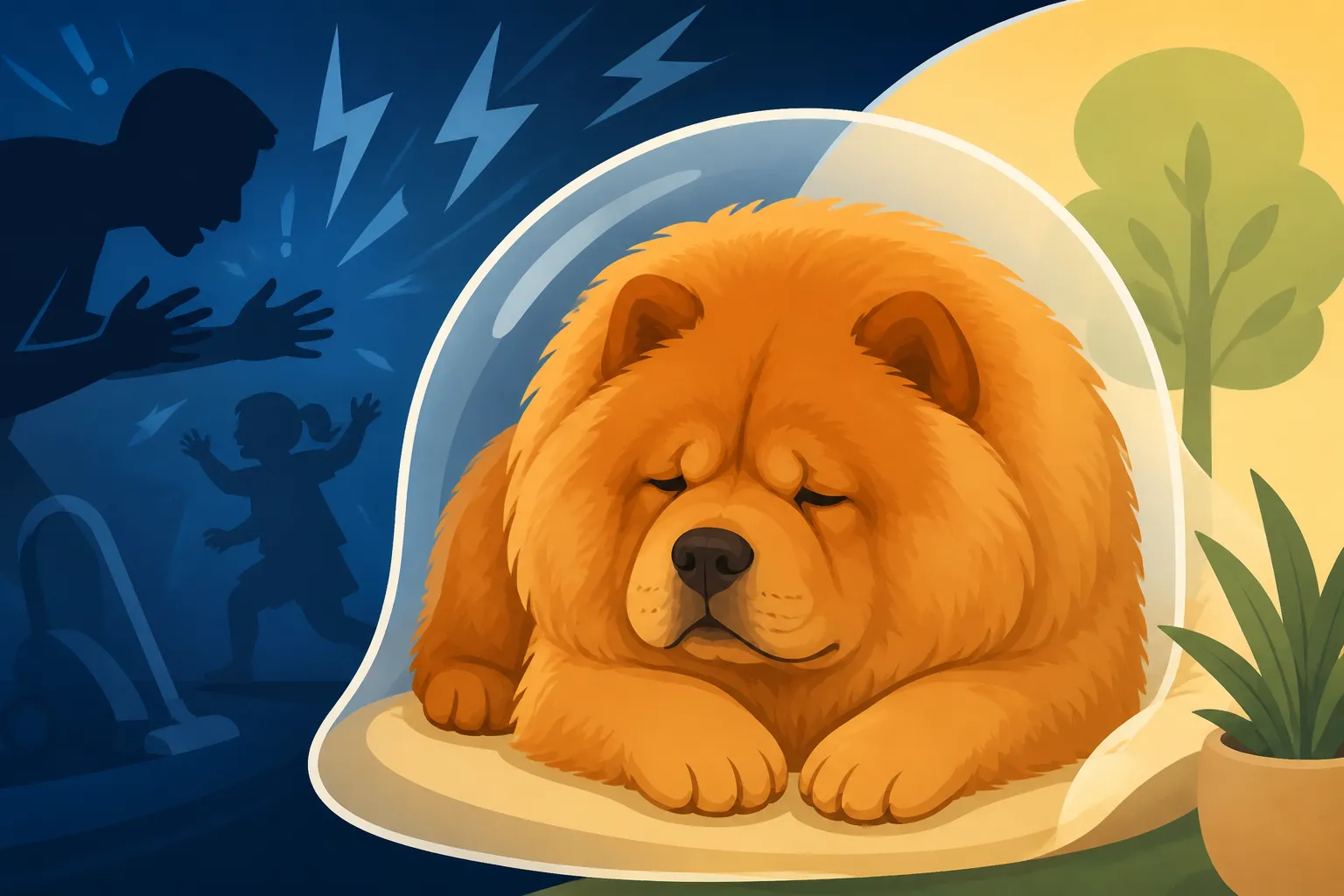
- Quiet Space: Ensure your Chow has a designated "safe space" where they can retreat when feeling overwhelmed – a comfy crate in a quiet corner, a dog bed under a desk, or a specific room that is off-limits to excessive human activity.
- Minimize Unexpected Intrusions: Teach family members and guests how to approach your Chow respectfully, avoiding sudden movements or over-the-top greetings. This is especially important for children, who might need guidance on how to interact with a reserved dog.
By minimizing unexpected stressors and providing a consistent, calm environment, you reduce the overall baseline stress levels, making your Chow less likely to feel the need to shut down.
Gradual Exposure and Desensitization
When introducing your Chow Chow to new experiences, places, or people, a slow, methodical approach using gradual exposure and desensitization is vital. Rushing them into overwhelming situations is a surefire way to trigger a shutdown.
Start small and keep it positive. If your Chow is wary of strangers, for example, begin by having a calm friend stand a good distance away, ignoring your dog. Reward your Chow for simply being present and calm. Over multiple sessions, slowly decrease the distance as long as your Chow remains comfortable, always ending before they show signs of stress. This might mean only a few minutes at a time. The goal is to create positive associations (treats, praise) with the new stimulus, at a level they can tolerate, gradually building their confidence.
Using High-Value Rewards and Short Sessions
Chow Chows aren't typically keen on endless repetition or working for generic kibble. To keep them engaged and prevent boredom or frustration that can lead to shutdown, you need to be strategic with your rewards and training duration.
- High-Value Rewards: Identify what your Chow Chow truly values. For some, it might be small pieces of cooked chicken, cheese, or hot dogs. For others, a favorite squeaky toy might be the ultimate motivator. Which Treat a Chow Chow Will Work Hardest For. Save these high-value treats exclusively for training sessions to maximize their impact. You can find a wide variety of high-value treats and training aids on platforms like Amazon, ensuring you always have something exciting to offer.
- Short, Engaging Sessions: Keep training sessions brief – often no more than 5-10 minutes for an adult Chow, even shorter for puppies. How Long a Chow Chow's Training Session Should Be. Chows bore easily with repetition, so vary your cues and make it feel like a game. End on a high note, even if it's just one successful "paw." This ensures they always leave the session feeling good about their performance and eager for the next one, rather than feeling pressured or mentally drained.
By implementing these strategies, you're not just training a dog; you're building a deeper understanding and a more resilient, trusting partnership with your unique Chow Chow.
Here's a quick comparison of approaches:
| Feature | Pressure-Based Training (Avoid) | Trust-Based Training (Recommended for Chows) |
|---|---|---|
| Approach | Forceful, coercive, dominant, physically demanding | Inviting, cooperative, patient, mentally engaging |
| Goal | Immediate compliance, submission | Voluntary participation, confidence, strong bond |
| Motivation | Avoidance of punishment, fear of consequences | Desire for reward, positive experience, enjoyment of interaction |
| Common Tools | Choke chains, prong collars, physical corrections, harsh verbal | High-value treats, clickers, praise, toys, gentle verbal cues, harness |
| Chow Chow Reaction | Shutdown, fear, reluctance, potential aggression, broken trust | Engagement, willingness, confidence, strengthened bond |
| Outcome | Short-term compliance, long-term behavioral issues, strained relationship | Lasting cooperation, happy and secure dog, strong partnership |
Disclaimer
This article is for general informational purposes only and does not constitute professional advice. Laws, prices and regulations vary by location and change over time. Consult a qualified professional for guidance on your specific situation.