Whether a Chow Chow Bonds to a Child
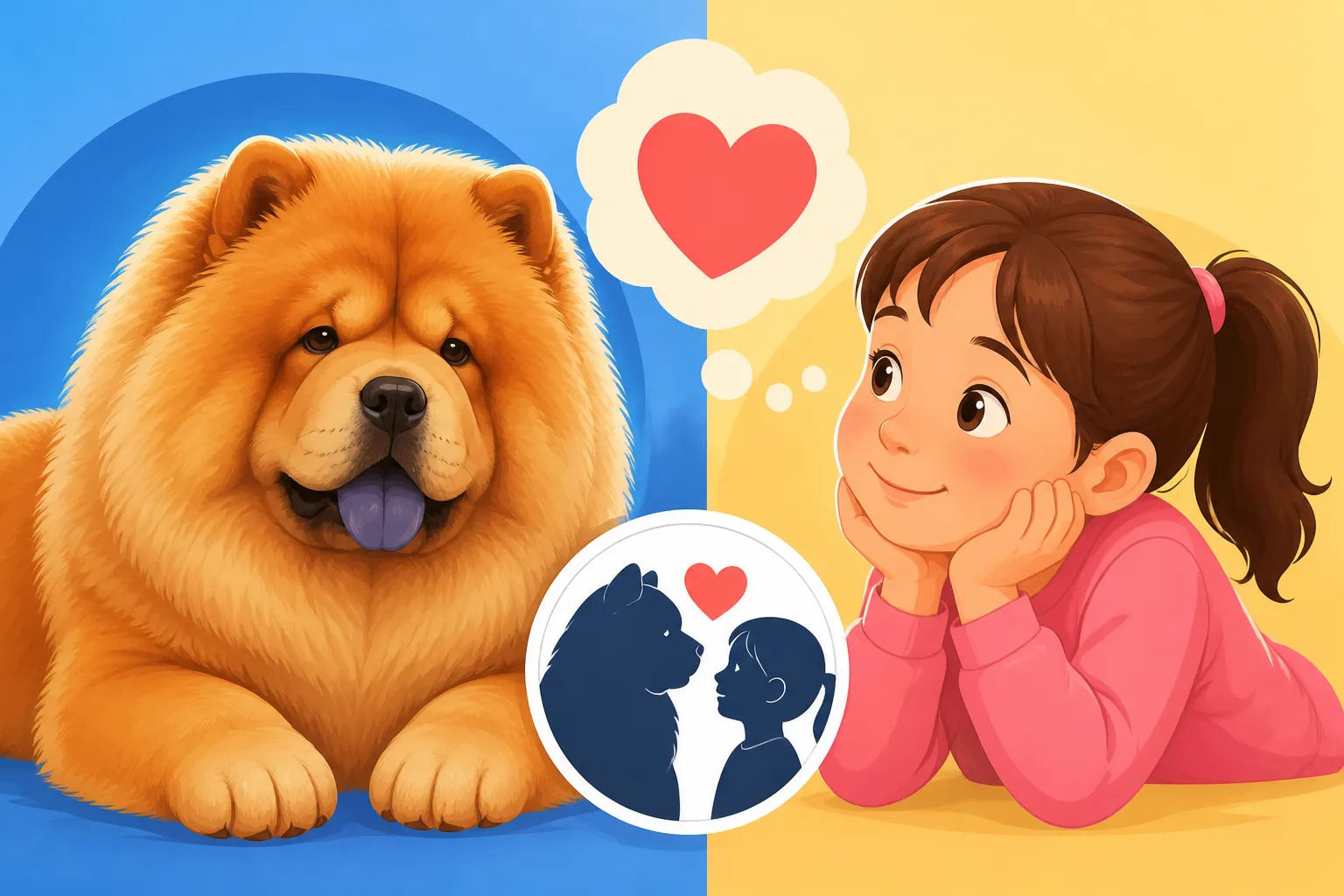
Many families dream of the idyllic scene: a child and their fluffy, devoted canine best friend, a bond that feels straight out of a storybook. But when you're considering a Chow Chow, you might be wondering if that picture is even possible, especially given their well-known reputation for independence and sometimes a reserved nature. It's a valid concern for any parent or prospective Chow Chow owner. This guide will dive deep into the unique way Chow Chows form connections, particularly with the youngest members of the family, offering realistic expectations and actionable advice for fostering a safe, respectful, and potentially loving relationship between your Chow Chow and your child.
The Chow Chow's Unique Bonding Style
Chow Chows aren't your typical golden retrievers who greet everyone with a wagging tail and an invitation to play. They are a dignified, ancient breed with a distinct personality that often surprises first-time owners. Understanding this inherent nature is the first step in setting realistic expectations for their interactions with children. They build trust slowly and selectively, which is a crucial point when considering their role within a family, especially one with kids.
The "One-Person Dog" Myth and Reality
You've probably heard the term "one-person dog" associated with Chow Chows, and there's a good deal of truth to it, though it's not as absolute as it sounds. While a Chow Chow often forms an exceptionally deep, almost singular bond with one primary caretaker, this doesn't mean they despise or ignore everyone else in the household. It means their affection and loyalty are often directed most intensely toward that one chosen individual. For children in the family, this can sometimes feel like being second best, or even just tolerated, if they aren't the primary person.
What this looks like in practice is that your Chow might follow you, the chosen one, from room to room, but simply observe the children from a comfortable distance. They might seek you out for quiet moments of connection, perhaps a head nudge or a lean, but not necessarily offer the same unsolicited affection to a child. The bond they form with a child might be more akin to respectful coexistence or a quiet acknowledgment, rather than boisterous playmates. It's not a slight, it's just their way. For more on this, you might find Why a Chow Chow Picks One Person insightful.
Affection on Their Own Terms
Chow Chows are affectionate, but on their own terms. They aren't dogs that typically revel in prolonged petting, boisterous cuddles, or unsolicited hugs. Their demonstrations of affection are often subtle: a soft gaze, a quiet presence in the same room, a gentle nudge of their head against your leg, or even just tolerating your presence nearby. This can be a challenge for children who naturally want to express their love for a dog through physical interaction, hugging, or vigorous petting.
A child's innocent attempt to hug a Chow Chow, or pull on its fur, might be met with a stiff body, a low growl, or even a snap if the dog feels cornered or uncomfortable. It's not aggression borne of malice, but a clear communication of their boundaries. They value their personal space immensely. Teaching children to respect this nuanced form of affection is paramount, and it requires constant supervision and guidance from adults. It's about teaching kids to read these subtle cues and understand that a Chow's love isn't always demonstrated with a wagging tail and licks. You can learn more about their general demeanor in How Affectionate a Chow Chow Is and How Aloof a Chow Chow Really Is.
The Chow Chow's Natural Wariness
Beyond their independent streak, Chow Chows possess a natural wariness towards strangers and novel situations. This innate caution extends to new people entering their home, and sometimes, even to the unpredictable movements and loud noises of children. They are excellent guard dogs, always observant, but this protective instinct can also manifest as suspicion. For a child, especially a visiting one or one they haven't grown up with, this wariness can be misinterpreted or even intimidating.
Their deep-set eyes, which are characteristic of the breed, can also limit their peripheral vision, making them easily startled if approached from behind or from the side without warning. This is a crucial factor when children are running around or approaching the dog unexpectedly. A startled Chow Chow might react defensively out of instinct. Understanding Why a Chow Chow Snaps at Someone It Did Not See can help parents teach children to always approach a Chow Chow calmly and from the front, allowing the dog to acknowledge their presence before any interaction.
Factors Influencing a Chow Chow-Child Bond
While a Chow Chow's personality traits present unique considerations, a positive relationship with a child isn't impossible. Several key factors heavily influence the strength and safety of this bond, and proactive measures from the very beginning can make all the difference.
Early Socialization and Exposure
The single most critical factor in shaping a Chow Chow's temperament around children is early and consistent socialization. This period, roughly from 3 to 16 weeks of age, is a crucial window for puppies to learn about the world around them. Exposure to a variety of sights, sounds, people, and experiences during this time helps them develop into well-adjusted adults. For a Chow Chow, whose natural inclination can be wary, this early work is non-negotiable.
If a Chow Chow puppy is raised in a home with respectful, well-behaved children from a young age, and these interactions are consistently positive and supervised, the puppy learns that children are a normal, non-threatening part of its environment. This doesn't mean letting kids run riot with the puppy; it means controlled, positive exposures. For example, a child can offer a high-value treat to a calmly sitting puppy, or gently pet the puppy while it's resting quietly with an adult. Programs like BAXTER & Bella offer excellent guidance on structured puppy socialization that considers a family environment. You can find more detailed advice on this in The Weeks That Matter Most for a Chow Chow Puppy and How Much Socialization a Chow Chow Puppy Needs.
The Child's Age and Temperament
The age and temperament of the child play an enormous role in the potential for a positive relationship. Toddlers and very young children, typically under the age of five or six, often lack the impulse control, understanding of canine body language, and gentleness required to safely interact with a Chow Chow. Their unpredictable movements, loud shrieks, tendency to grab, and inability to respect personal space can easily overwhelm or startle a reserved Chow Chow, leading to defensive reactions.
Older children, generally those aged seven and up, are more capable of understanding and following rules. They can learn to approach the dog calmly, understand its subtle cues, and engage in appropriate play. For example, they can learn to toss a toy instead of wrestling, or offer a treat with an open palm. It's a fundamental difference between a child trying to climb on a dog and a child gently brushing its coat. The calmer, more respectful the child, the higher the likelihood of a Chow Chow tolerating, and perhaps even enjoying, their presence. The article How a Chow Chow Tolerates a Toddler offers further insights into the challenges with very young children.
Consistent Training and Supervision
No matter how well socialized your Chow Chow is, or how well-behaved your children are, consistent training and unwavering supervision are the pillars of a safe household. Chow Chows need clear boundaries and consistent reinforcement from all family members, including children, about what is acceptable behavior. This means everyone understanding cues like "leave it" or "place," and respecting the dog's personal space.
Supervision isn't just about preventing negative interactions; it's about facilitating positive ones. Adults should always be present when children and the Chow Chow are together, actively guiding interactions. This means ensuring the dog has a safe retreat, like a crate or a separate room, where it can go to escape any overwhelming attention. Investing in sturdy baby gates, readily available on Amazon, can help create physical barriers and safe zones within the home. This kind of diligent management is key to preventing accidents and building a foundation of trust. Understanding Why a Chow Chow Ignores a Cue It Knows can highlight the importance of consistent training methods for this independent breed.
Strategies for Fostering a Safe and Positive Relationship
Creating a harmonious home where your Chow Chow and children coexist happily requires intentional effort. It's less about letting things happen naturally and more about carefully orchestrating interactions and teaching everyone, canine and human alike, how to behave.
Teaching Children How to Interact
This is perhaps the most crucial strategy. Children need explicit lessons on how to safely and respectfully interact with any dog, especially a Chow Chow. These lessons should cover:
- Calm Approaches: Always approach the dog slowly and from the front, allowing it to see and acknowledge them. No running, shouting, or sudden movements.
- Reading Body Language: Teach them to look for signs of comfort (relaxed body, soft eyes, gentle tail wag, if any) versus discomfort (stiff body, lip licking, yawning, looking away, whale eye, low growl). Understanding Signs a Chow Chow Is Uncomfortable is vital.
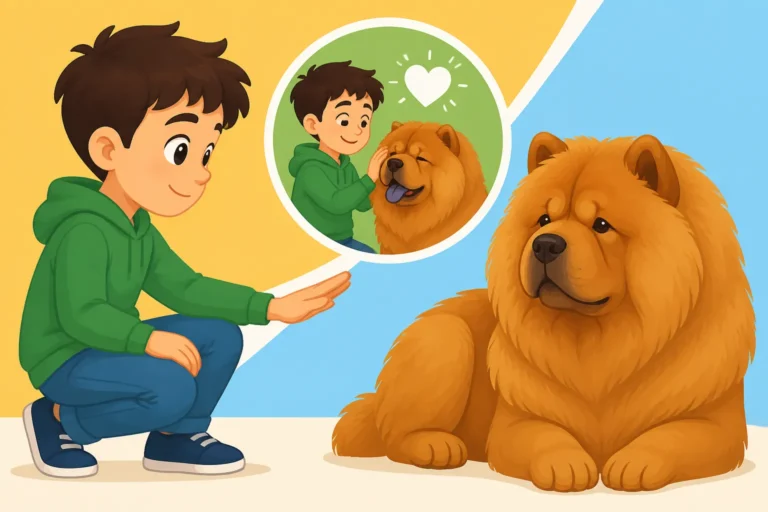
- The "Petting Consent Test": Encourage children to offer a hand for the dog to sniff. If the dog leans in or nudges, they can offer a gentle stroke on the chest or shoulder. If the dog pulls away or ignores, it means "no thank you." Never force interaction.
- Respecting Space: Teach children that the dog's crate, bed, or eating area is a private space where they should never be disturbed.
- Gentle Hands: Emphasize gentle petting, avoiding the face, ears, tail, and feet, which many Chows find intrusive.
- No Hugging: Explain that dogs don't understand hugs the way humans do and can feel trapped, leading to defensive reactions.
These rules need to be practiced repeatedly and consistently reinforced by adults. How to Teach a Child to Approach a Chow Chow provides more specific techniques for this training.
Creating Positive Associations
Every interaction between your Chow Chow and your child should ideally be a positive one for the dog. This means pairing the child's presence with something enjoyable for the Chow. For instance:
- Treat Delivery: Have the child, under adult supervision, toss a high-value treat to the Chow Chow when it is calmly lying down or ignoring them. This teaches the Chow that "children = good things." A variety of tasty training treats can be easily found on Amazon.
- Quiet Play: Engage the Chow Chow in a favorite game, like fetching a soft toy, while the child is quietly present in the same room. This helps the dog associate the child's presence with enjoyable, low-key activities.
- Walks Together: If the Chow Chow is comfortable with it, short, calm walks with the child walking respectfully a short distance away can build positive shared experiences.
The goal is to build up a bank of positive experiences, so the Chow Chow views the child's presence not as a threat or an annoyance, but as a neutral or even pleasant event.
Structured Interactions and Safe Spaces
Structure is your best friend when managing Chow Chow-child interactions. This means avoiding free-for-all play sessions and instead carefully planning when and how they interact.
| Interaction Do's | Interaction Don'ts |
|---|---|
| Always Supervise | Leave them alone, even "just for a minute" |
| Teach Calm Greetings | Allow children to rush or grab the dog |
| Provide Escape Routes | Corner the dog or block its retreat |
| Use Positive Reinforcement | Punish the Chow for growling (it's a warning) |
| Teach Respectful Petting | Allow children to hug or lie on the dog |
| Involve Children in Care | Let children tease or bother the dog |
| Create Safe Zones | Allow children to disturb the dog while eating or sleeping |
Creating safe spaces for your Chow Chow is non-negotiable. This could be a crate in a quiet room, a dog bed behind a baby gate, or simply a room where children are not allowed when the dog is there. This gives the Chow Chow a sanctuary where it knows it won't be bothered and can truly relax. If your Chow Chow is particularly sensitive, a structured training program can be invaluable. Online resources like BAXTER & Bella can help establish these routines and boundaries effectively from the start.
Recognizing and Respecting Boundaries
Ultimately, the success of a Chow Chow-child relationship hinges on everyone, especially the adults, being able to recognize and respect the Chow Chow's boundaries. Ignoring these cues can lead to serious consequences.
Understanding Chow Chow Body Language
Chow Chows are not effusive in their communication. Their facial expressions can often be misinterpreted due to their unique "scowl" and deep-set eyes, and their body language can be subtle. Unlike some breeds that give obvious warnings, a Chow Chow might go from appearing calm to snapping with very little overt signal in between. This means you need to be highly attuned to their quiet cues.
Look for signs like:
- Stiffening: The dog's body becomes rigid.
- Lip Licking or Yawning: Often a sign of stress.
- Turning Away: The dog tries to disengage.
- Whale Eye: You see the whites of the eyes.
- Freezing: The dog stops all movement.
- Low Growl: A clear, albeit subtle, warning.
- Elevated Tail (if not normally high): Can indicate tension.
Parents must be vigilant in spotting these early signals and intervening immediately to separate the child and dog. Teaching children How to Read a Chow Chow's Face and understanding that Why a Chow Chow Gives Little Warning can be critical.
Giving the Chow Chow Space
Perhaps the most important boundary to establish is the Chow Chow's right to personal space and quiet. They are not dogs that thrive on constant interaction or being the center of attention. They appreciate calm, predictability, and the freedom to retreat when they feel overwhelmed. This means actively managing the environment to ensure the dog always has an escape route and a peaceful place to rest.
If your Chow Chow is sleeping, eating, or chewing on a toy, they should be left undisturbed. Children, even with the best intentions, often struggle with this concept. It's up to the adults to enforce these rules without exception. This might mean having separate playtimes for the dog and children, using gates to keep them apart at certain times of the day, or always having the Chow Chow on a leash when children are visiting.
When to Seek Professional Help
If you're finding it challenging to manage your Chow Chow's interactions with children, or if you're observing concerning behaviors like consistent growling, snapping, or avoidance, do not hesitate to seek professional help. A certified professional dog trainer or a veterinary behaviorist experienced with Chow Chows and dog-child dynamics can provide invaluable guidance.
They can assess the specific situation in your home, help you understand your dog's motivations, and develop a tailored management and training plan. This isn't a sign of failure; it's a responsible choice that prioritizes the safety and well-being of both your child and your dog. Sometimes, an outside perspective and expert advice are exactly what's needed to bridge the gap and ensure a peaceful coexistence.
Ultimately, while a Chow Chow may not bond with a child in the same effusive way some other breeds do, a relationship built on mutual respect, clear boundaries, and consistent, positive guidance can certainly flourish. It requires understanding the Chow Chow's unique personality and a commitment from all adults in the household to create a safe and predictable environment for everyone.
Disclaimer
This article is for general informational purposes only and does not constitute professional advice. Laws, prices and regulations vary by location and change over time. Consult a qualified professional for guidance on your specific situation.