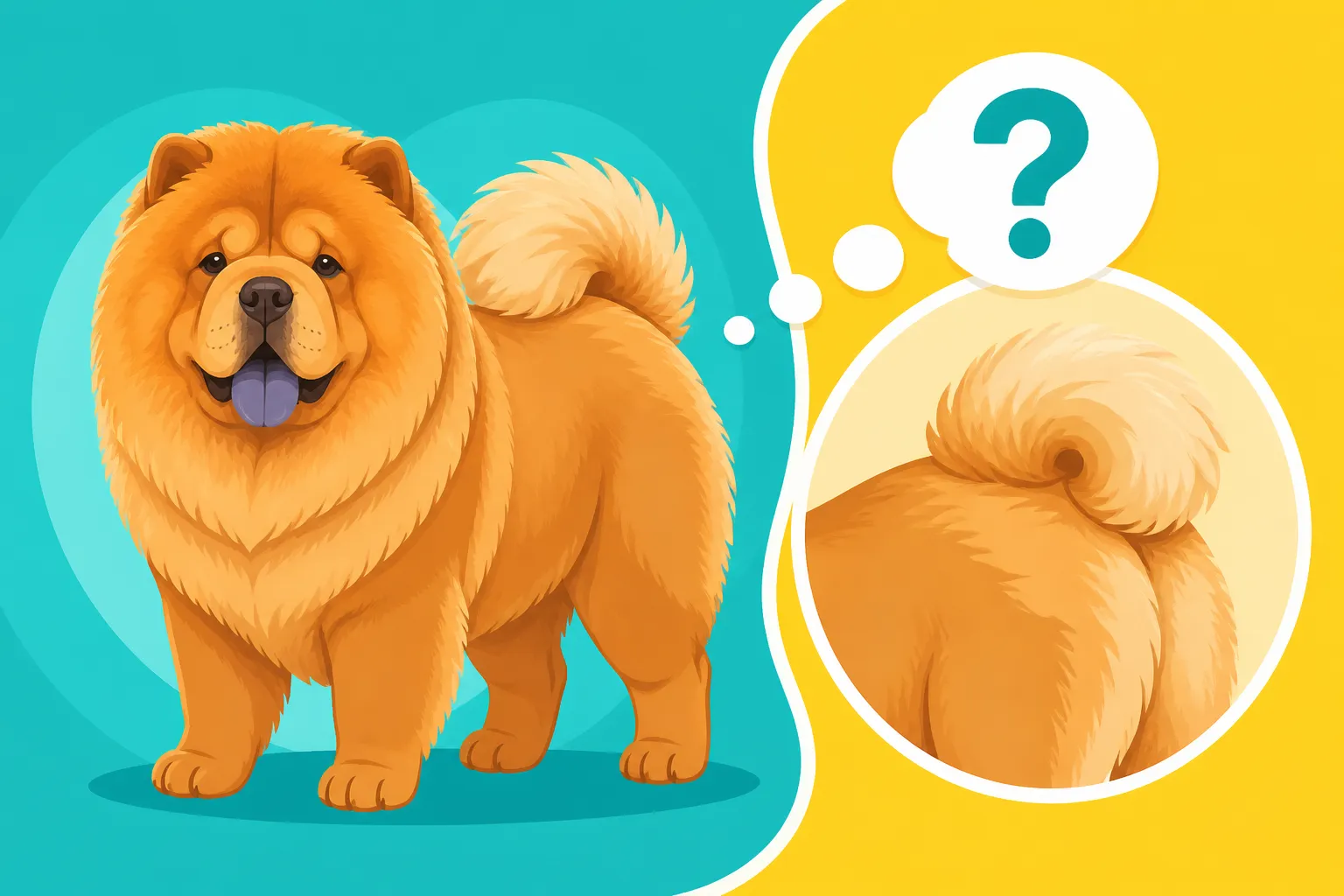
Whether a Chow Chow’s Tail Tells You Anything
It’s a common frustration for Chow Chow owners, isn't it? You watch other dogs with their expressive tails, wagging joyfully, tucked nervously, or held high in alert confidence. Then you look at your Chow, whose tail is perpetually curled in a beautiful, fluffy arc over their back, and you wonder: Does that tail ever actually tell me anything? The truth is, when it comes to reading your Chow Chow, their tail is probably the least communicative part of their entire body. This guide will help you understand why your Chow's tail offers so few clues, and more importantly, what other, more reliable body language signals you should be focusing on instead to truly understand your majestic companion.
The Unique Chow Chow Tail Carriage
One of the most defining characteristics of a Chow Chow, right up there with their lion-like mane and blue-black tongue, is that glorious tail. It's a hallmark of the breed, contributing significantly to their distinctive silhouette. But what makes it so different, and why does this difference impact how we interpret their feelings?
Why the Tail Curls Over the Back
From the moment they are born, a Chow Chow’s tail is destined for that tight, elegant curl. It's a genetic trait, deeply ingrained in the breed standard. Unlike many other breeds where the tail might hang low, be carried saber-like, or have a natural, relaxed arc, the Chow Chow's tail springs directly from the spine and curls tightly, often touching or even resting against their back. This isn't just a stylistic choice by breeders; it’s a fundamental part of their physical makeup, linked to centuries of breeding for specific physical characteristics. It’s part of what gives them that regal, almost aloof appearance that we Chow lovers find so captivating.
This high, tight carriage means there's simply not a lot of slack or flexibility for the kind of broad, sweeping movements you see in a Golden Retriever or a Labrador. Imagine trying to use a perfectly coiled spring to signal "hello" with a wide wave – it's just not designed for it. The muscles and bone structure are configured to maintain that curl, not to allow for a huge range of motion. So, while other dogs might be able to drop their tail low in submission, tuck it between their legs in fear, or wag it furiously at mid-level in excitement, a Chow Chow’s tail is largely stuck in its characteristic position. This inherent structural limitation means that many of the typical canine tail signals simply aren't available to them, or at least, not in a way that's easily discernible to the untrained eye.
How the Tail Structure Affects Expression
Because the tail is so tightly curled and carried high, its ability to convey nuanced emotion is severely hampered. Think of it this way: a human face has dozens of muscles that allow for a vast spectrum of expressions, from a subtle smirk to wide-eyed surprise. Now imagine if half of those muscles were permanently contracted into a fixed smile. You'd struggle to tell if that person was genuinely happy, slightly annoyed, or just trying to be polite. The Chow Chow’s tail operates under similar constraints.
A slight relaxation of the curl might indicate a tiny bit more comfort, or perhaps a firmer curl could mean increased alertness, but these are incredibly subtle cues that are almost impossible to differentiate reliably. You won't see the rapid, wide swings of excitement, or the low, subtle swishes of apprehension. The tail's position is largely fixed, making it a very poor indicator of your Chow Chow's internal state. This can be particularly frustrating for new Chow owners who are used to reading dogs based on these common signals. It's crucial to understand that this isn't because your Chow is unemotional; it's purely a physical limitation of their unique breed standard. Why a Chow Chow Moves With a Stilted Gait is another example of a physical trait impacting their expression.
What a Tail Doesn't Tell You About a Chow Chow
Given their unique tail structure, trying to interpret a Chow Chow's mood solely through its tail is often a futile, and sometimes even misleading, exercise. What might be a clear signal in another breed can be completely absent or misinterpreted in a Chow.
Beyond the Wag: Misinterpreting a Curled Tail
For many dog owners, a wagging tail equals a friendly dog. This is a deeply ingrained assumption, but it’s a dangerous oversimplification for any breed, and especially so for a Chow Chow. Even in breeds with expressive tails, the type of wag – its speed, height, and sweep – can convey different meanings, from happy greeting to high arousal or even pre-aggression. With a Chow Chow, this entire spectrum of tail movement is largely condensed into a fixed, high curl.
You might see a slight vibration or a very small, stiff movement of the tail, still held high and curled. This isn't the loose, joyful wag of a friendly golden retriever. It's more often a sign of alertness, interest, or even increasing tension, rather than an invitation for interaction. Because the tail is already "up," it lacks the capacity to be raised further as a sign of dominance or lowered as a sign of submission, making it difficult to gauge social signals from dogs and humans alike. Relying on the general assumption of "tail wag = friendly" could lead to a serious misunderstanding with a Chow Chow, who might be signaling something entirely different with other, more subtle cues. Why a Chow Chow Gives Little Warning is a critical factor here, as their tail won't fill in the blanks.
The Limitations of Tail-Gazing for Chow Owners
It’s easy to feel a bit lost when your dog doesn't communicate in the "standard" doggy way. You want to understand your companion, to know if they're happy, anxious, or just plain bored. For Chow owners, trying to decipher meaning from that curled tail is a road to nowhere. You might find yourself staring intently at it, hoping for a clue, and coming away more confused than before. This isn't your fault, nor is it your Chow's. It's simply a characteristic of the breed that requires a different approach to communication.
Instead of agonizing over the tail, you need to shift your focus entirely. Think of it as learning a completely different language. Instead of a verbose tail, your Chow Chow uses a vocabulary of subtle facial cues, body tension, and vocalizations. This shift in perspective is not just helpful for understanding your dog; it's essential for their safety and the safety of others. Because people often misinterpret the Chow's stoic demeanor and lack of a traditional "friendly" tail wag, they might approach a Chow Chow incorrectly, leading to misunderstandings. By learning the actual signals your Chow uses, you become their best advocate and interpreter. The Chow Chow Bonds to One Person and Tolerates the Rest, meaning their true feelings are often reserved for you to understand.
Other Body Language Cues to Watch For Instead
Since the tail is a non-starter for communication, where should your attention go? The good news is that Chow Chows communicate volumes – you just need to know how to read the rest of their unique body language.
Reading the Eyes and Face
The Chow Chow's face, despite its often "scowling" appearance, is incredibly expressive once you learn its nuances. Their deep-set eyes, which are a breed characteristic and can sometimes limit their peripheral vision Why a Chow Chow's Deep Set Eye Limits Its Vision, are key. A Chow Chow's eyes can range from soft and almond-shaped when relaxed to hard, direct, and narrowed when feeling threatened or challenging. Look for:
- Eye Contact: Is it soft and fleeting, or hard and prolonged? Prolonged, unwavering eye contact from a Chow is often a warning sign, not an invitation.
- Pupil Dilation: While subtle, dilated pupils can indicate fear or excitement.
- Ears: Although small and rounded, their ears still move. Forward-pointing ears indicate alertness and interest, while ears flattened slightly to the head can signal discomfort or a desire to avoid conflict.
- Mouth: A closed, tight mouth with tense lips can indicate stress or displeasure. A slightly open mouth with relaxed jowls suggests contentment. Watch for lip licking, yawning, or showing teeth (a clear warning sign).
- Forehead: The wrinkles on their forehead can deepen or smooth out, indicating different emotional states. A furrowed brow, combined with a hard stare, is a powerful signal.
Learning to read these subtle shifts in their facial muscles and eye expression is far more insightful than any tail movement. It allows you to anticipate their mood and react appropriately, whether it's giving them space or engaging in playful interaction. How to Read a Chow Chow's Face offers even more detail on this critical skill.
The Importance of Overall Body Posture
Beyond the face, your Chow Chow's entire body will provide a wealth of information. Unlike many breeds that might "dance" with excitement, a Chow's posture tends to be more deliberate and subtle. This means you need to pay close attention to the smallest changes.
- Relaxed vs. Stiff: A truly relaxed Chow will have a soft body, with their weight evenly distributed. When they become tense or uncomfortable, their body will stiffen, their muscles might appear rigid, and their stance might become more upright and formal. This subtle stiffening is a major warning sign.
- Weight Distribution: A Chow Chow leaning slightly away from something or shifting their weight to their rear can indicate a desire to retreat or create distance. Conversely, leaning forward with a rigid posture suggests readiness to engage, which could be positive or negative depending on the context.
- Movement: While their gait is naturally a bit stilted, watch for changes. Are they moving smoothly, or is there a hesitant, jerky quality to their steps? Are they freezing entirely? A sudden stillness, often accompanied by a hard stare, is a significant indicator of discomfort or impending action. Signs a Chow Chow Is Uncomfortable are crucial to learn for their safety and yours.
By observing these full-body signals, you can get a much clearer picture of your Chow's comfort level and intentions. These cues are often precursors to action, giving you valuable time to intervene or adjust the situation.
Voice and Movement Signals
While Chow Chows aren't typically known for being overly vocal, their barks, growls, and even subtle grumbles are definitive communication signals.
- Vocalizations: Pay attention to the type of bark. Is it a deep, resonant warning bark? A softer, questioning "woof"? Or a sharp, sudden bark that indicates surprise or alarm? Growls are clear warning signs and should always be heeded immediately. How Much a Chow Chow Barks can vary by individual, but the context is always key. Even a low rumble deep in their chest, barely audible, can signify displeasure.
- Head Tilts and Turns: A slight head tilt can indicate curiosity. Turning their head away, or even turning their entire body away, is a classic appeasement gesture, signaling "I don't want trouble" or "Please don't approach."
- Lip Licking and Yawning: In a stressful context, these aren't signs of hunger or tiredness; they're displacement behaviors that signal stress or anxiety. Your Chow is trying to calm themselves or defuse the situation.
- Piloerection (Hair Standing Up): While less common than in some other breeds, if the hair on your Chow's back or neck stands up, it's a clear sign of arousal – whether fear, excitement, or aggression. This is an undeniable signal that they are highly stimulated.
All these cues, when read in combination, provide a rich tapestry of communication that is far more reliable than anything their tail could ever hope to convey. It takes practice and keen observation, but it's a skill every Chow Chow owner absolutely must develop.
| Body Language Cue | What to Look For | Potential Interpretation (General) |
|---|---|---|
| Eyes | Soft, almond shape | Relaxed, content, comfortable |
| Hard, direct stare, narrowed | Alert, challenging, wary, uncomfortable | |
| Pupil dilation (subtle) | Fear, high arousal, excitement | |
| Ears | Forward-pointing, attentive | Alert, interested, engaged |
| Flattened slightly back | Discomfort, appeasement, avoidance | |
| Mouth | Slightly open, relaxed jowls | Content, comfortable, mild pant |
| Closed, tight lips, tense | Stress, displeasure, warning | |
| Lip licking, yawning | Stress, anxiety, appeasement | |
| Teeth bared, snarling | Clear warning, aggression | |
| Body Posture | Soft, even weight distribution | Relaxed, comfortable |
| Stiff, rigid, leaning forward | Alert, tense, ready to engage | |
| Leaning away, turning body | Avoidance, fear, seeking distance | |
| Freezing, sudden stillness | High alert, potential for reaction | |
| Vocalizations | Soft woofs, contented grumbles | Happy, seeking attention |
| Deep, resonant barks, growls | Warning, territorial, fear | |
| Sharp, sudden barks | Surprise, alarm, attention-seeking | |
| Other | Piloerection (hackles up) | Arousal, fear, aggression |
Why Understanding is Critical for a Chow Chow's Safety
Mastering the art of reading your Chow Chow's body language beyond the tail is not just about strengthening your bond; it's a vital component of responsible ownership that ensures the safety and well-being of your dog and those around them.
Preventing Misunderstandings with Strangers
Chow Chows often have a dignified, somewhat inscrutable expression, which can be misread by people who aren't familiar with the breed. Combined with their "non-expressive" tail, this can lead to dangerous assumptions. A stranger might see a Chow sitting calmly with its tail curled high and interpret it as an invitation for a pet, especially if they are used to more overtly friendly breeds. However, that calm demeanor could be a sign of wary observation, and an unsolicited approach could be met with a swift, unwelcome reaction. How to Introduce a Chow Chow to a Stranger carefully is essential.
As an owner, you become your Chow Chow's primary interpreter and protector. You need to be vigilant, advocating for your dog by managing interactions and educating others. This might mean verbally warning people not to approach, or physically creating distance when you perceive your Chow is becoming uncomfortable. Never assume that because your Chow isn't growling loudly or overtly bristling that they are comfortable. Their subtle signals are often the only warning you'll get, and if you miss them, the consequences can be serious.
Building a Deeper Bond Through Better Communication
When you start to truly understand your Chow Chow's unique language, a new level of connection opens up. It’s incredibly rewarding to recognize that slight shift in their eyes, the subtle tension in their jaw, or the barely perceptible tilt of their head that tells you exactly how they’re feeling. This deeper understanding allows you to meet their needs more effectively, whether it’s providing comfort, offering a distraction, or giving them the space they require. You'll be able to proactively address situations before they escalate, preventing stress for your Chow and maintaining harmony in your home and during outings.
There are many resources available to help you hone these observation skills. Consider online dog training programs, such as those offered by BAXTER & Bella, which often emphasize understanding canine communication and building a solid foundation through positive reinforcement. Look for specialized books on canine body language on platforms like Amazon that offer detailed visual guides. The more you immerse yourself in learning how dogs communicate, particularly a breed as nuanced as the Chow Chow, the stronger and more trusting your relationship will become. Teaching a Chow Chow to Accept Being Groomed or vet visits also relies heavily on understanding their comfort levels.
Proactive Training and Socialization
Because their natural body language can be challenging for others to read, early and ongoing socialization and training are absolutely paramount for a Chow Chow. This isn't just about teaching commands; it's about exposing them to a variety of sights, sounds, people, and experiences in a controlled, positive way so they learn to cope confidently with the world around them. Why Early Socialization Decides What a Chow Chow Becomes is a pivotal article on this topic.
Focus on positive reinforcement methods that build trust and cooperation, rather than force or intimidation, which can easily backfire with a sensitive Chow. Training should include desensitization to handling, familiarization with different environments, and polite greetings (or ignoring) of strangers and other dogs. If your Chow learns that new experiences are generally positive or neutral, and that you are a reliable guide, they will be far less likely to resort to defensive behaviors. Remember, a well-adjusted Chow Chow is a happy Chow Chow, and that starts with you speaking their language, even if it doesn't involve a wagging tail.
Disclaimer
This article is for general informational purposes only and does not constitute professional advice. Laws, prices and regulations vary by location and change over time. Consult a qualified professional for guidance on your specific situation.