How Many Grooms a Chow Chow Needs a Year
Anyone who has ever lived with a Chow Chow quickly learns that their magnificent, fluffy coat isn't just for show – it's a full-time commitment. Many new owners vastly underestimate the sheer amount of grooming these beautiful dogs require, leading to frustrating battles with mats and even skin issues. This guide is here to unravel the mystery of Chow Chow grooming frequency, helping you understand exactly how many professional grooms your Chow might need in a year, and what you can do at home to keep that glorious coat healthy and happy.
The Chow Chow's Magnificent Coat: A Double-Edged Sword for Grooming
That iconic Chow Chow coat is truly a sight to behold, whether it's the regal lion's mane of a rough coat or the dense, plush look of a smooth coat. But beneath all that beauty lies a complex structure that demands consistent attention. Ignoring it isn't an option; it quickly leads to discomfort for your dog and a much bigger headache for you.
Decoding the Double Coat: Rough vs. Smooth
Every Chow Chow boasts a double coat, a marvelous natural insulation system that served their ancestors well in harsh climates. This coat consists of two distinct layers:
- The Outer Coat: These are the guard hairs – longer, coarser, and somewhat stiffer hairs that protect the Chow from the elements. They repel water and dirt and give the coat its overall shape and texture.
- The Undercoat: This is the secret weapon! Close to the skin, you'll find an incredibly dense, soft, woolly undercoat. It's designed to trap air, providing warmth in winter and insulation against heat in summer.
While all Chows have both layers, there's a distinct difference between the "rough" and "smooth" coated varieties. The rough coat is the one most people picture: long, abundant, and standing off the body, forming a distinct ruff or mane around the head and shoulders, and heavy feathering on the legs and tail. The smooth coat, while still dense, has shorter, harder guard hairs and no significant ruff or feathering.
You might think a smooth-coated Chow would be a breeze to groom, but don't be fooled! Both coat types shed, and both require diligent care. The smooth coat might seem less prone to tangles, but its density means that if the undercoat isn't regularly brushed out, it can still pack down and create problems close to the skin. The rough coat, with its sheer volume and length, is more obviously high-maintenance when it comes to preventing mats. You can learn more about these differences in Rough or Smooth: the Two Chow Chow Coats and What Each Needs.
The Infamous "Coat Blow": When the Undercoat Explodes
Perhaps the single most challenging aspect of grooming a Chow Chow is their seasonal "coat blow," sometimes called "blowing coat." This isn't just regular shedding; it's an event. Typically, Chow Chows will shed their entire undercoat heavily twice a year, usually in spring and autumn, to prepare for the change in seasons. However, indoor Chows with climate control might shed more consistently year-round, making the "blows" less dramatic but still significant.
During a coat blow, the sheer volume of dead undercoat that detaches from the skin is astounding. It will come out in clumps, forming "tumbleweeds" of fur that float around your home. If this dead undercoat isn't thoroughly removed, it will compact against the skin, forming dense mats that pull on the skin, cause discomfort, and prevent air circulation. This lack of airflow creates a perfect breeding ground for skin irritations, hot spots, and infections. These coat blows can last several weeks, sometimes even a month or more. The Twice a Year a Chow Chow Blows Its Coat goes into more detail about this process. You'll be amazed by How Much Undercoat Comes Off a Chow Chow when you experience it for the first time!
Professional Grooming: Establishing a Core Schedule
Given the Chow Chow's unique coat, a simple wash and brush at home often isn't enough to keep them in tip-top shape. Professional groomers have the specialized tools, products, and expertise to handle such a dense coat effectively and safely.
Baseline Frequency for a Healthy Chow Chow
For most Chow Chows, a good baseline for professional grooming is every 6 to 8 weeks. This frequency helps manage shedding, prevent matting, and keep their skin healthy. A typical full professional groom for a Chow Chow involves several critical steps:
- Thorough Bathing: This isn't just a quick rinse. Professional groomers use high-quality shampoos and conditioners designed for double coats, ensuring the water penetrates all the way to the skin. They'll also use powerful dryers.
- De-shedding Treatment: This is paramount. Groomers use specific tools and techniques to thoroughly blow out and brush away the loose undercoat, which is vital for preventing mats and promoting skin health.
- Drying to the Skin: Perhaps the most crucial step, and one of the hardest to achieve at home, is drying a Chow Chow completely to the skin. Professionals use high-velocity dryers that blast air through the coat, separating the hairs and drying them quickly and thoroughly. This prevents moisture-related skin issues.
- Nail Trimming and Ear Cleaning: Essential hygiene components that are often part of a full service.
- Sanitary Trim: Trimming hair around the paws, eyes, and sanitary areas for cleanliness and comfort.
While this 6-8 week schedule is a good starting point, remember it's a living guideline. During peak shedding periods, some Chow owners opt for "de-shedding express" appointments every 3-4 weeks to help manage the coat blow, even if they don't need a full bath. What Professional Grooming Costs for a Chow Chow can give you an idea of the investment involved.
Tailoring the Schedule: Factors That Increase Frequency
Several factors can influence whether your Chow Chow needs professional grooming more or less often than the general 6-8 week recommendation:
- Lifestyle and Environment: If your Chow spends a lot of time outdoors, rolling in dirt, mud, or leaves, they'll naturally get dirtier and may require more frequent baths to keep their coat clean and free of debris that can lead to mats. Chows living in urban environments with less exposure to mud might stretch their grooms a bit longer, provided home care is diligent.
- Climate: High humidity can make a Chow Chow's coat feel heavier and more prone to tangles, especially during a coat blow. In contrast, very dry climates might lead to a drier coat, which can also require specific conditioning.
- Individual Coat Characteristics: Even within rough-coated Chows, some simply have a softer, more cottony undercoat that mats more easily than others. These Chows will undoubtedly need more frequent professional attention, or exceptionally diligent home care.
- Diet and Overall Health: A poor diet can lead to a dull, dry, or excessively greasy coat, which is harder to maintain and more prone to matting. A healthy, balanced diet, perhaps incorporating supplements like fish oil, can significantly improve coat condition. Likewise, underlying health issues can manifest in coat problems, necessitating more frequent professional care to address skin issues. High-quality dog food brands like Ollie focus on nutrition that supports overall health, including coat quality.
When the Pros Are Non-Negotiable: Managing Matting and Skin Health
Let's be blunt: matting is painful for your Chow Chow. These dense clumps of fur pull on the skin, restrict movement, and can hide a multitude of skin problems. If left unchecked, mats can become so severe that they impede circulation, cause open sores, or even harbor parasites.
If your Chow Chow develops significant matting, particularly large, dense mats close to the skin, it is absolutely essential to seek professional help. Do not attempt to cut out large mats with scissors at home. This is incredibly risky, as it's easy to accidentally cut the skin, which is often pulled up into the mat. A professional groomer has the right tools and expertise to safely and gently (or, if necessary, efficiently) remove mats. Sometimes, severe matting requires a full shave-down by a groomer, or even sedation at a veterinary clinic. Why a Groomer Charges More for a Matted Chow Chow because this work is difficult, time-consuming, and carries risks for the dog.
Furthermore, if you notice skin redness, irritation, flaky skin, or an unusual odor beneath your Chow Chow's coat, these could be signs of a skin infection or allergy. Because their coat is so dense, these issues can be easily missed until they become quite advanced. Regular professional grooms allow a trained eye to inspect the skin more closely. If skin issues are suspected, a vet visit is paramount. Pet insurance providers like Healthy Paws can be invaluable for covering unexpected vet costs associated with skin conditions, allergic reactions, or infections that might arise or be exacerbated by improper grooming.
The Daily Grind: Home Grooming as Your First Line of Defense
While professional grooms are indispensable, they are only part of the equation. Consistent, effective home grooming between appointments is absolutely non-negotiable for a Chow Chow owner. Think of professional grooms as deep cleaning, and home grooming as your daily tidying up.
The Non-Negotiable Daily/Weekly Brushing Regimen
To keep your Chow Chow's coat in good condition, you need to commit to regular brushing. For a rough-coated Chow, this often means 2-3 times a week, or even daily during a coat blow. Smooth-coated Chows might get away with once or twice a week, but still require diligence. The key is not just to skim the surface; you must brush all the way down to the skin.
The technique often recommended is line brushing. This involves parting the coat horizontally and brushing one small section at a time, from the skin out, gradually working your way across and down the dog's body. Pay extra attention to "problem areas" where mats tend to form first: behind the ears, under the armpits, on the belly, in the "britches" (the long fur on the back of the thighs), and under the collar.
- Behind the ears: These are prime spots for fine hair to tangle.
- Armpits and between legs: Constant friction here leads to mats.
- Britches: The longer, softer hair here can knot easily.
- Under the collar: Pressure and movement create friction that can cause mats.
Many new owners are shocked by How Long Brushing a Rough Chow Chow Takes, but it's time well spent to prevent painful mats and costly professional de-matting sessions. Remember, Brushing a Chow Chow's Mane Down to the Skin is the goal.
Equipping Your Home Grooming Arsenal
You can't effectively groom a Chow Chow with just any old brush. You need specific tools designed for their unique coat:
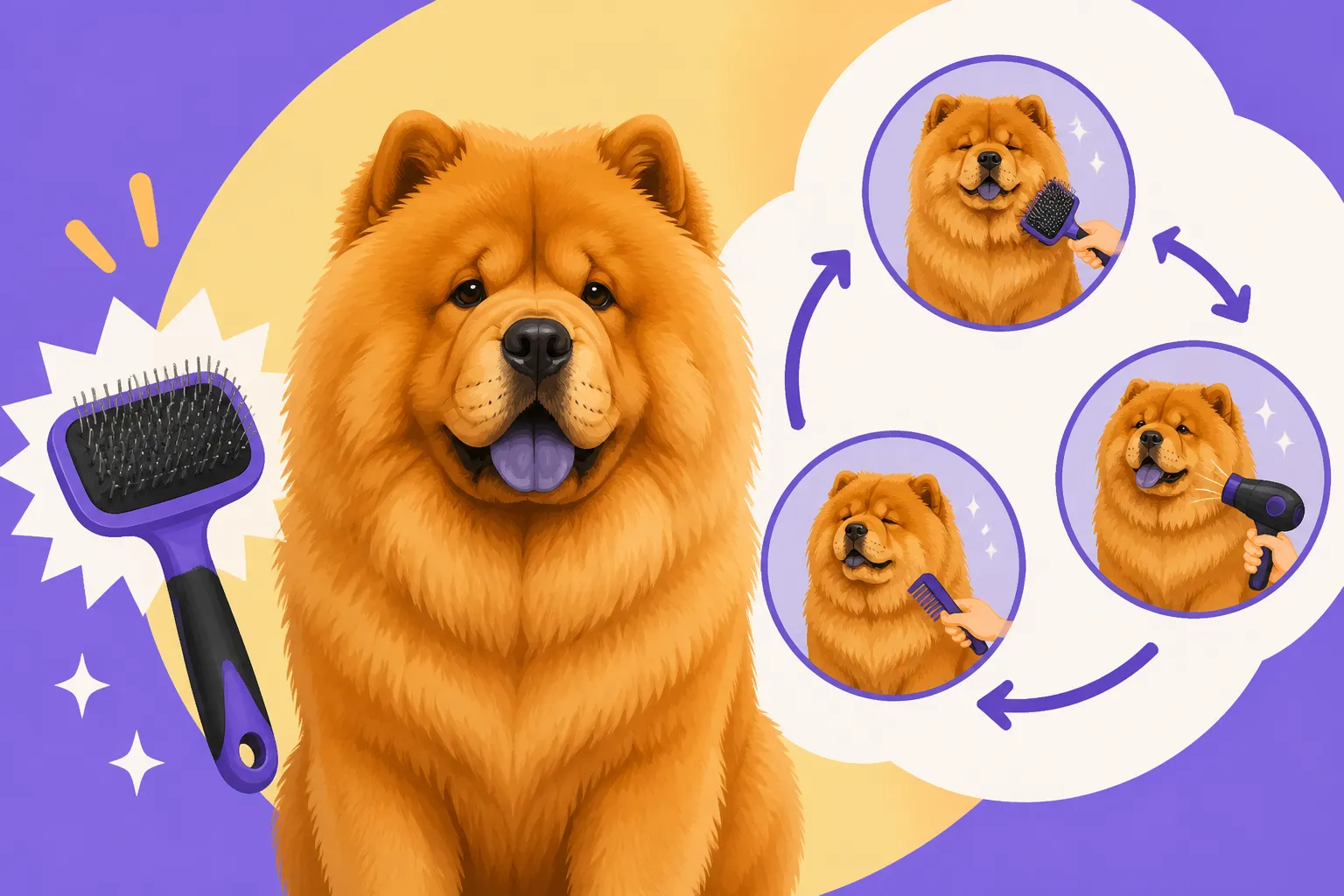
- Slicker Brush: Essential for removing loose hair and small tangles from both layers of the coat. Look for one with firm, bent wire pins.
- Undercoat Rake: This tool is your best friend during a coat blow. It has long, blunt teeth designed to reach through the guard hairs and pull out the loose undercoat without damaging the top coat. What an Undercoat Rake for a Chow Chow Costs is a worthwhile investment.
- Wide-toothed Comb: Perfect for finishing work, checking for any missed tangles, and ensuring the coat is thoroughly detangled from skin to tip.
- Nail Clippers or Dremel: Keeping nails short is crucial for their comfort and gait.
- High-Velocity Dryer: While not strictly necessary for daily brushing, this is a game-changer if you plan to bathe your Chow at home. It dramatically reduces drying time and effectively blows out loose undercoat, preventing mats from forming as the coat dries. Brands like Chewy often carry a good selection of these essential grooming tools. What a High Velocity Dryer Costs a Chow Chow Owner might seem high, but it saves so much time and effort.
Mastering the At-Home Bath and Drying Challenge
Bathing a Chow Chow at home is an undertaking, but it can be done. The challenge lies in getting the water and shampoo to penetrate their dense double coat and, more importantly, drying them completely.
- Pre-Bath Brush: Always, always thoroughly brush out your Chow before a bath. Water tightens mats, making them nearly impossible to remove once wet.
- Shampooing: Use a good quality dog shampoo designed for dense coats. Dilute it if necessary to help it spread. Work the shampoo thoroughly into the coat, ensuring it reaches the skin. This usually means multiple applications and a lot of massaging.
- Rinsing: This is where many owners fail. You must rinse until the water runs completely clear and you feel no residue. Any leftover shampoo can irritate the skin and lead to a dull coat.
- Drying: This is the most critical and time-consuming step. Towel dry vigorously to remove excess water, then use a high-velocity dryer. You must dry the coat completely to the skin. If any part of the undercoat remains damp, it can create a breeding ground for bacteria, leading to skin infections and a musty odor. This process can easily take How Long a Chow Chow Takes to Dry – sometimes 2-3 hours or more for a rough-coated Chow. Without proper drying, you risk serious skin issues. Read more on the process in Bathing and Drying a Chow Chow's Dense Coat.
Special Considerations for Chow Chow Grooming
Beyond the regular brushing and bathing, there are a few other critical points Chow Chow owners need to keep in mind to ensure their dog's well-being.
Diet's Role in Coat Health
It might not seem directly related to how many grooms a Chow needs, but diet plays a significant role in coat health. A well-nourished Chow Chow with a diet rich in essential fatty acids (like Omega-3 and Omega-6) will have a healthier, stronger coat that is generally easier to groom. Their skin will also be healthier, reducing the likelihood of dryness, flakiness, or excessive oiliness that can exacerbate matting.
Consider the quality of food you provide. Brands like Ollie prioritize fresh, human-grade ingredients that can contribute to a lustrous, manageable coat. If your Chow has a particularly dry or dull coat, or is prone to skin issues, discussing dietary supplements with your vet, such as fish oil, might be beneficial. Whether a Chow Chow Needs Fish Oil for Its Coat is a common question with good answers.
Early Introduction to Grooming
One of the greatest gifts you can give your Chow Chow is to introduce them to grooming routines from a very young age. This means gently handling their paws, ears, tail, and muzzle daily, brushing them with a soft puppy brush, and making it a positive experience with treats and praise.
Taking your Chow Chow puppy for "happy visits" to a professional groomer before their first full groom can also be incredibly beneficial. These short, positive experiences (often without a full service) help them get used to the sounds, smells, and sensations of the grooming salon, making future appointments much less stressful. A calm, cooperative Chow makes grooming easier for everyone involved and reduces the risk of injury. Teaching a Chow Chow to Be Brushed is a foundational skill that pays dividends for a lifetime. If you wait until they are older and matted, grooming becomes a battle. Whether a Chow Chow Puppy Should Visit the Groomer Early is a resounding yes!
The Dangers of Shaving a Chow Chow
Despite the temptation to shave a Chow Chow in summer to "keep them cool" or to deal with severe matting, you should almost never shave a Chow Chow. Their double coat is designed to insulate them from both cold and heat. Shaving disrupts this natural system:
- Loss of Insulation: It removes the protective outer layer and the insulating undercoat, making them more susceptible to sunburn, insect bites, and overheating.
- Coat Damage: Shaving can permanently damage the texture of the double coat. The guard hairs might grow back coarser, or the undercoat might grow back thicker and faster than the guard hairs, creating an uneven, cottony, and even more mat-prone coat. This condition is sometimes referred to as "post-clipping alopecia," where the coat simply doesn't grow back correctly, if at all. Why a Chow Chow Must Never Be Shaved is a crucial piece of Chow Chow care. While some owners might eventually see their Chow's coat return to normal, it's not a guarantee, and for many, Whether a Shaved Chow Chow's Coat Grows Back is a painful question to answer.
Instead of shaving, focus on regular, thorough de-shedding, both at home and professionally, to remove the dead undercoat that traps heat. This allows air to circulate properly through their natural coat, helping them regulate their temperature more effectively.
Final Thoughts on Chow Chow Grooming Frequency
So, how many grooms does a Chow Chow need a year? The answer is less about a magic number and more about a consistent, integrated approach. You're looking at at least 6 to 8 professional grooms annually for maintenance, with potentially more frequent de-shedding appointments during seasonal coat blows. This must be coupled with diligent weekly (or even daily) home brushing, especially focusing on line brushing to reach the undercoat and prevent mats.
It's a significant commitment of time and sometimes money, but it's vital for your Chow Chow's comfort, health, and well-being. A well-groomed Chow is a happy Chow, free from painful mats and skin irritations, able to enjoy their magnificent coat as nature intended.
| Grooming Task | Rough Coated Chow Chow | Smooth Coated Chow Chow | Importance Level |
|---|---|---|---|
| Professional Grooms | Every 6-8 weeks (minimum) | Every 8-10 weeks (minimum) | High |
| De-Shedding Sessions | Every 3-4 weeks during coat blow | Every 4-6 weeks during coat blow | Critical |
| Home Brushing | 2-3 times/week (daily during blow) | 1-2 times/week | Critical |
| At-Home Baths | Monthly to Bi-monthly (with full drying) | Monthly to Bi-monthly (with full drying) | Moderate |
| Nail Trims | Every 2-4 weeks | Every 2-4 weeks | High |
| Ear Checks/Cleaning | Weekly | Weekly | High |
Disclaimer
This article is for general informational purposes only and does not constitute professional advice. Laws, prices and regulations vary by location and change over time. Consult a qualified professional for guidance on your specific situation.