How to Teach a Child to Approach a Chow Chow
It’s a scenario many dog owners, especially those with unique breeds like the Chow Chow, have faced: a child, full of innocent curiosity, spots your fluffy companion and instinctively wants to run up and pet them. While the intention is sweet, the potential for misunderstanding—or worse, a negative interaction—is very real, particularly with a breed whose body language and temperament are often misread. This guide will help you understand the Chow Chow's particular quirks and equip you with practical, empathetic ways to teach children how to approach them safely and respectfully, ensuring a positive experience for both child and dog.
Understanding the Chow Chow's Unique Nature
Before we even begin talking about teaching children, it's crucial for us, the adults, to deeply understand the Chow Chow. These aren't your typical Golden Retrievers or Labradors, eager to greet every new face with a wagging tail. Their history, their build, and their innate personality all contribute to a distinct way they interact with the world, and by extension, with children.
Why They're Not Like Other Dogs
Chow Chows were originally bred for a variety of tasks in ancient China, from guarding temples to hunting and herding. This working heritage instilled in them a self-reliant, often serious, and highly protective nature. They are notoriously independent, carrying themselves with a dignified aloofness that can be easily misinterpreted. Unlike many modern companion breeds, a Chow Chow typically doesn't seek out constant attention or affection from strangers. They often form an incredibly deep, singular bond with one person in the family and, while they tolerate others, they rarely extend that same level of warmth or familiarity beyond their inner circle.
This means that while a child might see a fluffy, bear-like creature they want to hug, the Chow Chow sees a potential intruder into their personal space, especially if that child is unknown or boisterous. Their guarding instincts are strong, and they are not afraid to use them if they feel threatened or that their family is in danger. This isn't aggression for the sake of it; it's a deep-seated instinct to protect what's theirs.
Reading a Chow Chow's Body Language
One of the biggest challenges with Chow Chows, particularly when teaching children, is their subtle and often unreadable body language. Their dense, plush coat can obscure many of the common canine communication signals. A Chow's tail, for instance, is often curled tightly over its back, a natural breed characteristic that means it doesn't give away as much information as a loose, wagging tail on another breed.
Furthermore, their deep-set eyes and wrinkled forehead often give them a permanent "scowl" or stern expression. This isn't an indication of mood; it's just their face! A child (or even an adult) might misinterpret this as anger or unfriendliness, when in fact, the dog might be perfectly calm. Conversely, a Chow can be subtly signaling discomfort – a slight stiffening of the body, a quick flick of the tongue, a momentary gaze aversion – that is easily missed, especially by an inexperienced eye. It’s incredibly important to learn How to Read a Chow Chow's Face to understand their true feelings. Because their facial expressions can be so hard to read, we often miss the subtle warnings they might be giving before they feel they need to escalate.
The Importance of Respecting Boundaries
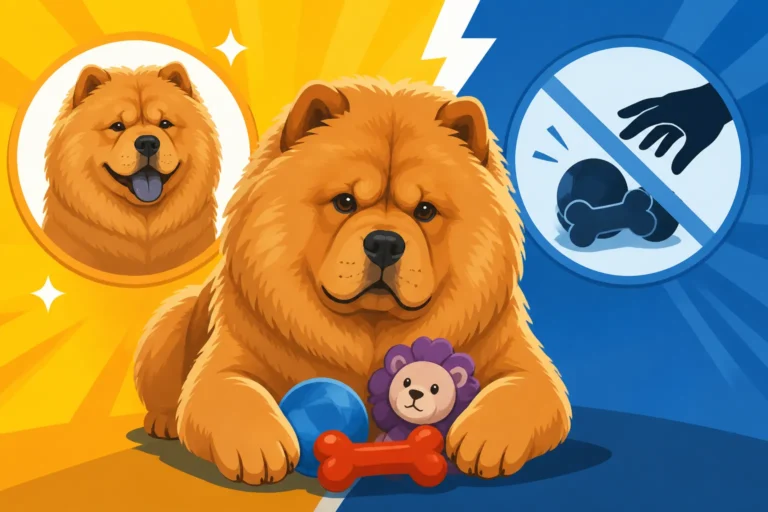
For a Chow Chow, personal space is paramount. They are not a breed that generally enjoys being fussed over by multiple people, especially not strangers. Imagine someone constantly patting your head or hugging you without asking – that’s how a Chow might perceive unsolicited advances. Forcing interaction, trying to get them to "make friends," or allowing a child to overwhelm them with attention can quickly lead to a negative experience. They aren't being "mean" by wanting their space; they are simply being true to their nature.
It’s about teaching respect, not just for the Chow Chow, but for all animals. Every dog, regardless of breed, deserves to have its boundaries acknowledged. With a Chow Chow, this respect is not just good manners; it's a safety imperative. They tend to be dogs who give very little warning before acting if their boundaries are crossed too aggressively or repeatedly ignored.
Foundational Rules for Children (and Adults!)
Establishing clear, consistent rules for how children interact with any dog, but especially a Chow Chow, is vital. These aren't just suggestions; they are non-negotiable safety protocols that should be taught early and reinforced constantly.
Always Ask First
This is the golden rule, and it applies universally. Children must understand that they never approach a dog, any dog, without first asking the owner if it's okay. And even then, the answer might be no, and that's perfectly acceptable. With a Chow Chow, this "ask first" rule gains even more weight. An owner knows their dog best and can tell if their Chow is in the right mood for even a polite, gentle interaction. If the Chow is napping, eating, or looks uncomfortable, the answer should always be no. It teaches children patience and respect for an animal’s space and feelings.
We need to teach children that a polite question is: "May I please pet your dog?" not "Can I hug your dog?" or "Can I ride your dog?" The type of interaction is important, and even if permission is given, the next steps are crucial.
Gentle, Slow Movements
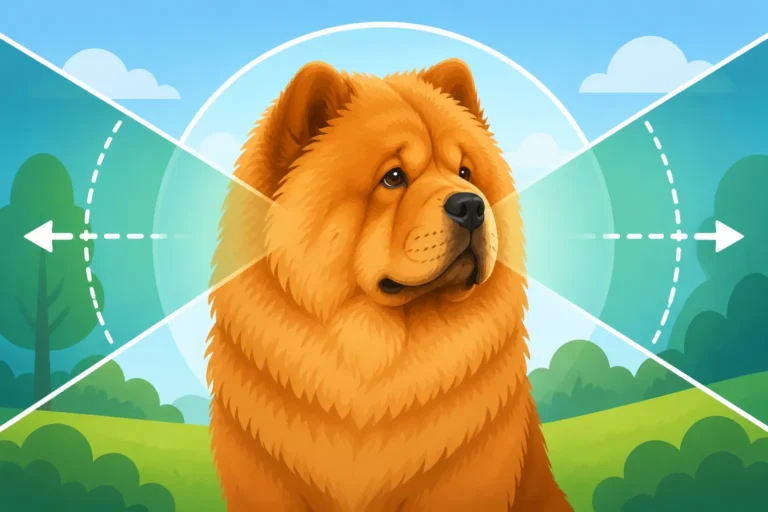
Chow Chows, with their deep-set eyes, have a limited field of vision, especially to their sides and directly behind them. This anatomical quirk means they can be easily startled by sudden movements or someone appearing unexpectedly in their blind spots. Why a Chow Chow Snaps at Someone It Did Not See is often due to this. A child running up, waving their arms, or making loud noises can easily trigger a defensive reaction.
Teaching children to move slowly and calmly around a Chow Chow is crucial. This means no running, no shouting, and no sudden gestures. It’s about being mindful of their presence and giving them time to register and process your approach. We want to avoid any action that might make the Chow feel cornered, surprised, or threatened. Think of it as approaching a wild animal; you move with respect and caution, allowing them to feel safe.
Approaching Safely, Not Head-On
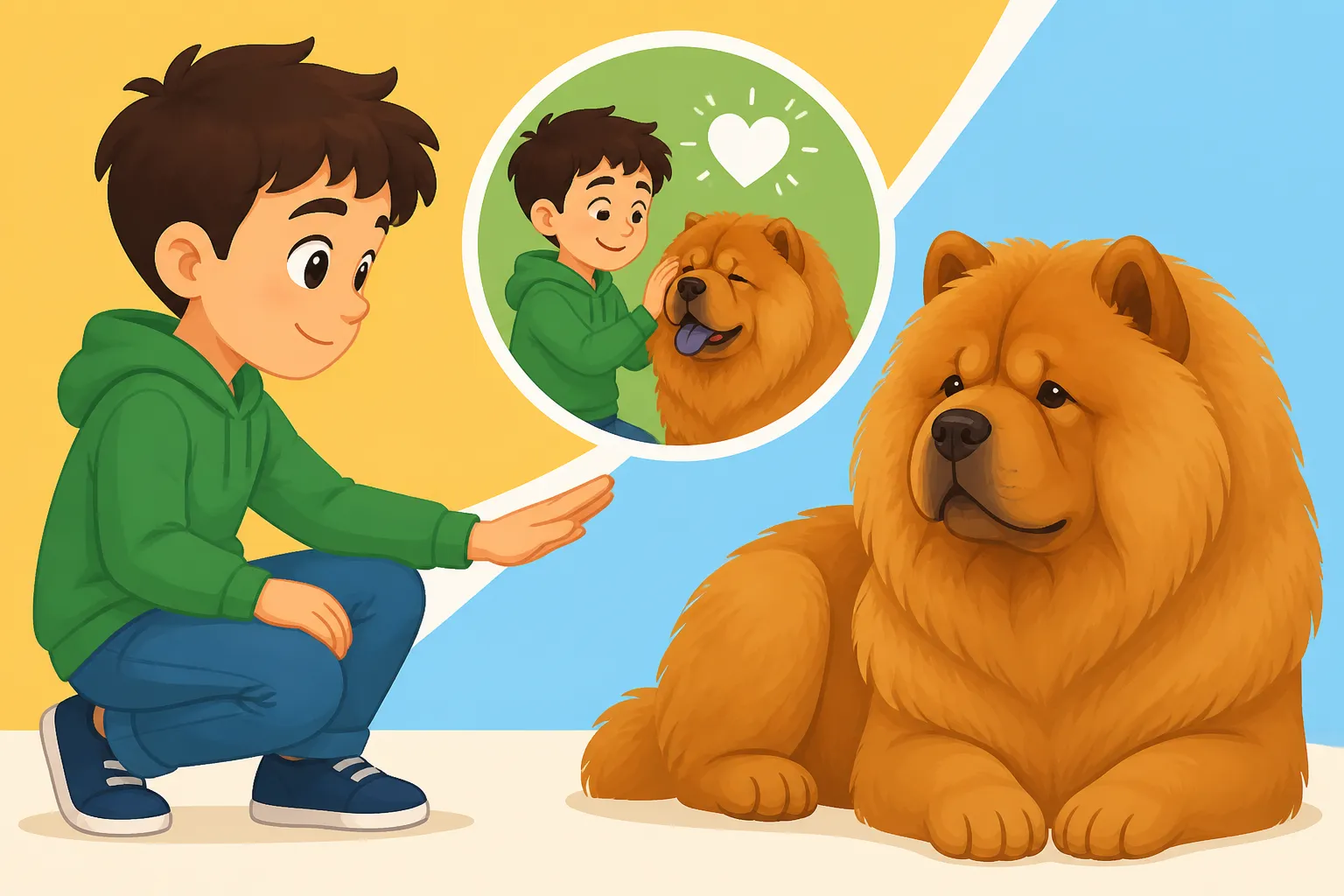
Just as important as moving slowly is how a child approaches. A direct, head-on approach can feel confrontational to many dogs, and especially to a Chow Chow with their guarding instincts. It’s better to teach children to approach a dog from the side, allowing the dog to see them clearly without feeling challenged. Think of it like walking into a room – you wouldn't typically barge straight up to someone's face without acknowledging their personal space.
Additionally, due to their limited peripheral vision, a direct approach is less likely to be perceived quickly. How Far a Chow Chow Can See to the Side is not as extensive as many other breeds, meaning they literally need to turn their head more to get a full view. An approach from the side, with the child crouching slightly to appear less imposing, can make a huge difference in how the Chow perceives the interaction. This low, sideways posture is less threatening and allows the dog to feel more in control of the situation.
Practical Steps for Teaching Children
Once the foundational rules are understood, we can move into the practical "how-to" of interaction, always emphasizing that every interaction must be supervised by an adult.
The "Tree and Rock" Method
This is a fantastic, simple method to teach children how to behave around unfamiliar or sensitive dogs.
- Be a "Tree": If a dog approaches you or seems too interested, stand still like a tree. Keep your hands clasped in front of you (like roots), look at your shoes, and be quiet. This makes you appear boring and non-threatening, signaling to the dog that you are not a playmate or a threat. Most dogs will sniff, lose interest, and move on.
- Be a "Rock": If you are on the ground and a dog approaches, curl up like a rock, tucking your head and hands in. This protects vulnerable areas and again, makes you seem uninteresting and safe.
Practicing this with children, even role-playing with a stuffed animal, can instill these safe behaviors effectively. It teaches them self-control and how to de-escalate a potentially overwhelming situation without resorting to fear-based reactions like screaming or running, which can trigger a chase response in some dogs.
The "Petting Zone" – Where and How
Once permission is granted and the child has approached calmly, it's time to teach them where and how to pet a Chow Chow.
- Where to Pet: The general rule for most dogs is to offer a hand for sniffing (knuckles first, not fingers) and then to pet on the chest, shoulder, or side of the neck. For a Chow Chow, this is particularly important. Avoid reaching directly over their head, as this can feel threatening or dominant. Many Chows dislike having their head, ears, or face touched by strangers. Also, their rear end is often a sensitive area, and they may object to their rear being touched. Focus on the areas they can see and control.
- How to Pet: Teach children to use gentle, open-hand strokes, moving in the direction of the fur. No grabbing, poking, pulling, or roughhousing. A Chow Chow, even one that accepts petting, generally appreciates calm, brief interactions. They are not typically the type to lean into endless belly rubs from anyone but their most trusted person. How much a Chow Chow wants to be petted is usually far less than what a child might want to give. Avoid hugging, as this can make a dog feel trapped and is often misinterpreted by them as a threat. Why a Chow Chow Dislikes Being Hugged is a common trait for many dogs, not just Chows, because it restricts their movement and can feel like a challenge.
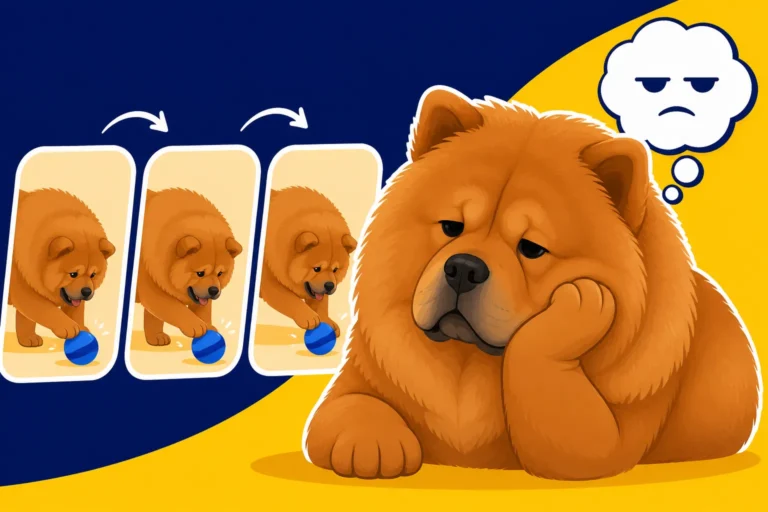
Encourage children to keep their interactions short and sweet. A couple of gentle strokes and then stepping back can be much more appreciated than prolonged attention. Always watch the Chow's body language for any signs of discomfort – a stiff posture, a yawn, lip licking, turning away, or walking off. These are all signals that the dog has had enough.
Supervising Every Interaction
I cannot stress this enough: all interactions between children and Chow Chows (or any dog, for that matter) must be 100% supervised by a responsible adult. This isn't just about initial introductions; it's about constant, vigilant supervision. Even a well-socialized Chow Chow, deeply bonded with its family, can have an off day, or a child can inadvertently cross a boundary.
An adult needs to be present and actively engaged, ready to intervene instantly if either the child or the dog shows signs of stress or discomfort. This means no "set it and forget it" mentality. If you can't be actively watching, it's best to create separate spaces for the dog and child. This is especially critical with younger children and toddlers, who may not yet understand boundaries or canine communication. How a Chow Chow Tolerates a Toddler is a very individual thing, but caution is always the best approach. An adult's job is to advocate for both the child's safety and the dog's comfort.
Creating a Positive, Safe Environment
Teaching children how to approach a Chow Chow safely is only one piece of the puzzle. The other, equally important part, is creating an environment where both dog and child feel secure and understood.
Training Your Chow Chow for Child Interactions
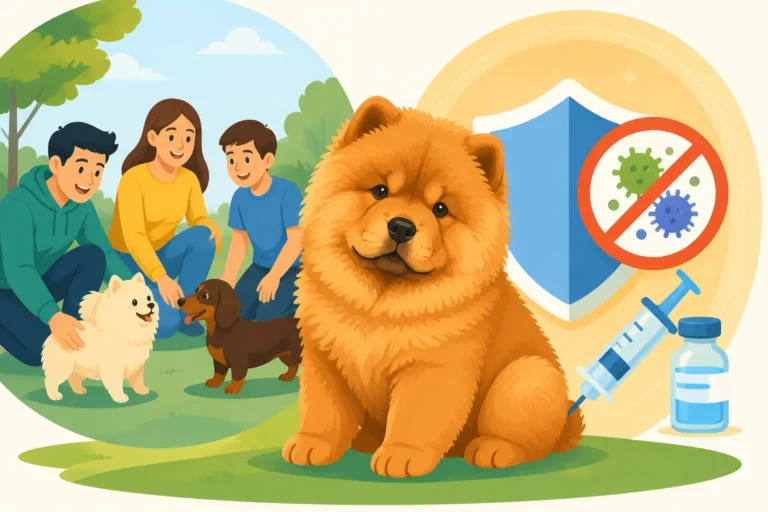
Ideally, your Chow Chow should be well-socialized and have positive associations with children from a young age. While their natural temperament leans towards aloofness, controlled, positive exposure can help them tolerate children more readily. This means gradual introductions, always under strict supervision, where the Chow is rewarded for calm behavior in the presence of children.
Using positive reinforcement methods (treats, praise) when children are around can help build positive associations. Online training platforms, such as those offered by BAXTER & Bella, can be invaluable resources for parents looking for structured programs to help train their Chow Chow and build a strong foundation of polite behavior, including how to react calmly to novel stimuli like children. They often provide step-by-step guidance on desensitization and counter-conditioning techniques that can make a big difference. Remember, the goal isn't necessarily for your Chow to love every child, but to calmly tolerate their presence without stress. An undersocialized Chow can become wary or reactive, making safe interactions much harder. What an Undersocialized Chow Chow Becomes can be a serious concern, so early, positive experiences are key.
Equipping Your Child (and Your Home)
Knowledge is power. Provide children with age-appropriate books or videos that explain dog body language and safe interaction rules. Many resources are available on platforms like Amazon that can help children understand how dogs communicate and why certain behaviors (like hugging) might make a dog uncomfortable. Seeing these rules visually and having them explained in a child-friendly way can reinforce the lessons you're teaching.
Furthermore, ensure your Chow Chow has a designated "safe space" in your home where they can retreat and be undisturbed. This might be a crate, a dog bed in a quiet room, or a fenced-off area. Teach children that when the Chow is in its safe space, it is absolutely off-limits. This gives the dog an essential place to decompress and feel secure, which is vital for a breed that values its independence.
What to Do If Things Go Wrong
Even with the best intentions and training, sometimes misunderstandings happen. It's crucial for adults to know how to react calmly and effectively if an interaction goes awry.
- Immediate Separation: The first step is always to calmly separate the child and the dog. Avoid shouting or panicking, as this can escalate the situation.
- Assess and Cool Down: Once separated, assess both child and dog for any injuries or signs of stress. Give both parties time to cool down in different areas.
- Identify the Trigger: Reflect on what might have caused the incident. Was a boundary crossed? Was the dog startled? Was the child misreading signals? Understanding the trigger is crucial for preventing future incidents.
- Seek Professional Help: If there's any bite, scratch, or significant negative interaction, consult a veterinarian to check the dog for any underlying issues (pain can make a dog reactive) and a certified professional dog trainer or veterinary behaviorist. They can help evaluate the situation and develop a plan to address the specific behaviors.
Remember, the goal is always prevention. By understanding your Chow Chow, teaching your children respectful boundaries, and actively supervising, you can foster a safe and positive coexistence. How to Introduce a Chow Chow to a Stranger can involve similar principles of slow, controlled interactions, but with children, the stakes are higher due to their vulnerability and limited understanding of canine cues. Also, it’s important to acknowledge Why Children Misread a Chow Chow – it’s not their fault, but a reflection of the breed’s unique communication style and our responsibility to bridge that gap.
Here's a quick summary of dos and don'ts for children approaching a Chow Chow:
| Do's | Don'ts |
|---|---|
| Ask the owner first if it's okay to pet. | Run up to the dog excitedly. |
| Move slowly and calmly. | Make loud noises or sudden movements. |
| Approach from the side. | Approach directly from the front or rear. |
| Offer a gentle hand for sniffing (knuckles). | Reach over the dog's head. |
| Pet on the chest or shoulder. | Hug the dog or grab its face. |
| Keep interactions brief and gentle. | Stare directly into the dog's eyes. |
| Give the dog space if it walks away. | Follow a dog that's trying to disengage. |
| Be a "tree" or a "rock" if uncertain. | Climb on or play roughly with the dog. |
| Always have an adult supervising. | Leave children unsupervised with the dog. |
| Respect the dog's safe space. | Disturb the dog when it's eating or sleeping. |
| Learn to read dog body language. | Assume a "scowl" means the dog is mean. |
| Use a calm, quiet voice. | Yell or scream near the dog. |
| Reward the dog for calm behavior. | Punish the dog for growling (it's a warning). |
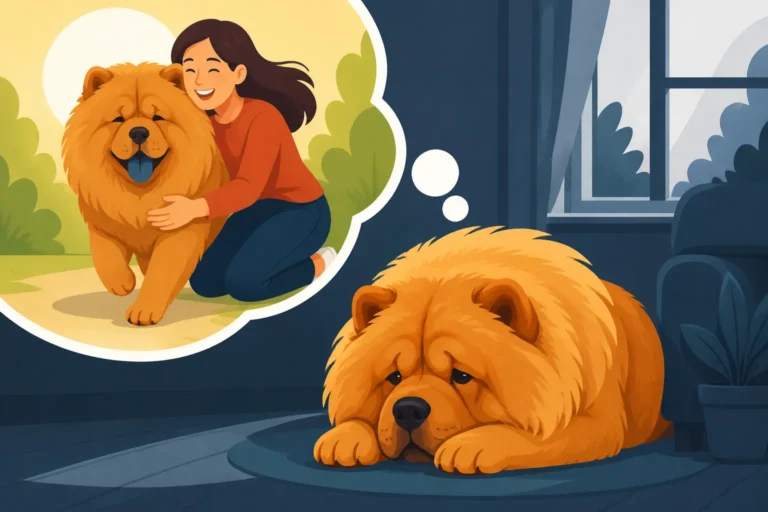
Ultimately, teaching children how to approach a Chow Chow safely is a testament to responsible pet ownership and a crucial step in ensuring harmonious homes and communities. It requires patience, consistency, and a deep respect for the unique character of this magnificent breed. By doing so, we not only protect our children but also honor our Chows by understanding and appreciating them for who they are. Whether a Chow Chow Bonds to a Child can often depend heavily on these early, positive, and structured interactions, fostering a relationship built on trust and mutual respect.
Disclaimer
This article is for general informational purposes only and does not constitute professional advice. Laws, prices and regulations vary by location and change over time. Consult a qualified professional for guidance on your specific situation.