Whether a Chow Chow Needs Paw Protection on Hot Asphalt
It’s a scenario we've all faced: stepping outside with our beloved Chow Chow, only to realize the sun has turned the asphalt into a searing hot plate. The immediate dread of "Is this too hot for their paws?" is a common worry for any responsible dog owner. This guide will walk you through understanding the very real dangers of hot pavement, how to accurately assess the ground temperature, and most importantly, what practical steps you can take to protect your Chow Chow's sensitive paw pads from painful burns.
The Burning Reality: Why Hot Surfaces Threaten Your Chow Chow's Paws
It's easy to forget that while we're comfortably shod in our sneakers or sandals, our dogs are walking directly on whatever surface is beneath them, with only their paw pads as protection. These pads, while tough, are not invincible. Hot asphalt and other heated surfaces pose a significant, often underestimated, risk to your Chow Chow's health and comfort.
The Immediate Damage Hot Pavement Inflicts
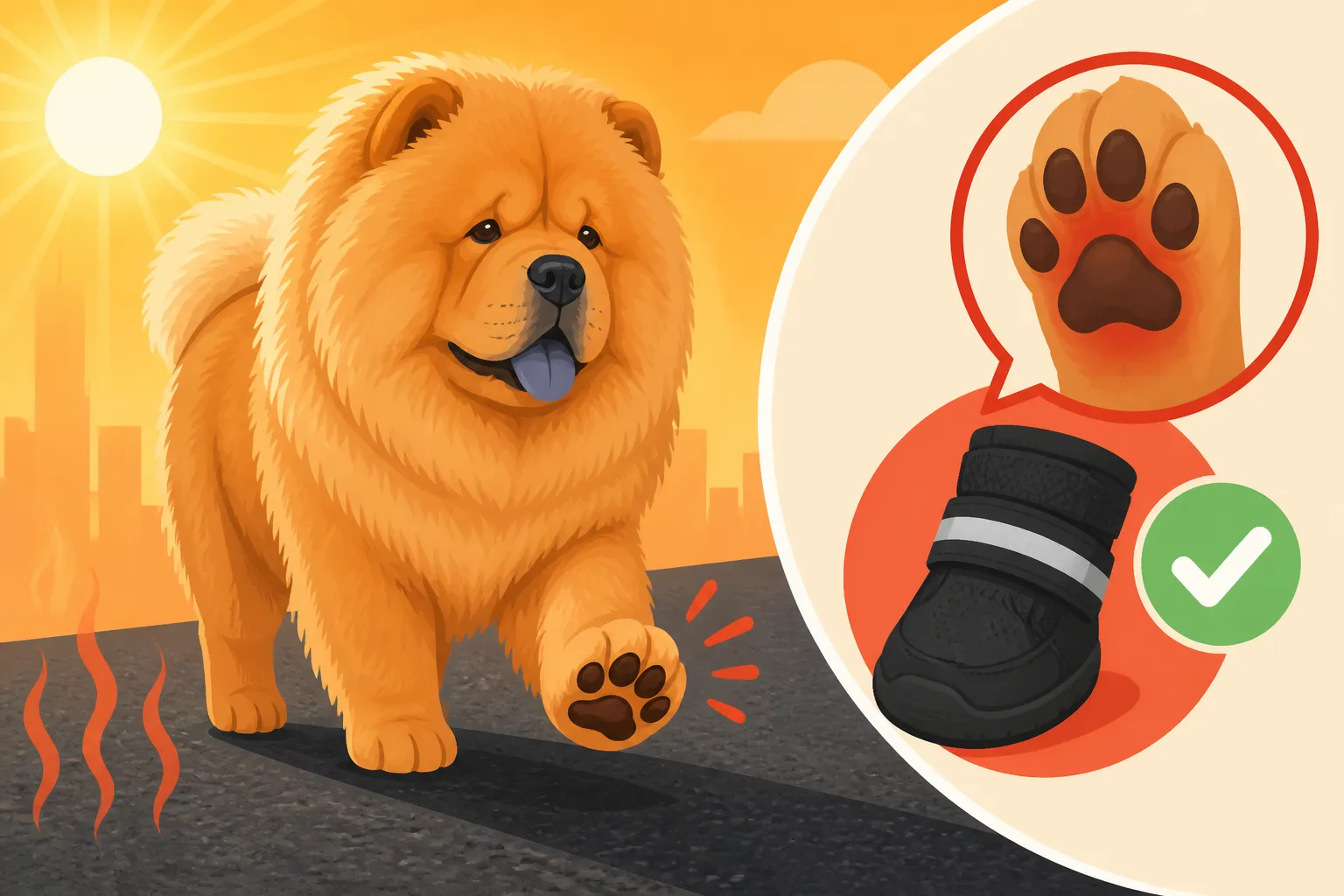
Think about how quickly a black car seat or a dark patio stone heats up under direct sunlight. That same intense heat is radiating from the asphalt. When your Chow Chow walks on such a surface, that heat transfers directly to their paw pads. This isn't just uncomfortable; it can lead to severe burns in a surprisingly short amount of time. We're talking about blisters, peeling skin, and excruciating pain that can mimic second-degree burns on human skin.
The damage goes beyond just the surface. Burned paw pads can become infected, leading to a much more complicated and painful recovery process. Your Chow Chow might be reluctant to walk, lick their paws obsessively, or even develop a fever. This kind of injury can take weeks, even months, to heal fully, requiring diligent wound care and often expensive veterinary visits. It’s a preventable trauma that no pet owner wants their furry companion to endure.
Why Chow Chows Are Particularly Vulnerable
While all dogs are susceptible to paw burns, Chow Chows have a few characteristics that can make them particularly vulnerable, even if indirectly. Firstly, their dense double coat, while fantastic for cold weather, means they can Heat Is the Chow Chow's Most Immediate Danger and Why a Chow Chow Overheats So Easily much faster than many other breeds. When a Chow Chow is feeling too hot, they might be more desperate to get to shade, moving faster across hot surfaces without the same caution. They might also show fewer overt signs of discomfort until the damage is already done, due to their stoic nature.
Secondly, their overall body temperature regulation issues mean that if they're already struggling with heat, the added stress of hot paws can compound the problem. A dog who is already bordering on heat exhaustion might not pull away from hot pavement as quickly as a cooler, more comfortable dog. We often talk about What Temperature Is Too Hot for a Chow Chow for their whole body, but it's just as critical to consider the ground temperature. Their deep-set eyes, while distinctive, can also mean they might not see subtle changes in ground color or texture that could indicate cooler spots as readily as other breeds.
The Seven-Second Rule and Beyond: Gauging Pavement Temperature Safely
The best defense against hot pavement burns is awareness and prevention. You can't rely solely on the air temperature because surfaces like asphalt absorb and retain heat far more efficiently than the air around them. What feels pleasant to you might be scorching hot to your Chow Chow.
The Barefoot Test: Your Best Indicator
The most reliable, simplest, and cheapest way to tell if a surface is too hot for your Chow Chow's paws is to test it yourself. This is known as the "seven-second rule."
Here's how it works:
- Place the back of your hand or your bare foot flat on the pavement. Don't just tap it; hold it there.
- Count to seven.
- If you cannot comfortably hold your hand or foot there for the full seven seconds, it is too hot for your Chow Chow's paws.
It's that simple. If it's too hot for you, it's definitely too hot for them. This test should be performed on any surface you plan for your Chow Chow to walk on – asphalt, concrete, brick, metal grates, even artificial turf in direct sunlight. Remember, direct sunlight will heat these surfaces much more intensely than shaded areas.
Understanding the Discrepancy Between Air and Ground Temperatures
It's a common misconception that if the air temperature is, say, 75°F (24°C), the ground will be roughly the same. This couldn't be further from the truth. Dark-colored materials like asphalt can be significantly hotter. On a sunny 77°F (25°C) day, asphalt can reach a blistering 125°F (52°C) – hot enough to cause burns in just a few minutes. At 87°F (30°C) air temperature, asphalt can hit 143°F (62°C), which can cause burns in under a minute.
This table illustrates the stark difference:
| Air Temperature (°F / °C) | Asphalt Temperature (°F / °C) | Time to Burn Paw Pads |
|---|---|---|
| 77°F / 25°C | 125°F / 52°C | ~60 seconds |
| 87°F / 30°C | 143°F / 62°C | <60 seconds |
| 90°F / 32°C | 150°F / 65°C | Immediate |
This data should make it clear that simply feeling the air or looking at a weather app isn't enough. You absolutely must test the surface directly. This is especially vital when considering When a Chow Chow Should Be Walked in Summer. Early mornings and late evenings are generally safer bets.
Proactive Paw Protection: Essential Gear and Smart Habits for Hot Weather
Once you understand the risk, taking steps to protect your Chow Chow becomes second nature. There are both physical barriers and behavioral adjustments you can make to ensure their paws stay safe and healthy.
Canine Footwear: Boots and Booties
For direct protection against hot surfaces, canine booties or boots are the most effective solution. These come in various styles and materials, designed to shield paws from extreme temperatures, rough terrain, and even chemicals.
- Pros: Offer excellent insulation from heat, provide traction, and can protect against sharp objects. Many brands are available on platforms like Amazon or Chewy, offering different sizes and features.
- Cons: Some dogs resist wearing them at first and require a period of desensitization. Finding the right fit is crucial – too tight can cause rubbing, too loose can fall off. They also need to be cleaned regularly. Your Chow Chow might walk a bit funny initially, like they're on stilts, but most adapt with patience and positive reinforcement.
When choosing boots, look for ones with durable soles, breathable uppers, and secure closures. Materials like rubber or neoprene in the sole offer good heat resistance. Remember, these aren't just for snow; they are a summer necessity in many areas.
Paw Balms and Waxes: A Layer of Defense
While not as protective as boots against extreme heat, paw balms and waxes can provide a thin, conditioning layer that helps moisturize and toughen your Chow Chow's paw pads. This can make them slightly more resilient to minor abrasions and dryness, which in turn could indirectly help them withstand slightly warmer surfaces for very brief periods, but they are absolutely NOT a substitute for boots on hot pavement.
Think of these as skin conditioners. A well-hydrated, healthy paw pad is less prone to cracking and irritation. Brands like Musher's Secret or various natural paw balms available on Chewy or Amazon can be beneficial for overall paw health, making them less susceptible to general wear and tear. Apply them regularly, especially before walks in less extreme conditions, and before bed. This builds up the natural resilience of the pads, but again, cannot prevent burns from truly hot surfaces.
Strategic Walking: Timing and Terrain
The simplest, most effective, and cost-free method of paw protection is altering when and where you walk your Chow Chow.
- Timing Your Walks: The coolest parts of the day are typically early mornings and late evenings. Schedule your walks during these times, especially in summer. Even if the air feels cooler at 6 PM, the asphalt might still be radiating heat absorbed throughout the day, so always check.
- Choosing Your Route: Opt for grassy areas, shaded trails, or indoor spaces whenever possible. If you must walk on pavement, stick to the shady side of the street. Grass and natural dirt paths are significantly cooler than asphalt or concrete. Pay attention to how your Chow Chow is moving; if they're hesitant, picking up their paws quickly, or licking them, it's a clear sign of discomfort. This goes hand-in-hand with ensuring your Chow Chow doesn't get Signs a Chow Chow Is Overheating on a Walk. Remember, even short bursts on hot pavement can cause damage.
By being mindful of your environment and adjusting your routine, you can drastically reduce the risk of paw burns without relying solely on products.
Mitigating Risk: What to Do if Your Chow Chow's Paws Get Burned
Despite your best efforts, accidents can happen. Maybe you misjudged the pavement temperature, or your Chow Chow darted across a hot patch unexpectedly. Knowing how to react quickly can minimize the severity of the injury and reduce your dog's pain.
Immediate First Aid for Burned Paws
If you suspect your Chow Chow has burned paws, immediate action is crucial:
- Get Off the Hot Surface Immediately: Carry your dog to a cooler area – grass, dirt, or indoors.
- Cool the Paws: Gently rinse their paws with cool (not ice cold) water for about 10-15 minutes. You can use a hose on a gentle setting or soak their paws in a shallow basin of water. This helps to stop the burning process and soothe the pain. Avoid ice, which can cause further tissue damage.
- Inspect the Paws: Carefully examine each paw pad. Look for redness, blisters, swelling, or any missing patches of skin. Even if you don't see obvious damage, assume it's there if they're limping or licking.
- Prevent Licking: Cover the paws loosely with clean gauze or a light towel to prevent your Chow Chow from licking the injured areas, which can introduce bacteria and worsen the burn. An old sock or a clean t-shirt tied loosely can work in a pinch.
- Contact Your Vet: Even if the burn appears minor, it's always best to contact your veterinarian. Paw pad burns are painful and prone to infection. Your vet can accurately assess the severity, prescribe pain medication, antibiotics if needed, and give you specific instructions for wound care. They might recommend special paw wraps or protective booties during healing.
Remember, early intervention can make a huge difference in your Chow Chow's recovery. Don't wait to see if it gets better on its own.
Long-Term Care and Prevention Moving Forward
After a paw burn incident, diligent follow-up care is essential. Your vet will guide you through cleaning the wounds, applying any prescribed topical treatments, and changing dressings. It's a commitment that can take several weeks.
Beyond the immediate healing, this experience should serve as a stark reminder of the importance of vigilance.
- Re-evaluate Your Routine: Use the seven-second rule every single time before walking on pavement. Consider investing in a pair of quality dog boots if you live in an area with consistently hot summers.
- Paw Pad Conditioning: Once the paws are fully healed, regularly apply a quality paw balm to keep the pads supple and less prone to cracking. This isn't for heat protection, but for general health, which contributes to overall resilience. You can find excellent options on Chewy or Amazon.
- Educate Others: If others walk your Chow Chow, ensure they understand the risks of hot pavement and the seven-second rule.
- Consider a Cooling Vest: Since Chow Chows are so prone to overheating, a cooling vest could be a good investment. While it doesn't directly protect paws, it helps lower their overall body temperature, making them less likely to push through discomfort on warm surfaces. How to Cool a Chow Chow Down Fast provides more tips for managing their heat sensitivity.
By adopting these proactive measures, you can dramatically reduce the chances of your Chow Chow suffering from another painful paw burn. Their comfort and well-being depend on our awareness and thoughtful care. It’s a small effort for a lifetime of happy, healthy walks with your loyal companion.
Disclaimer
This article is for general informational purposes only and does not constitute professional advice. Laws, prices and regulations vary by location and change over time. Consult a qualified professional for guidance on your specific situation.