Why a Chow Chow’s Double Coat Traps Heat
It’s a common sight that puzzles many Chow Chow owners and admirers alike: your fluffy, majestic companion seems to suffer terribly in even moderately warm weather, panting heavily and seeking out the coolest tile in the house. Despite its beauty, the Chow Chow's iconic double coat, which served it so well in its colder origins, becomes a significant challenge in warmer climates. This guide will meticulously break down the unique structure of this dense coat, explaining precisely why it acts as such an efficient heat trap and offering actionable advice to help your Chow Chow stay comfortable and safe.
Understanding the Chow Chow's Majestic Double Coat
The Chow Chow’s coat is, without a doubt, one of its most defining and magnificent features. It’s what gives them their lion-like mane and cuddly, bear-like appearance. But beneath the surface of that luxurious fur lies a complex insulation system, a marvel of nature designed for protection against harsh, cold environments. This isn't just one type of hair; it's a sophisticated two-layer system, often referred to as a double coat, and understanding each component is key to grasping why it can be problematic in heat.
The Insulating Power of the Undercoat
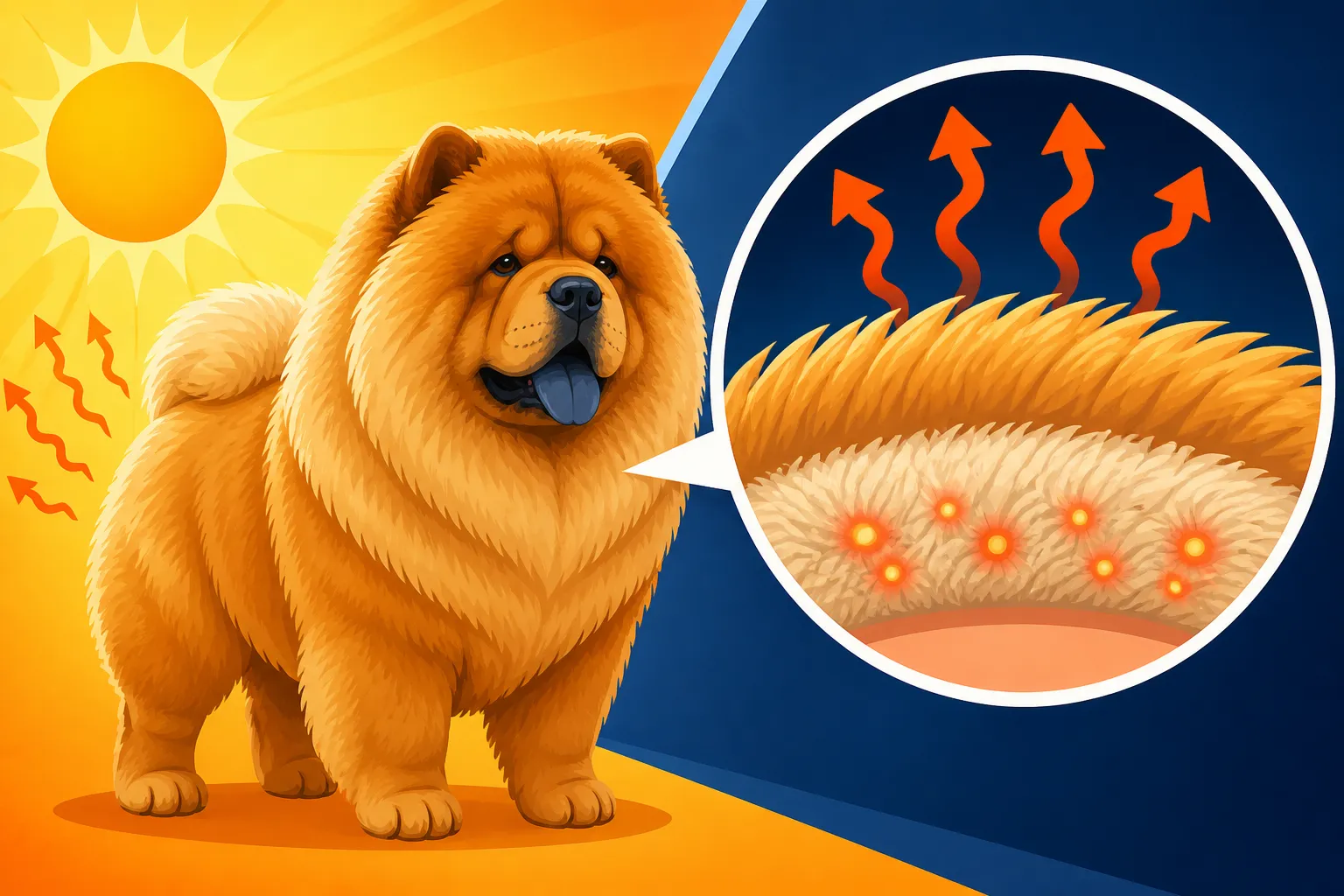
Deep beneath the long, coarse outer layer of a Chow Chow's coat lies a plush, soft, and incredibly dense undercoat. Think of it like a down feather jacket for your dog. This undercoat is made up of fine, woolly hairs that are packed closely together, creating millions of tiny air pockets. These air pockets are exactly what provide such exceptional insulation. In cold weather, this trapped air warms up from the dog's body heat and forms a protective thermal barrier, preventing body heat from escaping into the environment. It works similarly to how a thermos keeps coffee hot; it's designed to maintain a stable temperature inside, regardless of the outside conditions.
However, this amazing insulating property becomes a double-edged sword when temperatures rise. When it's warm outside, the same principle applies: the undercoat traps a layer of air heated by the Chow Chow's body, but this time, it prevents that heat from dissipating. The dog's natural cooling mechanisms, like panting and evaporative cooling from the skin, are significantly hindered because the heat can't easily escape through the dense undercoat. This creates a miniature microclimate close to the dog's skin that is much hotter and more humid than the outside air, making them feel much warmer than their human companions might perceive.
The Guard Hairs and Their Role
The outer layer of the Chow Chow's coat consists of what are called "guard hairs." These are longer, coarser, and straighter hairs that form the visible, protective topcoat. If you have a rough-coated Chow Chow, these hairs are quite prominent, creating that majestic ruff around their head and neck, and dense feathering on their legs and tail. Even smooth-coated Chows have these guard hairs, though they are shorter and lie flatter against the body, giving them a sleek, velvety appearance.
The primary function of these guard hairs is to protect the delicate undercoat and the skin from external elements. They repel water, dirt, and debris, keeping the undercoat dry and clean, which is crucial for its insulating efficiency. They also offer a degree of protection from UV rays, preventing sunburn. In their native cold, snowy environments, this protection would have been invaluable. However, in hot weather, these guard hairs, especially on a rough-coated Chow Chow, create another layer of barrier. They further reduce airflow to the skin, making it even harder for any trapped heat to escape. While they do offer some sun protection, their primary effect in heat is to exacerbate the insulation problem, trapping heat against the body and hindering the natural convection and radiation processes that would otherwise help the dog cool down.
How the Dense Coat Traps Heat
It's not just that the Chow Chow's coat is thick; it's how that thickness works in conjunction with various environmental factors that truly creates a heat-trapping predicament. Their ancestral purpose was to thrive in cold climates, and every aspect of their coat is geared towards conservation of warmth, which unfortunately makes them ill-equipped for heat dissipation.
Reduced Airflow and Evaporation
One of the most effective ways for mammals to cool down is through evaporative cooling, primarily by sweating (in humans) or panting (in dogs). When moisture evaporates from a surface, it carries heat away with it, leading to a cooling effect. Dogs pant to evaporate moisture from their tongues and respiratory tracts. They also lose some heat through their paw pads. However, to truly dissipate body heat efficiently, they need good airflow around their body and skin to allow for convection and the evaporation of any moisture (like sweat from paws or condensation from panting) that might collect on their fur.
The Chow Chow's double coat, particularly the incredibly dense undercoat and the overlapping guard hairs, significantly restricts this vital airflow. Imagine wearing a heavy, non-breathable parka on a hot day – that's somewhat akin to what a Chow Chow experiences. The thick fur creates a barrier that prevents cooler ambient air from reaching the skin and impedes the evaporation of heat and moisture. This leads to a build-up of heat against the dog's body, making it feel much hotter than the outside temperature suggests. This is a critical factor in why a Chow Chow Overheats So Easily, even during seemingly mild weather.
The Impact of Humidity and Activity
While the double coat is inherently designed to trap heat, external factors like humidity and the dog's activity level can dramatically worsen the situation. High humidity means there's already a lot of moisture in the air, making it harder for your Chow Chow to cool down through panting. Evaporation is less efficient in humid conditions, so their primary cooling mechanism becomes significantly less effective. When the air is thick with moisture, the heat trapped by their coat has nowhere to go.
Couple this with physical activity, and you have a recipe for rapid overheating. Even a short walk on a warm, humid day can push a Chow Chow into dangerous territory. Their muscular bodies generate internal heat during exercise, and their coat's inability to release this heat efficiently means their core body temperature can skyrocket quickly. This is why it's so important to be vigilant about Signs a Chow Chow Is Overheating on a Walk, which can include excessive panting, drooling, weakness, and disorientation. A Chow Chow's dense coat is an immediate danger multiplier under such conditions.
Why Shaving is a Misguided Solution
Many well-meaning Chow Chow owners, seeing their beloved dog panting in the summer heat, might think the most logical solution is to shave off that dense coat. After all, less fur means cooler, right? Unfortunately, for a double-coated breed like the Chow Chow, shaving is almost universally discouraged by veterinarians and experienced breeders, and it can actually do more harm than good. It disrupts the natural functions of their coat and can lead to a host of other problems.
Disrupting Natural Insulation
While a double coat traps heat in summer, it's crucial to remember its year-round purpose: insulation. In winter, it traps warm air in. In summer, the natural, healthy coat, with proper grooming, also plays a role in keeping a dog cooler by acting as a barrier against direct sun rays and allowing for a micro-layer of air to circulate if well-maintained. When you shave a Chow Chow, you remove both the protective guard hairs and the dense undercoat. This sounds like it would help, but it strips away their natural defense system.
What Shaving Does to a Chow Chow's Undercoat is essentially remove its ability to regulate temperature. The guard hairs provide protection from the sun's harsh UV rays. Without them, your Chow Chow's delicate skin is directly exposed, making them much more prone to sunburn. Sunburn on dogs can be just as painful as it is for humans, and in severe cases, it can lead to skin infections or even increase the risk of skin cancer over time. Furthermore, the act of shaving can often damage the hair follicles, leading to what's known as "post-clipping alopecia," where the coat may grow back unevenly, in patches, or not at all, changing its texture and effectiveness permanently.
Risks of Sunburn and Coat Damage
Beyond sunburn, shaving a Chow Chow can lead to a host of other skin and coat issues. The natural function of the coat is to regulate body temperature by shedding appropriately throughout the year, especially during the twice-a-year "coat blow" periods. When you remove it entirely, you disrupt this natural cycle. The undercoat, when it eventually grows back (and there's no guarantee Whether a Shaved Chow Chow's Coat Grows Back properly), can come in thicker and more cottony, making it even more prone to matting and potentially exacerbating heat issues in subsequent summers because it loses its natural ability to allow air to pass through.
The sensitive skin that was once protected by layers of fur is now vulnerable to scrapes, insect bites, and environmental irritants. The idea that Whether a Shaved Chow Chow Is Cooler is largely a myth for double-coated breeds. A properly maintained coat, brushed regularly to remove dead undercoat, actually allows for better air circulation near the skin than a shaved dog who now has exposed skin constantly absorbing solar radiation. If your Chow Chow suffers from overheating, the potential vet costs for things like severe sunburn or skin infections can be substantial. Comprehensive pet insurance plans, such as those offered by Healthy Paws, can certainly help cushion the financial blow of unexpected health issues that might arise from misguided attempts at cooling.
Practical Strategies for Keeping Your Chow Cool
While the Chow Chow's double coat presents challenges in warm weather, owners aren't helpless. There are many effective, safe, and responsible strategies you can employ to help your furry friend stay cool and comfortable without resorting to harmful practices like shaving.
Effective Grooming for Heat Management
The single most impactful thing you can do for your Chow Chow's comfort in warmer weather is to commit to a rigorous and consistent grooming routine. The goal is not to remove the coat entirely, but to remove all the dead undercoat. That matted, dead undercoat is what truly traps heat and prevents airflow.
Regular, thorough brushing, ideally several times a week, is paramount. You need to line-brush down to the skin to ensure you're getting all the loose undercoat. Tools like a good quality slicker brush and an undercoat rake are indispensable. During the "coat blow" seasons, typically twice a year (spring and fall), your Chow Chow will shed an incredible amount of fur. How to Get a Chow Chow Through a Coat Blow Faster involves even more frequent brushing and potentially professional deshedding treatments. A high-velocity dryer can also be a game-changer during these times, helping to blast out loose fur after a bath and promote airflow. A clean, well-brushed coat with minimal dead undercoat allows for better air circulation and actually provides a layer of insulation against the sun's heat. Remember, How Often a Rough Coated Chow Chow Needs Brushing is much more frequently than you might think, especially in warmer months.
Creating a Cooler Environment
Controlling your Chow Chow's immediate environment is another crucial aspect of heat management. They simply cannot tolerate high temperatures like other breeds. For them, What Temperature Is Too Hot for a Chow Chow can be as low as 75-80°F, especially with humidity.
- Air Conditioning is Essential: In any climate where temperatures regularly climb above 75°F, air conditioning is not a luxury; it's a necessity for a Chow Chow. They truly Whether a Chow Chow Needs Air Conditioning to prevent heatstroke.
- Shade and Water: If your Chow is outdoors, ensure constant access to deep shade and plenty of fresh, cool water. A kiddy pool with a few inches of water can also be a fantastic way for them to cool down, but always supervise.
- Cooling Products: There are several products designed to aid cooling. Cooling mats, cooling vests, and even bandanas that you soak in water can provide temporary relief. A What a Chow Chow's Cooling Vest Costs can range widely, but it's a worthwhile investment for short outings.
- Timing of Walks: Adjust your exercise schedule to the coolest parts of the day – early mornings and late evenings. Avoid walks during midday or afternoon heat altogether. Remember, Why a Chow Chow's Short Muzzle Cools Poorly means they struggle more than many other breeds. Why a Chow Chow Should Never Wait in a Car, even for a few minutes with windows down, cannot be stressed enough; temperatures inside a car can rise to deadly levels shockingly fast.
Recognizing and Responding to Overheating
Despite your best efforts, sometimes a Chow Chow can still overheat, and recognizing the signs early is critical for their survival. Heatstroke is a medical emergency that can quickly become fatal.
Signs of Overheating and Heatstroke in Chow Chows:
| Symptom | Description | Severity | Action |
|---|---|---|---|
| Excessive Panting | Rapid, heavy breathing, often accompanied by a noisy or labored sound. | Early Stage | Move to cool area, offer water, use fan. |
| Drooling | Thick, copious saliva. | Moderate Stage | Begin active cooling (wet cloths, fan), contact vet. |
| Bright Red Gums/Tongue | Gums and tongue appear abnormally red, indicating increased blood flow. | Moderate Stage | Begin active cooling, urgent vet contact. |
| Weakness/Lethargy | Unsteady gait, difficulty standing, disinterest in surroundings. | Severe Stage | Immerse in cool (not cold) water, apply ice packs to groin/armpits, immediate vet transport. |
| Vomiting/Diarrhea | Gastrointestinal upset. | Severe Stage | How to Cool a Chow Chow Down Fast while en route to vet. |
| Disorientation/Collapse | Stumbling, confusion, loss of consciousness. | Critical Stage | Seek emergency veterinary care immediately. What Heat Stroke Costs to Treat in a Chow Chow can be thousands, and insurance like Healthy Paws becomes invaluable. |
If you suspect your Chow Chow is overheating, immediate action is required. Move them to a cooler location, offer water, and apply cool (not ice-cold) water to their body, especially their belly, groin, armpits, and paws. Use a fan if possible to aid evaporative cooling. Do not attempt to force them to drink. If symptoms are severe or do not improve quickly, seek emergency veterinary care immediately. Heat Is the Chow Chow's Most Immediate Danger, and swift, appropriate action can be the difference between life and death.
Disclaimer
The information provided in this article is for general informational purposes only and is not a substitute for professional veterinary advice, diagnosis, or treatment. Always seek the advice of your veterinarian or other qualified health provider with any questions you may have regarding a medical condition or the health and well-being of your Chow Chow.