What a Chow Chow Barks At
One of the most common frustrations for Chow Chow owners, new and experienced alike, is trying to figure out why their otherwise stoic and quiet companion suddenly transforms into a barking machine. It can be confusing and sometimes downright annoying when you're just trying to enjoy a peaceful afternoon. This comprehensive guide is here to shed light on the myriad reasons behind a Chow Chow's vocalizations, helping you understand the "why" so you can better manage and respond to their barking habits.
The Territorial Sentinel: Barking to Guard Their Space
Chow Chows are ancient guardians, a trait deeply embedded in their DNA. This instinct to protect their perceived territory and family is a primary driver for much of their barking. It’s not usually out of aggression, but rather a firm declaration of boundaries and a warning to perceived intruders.
Protecting the Home Boundary
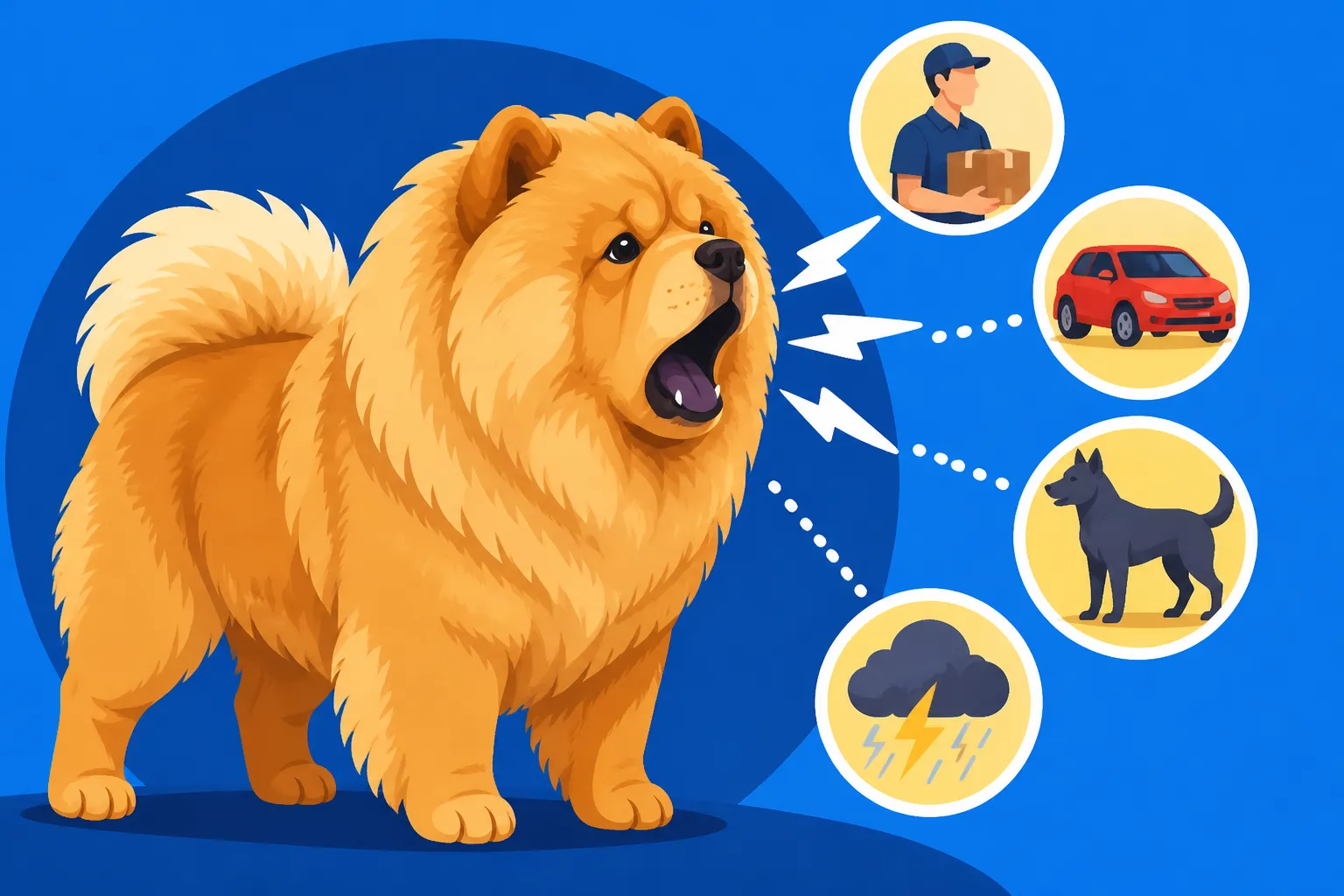
Your Chow Chow sees your home, your yard, and even your car as extensions of their personal domain. They take their role as guardian seriously, and any approach to these boundaries is often met with a stern vocal challenge. Imagine the daily spectacle: the mail carrier making their rounds, a package delivery driver leaving a box on the porch, or even just a neighbor taking their morning stroll past your property. To your Chow, these aren't just everyday occurrences; they are potential incursions into their space.
Their bark in these situations is typically deep, resonant, and insistent – a sound designed to deter. It's their immediate response, a declaration that "this is my territory, and I am here to protect it." This behavior can be particularly pronounced if your Chow has clear sightlines from a window overlooking the street or a securely fenced yard. They feel it's their job to announce these events, to alert you, and to firmly establish their presence and claim.
This isn't necessarily a sign of a poorly behaved dog, but rather a manifestation of their strong instincts. They are simply doing what comes naturally to them, albeit in a way that sometimes causes a bit of a ruckus. Understanding this inherent drive is the first step in learning to manage it.
Reacting to Strangers and Visitors
Beyond the invisible lines of property boundaries, a Chow Chow's territorial instincts extend to the living beings within their domain. While they are renowned for bonding fiercely and deeply with one or two chosen family members, they tend to be naturally reserved and suspicious of strangers. This innate wariness often translates into barking when new people enter their space. The Chow Chow Bonds to One Person and Tolerates the Rest
When a guest rings your doorbell, or even steps foot inside your home, a Chow will often respond with a string of barks. This isn't usually an invitation for a belly rub or a game of fetch; it's more of a demanding "Who are you, and what are your intentions?" Their barking serves as a clear warning, both to the newcomer and to you, their person. For visitors unfamiliar with the breed, this staunch reception can be quite startling, even intimidating.
They are meticulously evaluating the newcomer, assessing whether they pose a threat or can be tolerated. This guarding behavior underscores the critical importance of early and ongoing socialization. Introducing your Chow Chow to a wide variety of people in a controlled, positive manner from puppyhood can help them develop the discernment to accept new faces more calmly, rather than reacting with an automatic, loud defense. It helps them learn that not every unfamiliar person is a threat. You can read more about How a Chow Chow Greets Visitors to understand this interaction better.
Object Guarding and Resource Protection
Territorial barking doesn't always manifest as guarding physical space or people; it can also extend to specific objects or resources that your Chow Chow values highly. This could be their favorite squeaky toy, their comfy dog bed, a delicious bone, or even their food bowl during mealtime. They can develop a strong sense of ownership over these items.
Consider a scenario where your Chow is enjoying a new chew toy, and another family pet or even a child innocently approaches. A sudden, sharp bark might erupt, clearly communicating "Mine!" This type of behavior, known as resource guarding, is not uncommon in many breeds, including Chows, and it's a natural instinct that needs careful and consistent management from an early age to prevent it from escalating into more serious issues.
It's essential to recognize this as an instinct rather than simple naughtiness. Punishing it outright can often make it worse, as it increases their anxiety about losing their prized possession. Instead, gentle training methods focused on trade-and-reward, where they learn that people approaching their items can lead to even better things, can be very effective. Understanding What a Chow Chow Guards and Why can provide further insights into this protective tendency and how to address it empathetically and effectively within your household.
The Alert System: Barking at the Unfamiliar and Unexpected
Beyond their role as territorial guardians, Chow Chows are also keen observers and often serve as the household's impromptu alert system. They feel compelled to notify you of anything new, different, or out of place in their environment, both seen and heard.
The Mail Carrier, Delivery Truck, or Neighbor's Cat
This is perhaps one of the most common types of barking we hear from our Chows. It’s not necessarily about a direct invasion of territory but rather a notification of something unusual or unexpected that has entered their field of perception. The world outside is a dynamic place, full of interesting sights, sounds, and smells, and your Chow Chow believes it’s their solemn duty to report every notable occurrence.
Take the familiar example of a delivery vehicle. The rumble of a truck pulling up, the opening and closing of a door, the person walking up your path – to us, it’s just a package arriving. To a Chow, however, it’s a sequence of distinct events that demands immediate vocalization. They’re not necessarily trying to scare the driver away, but rather saying, "Hey! Something's happening out there! Just wanted to make sure you know!"
It’s not just large vehicles or people, though. A squirrel making a dash across the fence, a plastic bag tumbling down the street in a strong gust of wind, or even the subtle jingle of a neighbor’s dog tags as they pass by on a walk can all trigger this type of alert bark. They possess a remarkable ability to pick up on subtle cues that we often miss, and their barking is their primary way of saying, "Heads up! Something's going on!"
Unexplained Noises and Visual Stimuli
Chow Chows, despite their sometimes sleepy appearance, have incredibly acute senses. Their deep-set eyes, while sometimes limiting their peripheral vision, are still highly attentive to movement, and their ears are tuned to a wide range of frequencies. Why a Chow Chow's Deep Set Eye Limits Its Vision Any sudden, unfamiliar, or particularly loud noise can instantly set them off.
Imagine the distant wail of a siren, the rumble of a garbage truck coming down the street, a car backfiring several blocks away, or even the unexpected pop and crackle of fireworks from a distant celebration. These sounds, which might barely register for us, can be significant triggers for a Chow. Their barks in these moments are often a mixture of alert and mild apprehension, trying to understand and react to the source of the unexpected sound. They can perceive and react to things we might not even consciously register.
Similarly, unexpected visual stimuli will elicit a vocal response. A person or animal suddenly appearing at the edge of their vision, a swift movement in the garden, or even an unusual reflection catching their eye can cause an immediate and often urgent bark. This is why many Chows are highly reactive to things moving past windows or along fence lines. They are simply doing their job as the household alarm system, ensuring that nothing goes unnoticed. Sometimes, this can escalate if they feel truly surprised, and an unobserved approach can lead to Why a Chow Chow Snaps at Someone It Did Not See.
Frustration and Boredom: The "I Need Something to Do!" Bark
While Chows are often celebrated for their independent and somewhat sedate demeanor, they are far from being inert creatures. Beneath that magnificent mane lies an intelligent dog with needs for both mental and physical engagement. If these needs are not adequately met, frustration and boredom can set in, and barking often becomes their chosen method of expressing this discontent.
Lack of Mental or Physical Stimulation
It’s a common misconception that because Chow Chows aren't typically high-energy dogs, they don't require much to do. This couldn't be further from the truth. They are intelligent and, like all dogs, need outlets for their minds and bodies. If a Chow is consistently left alone for long periods with no stimulating activities, no chew toys, no puzzle feeders, and infrequent walks, they can quickly become bored.
This boredom often escalates into frustrated barking. You might find them barking at nothing in particular, at shadows, at sounds you can’t hear, or just generally vocalizing out of sheer ennui. It’s their way of saying, "I'm under-stimulated, human! I need something to occupy my brain and body!" This isn't just about noise; it's a plea for engagement.
Regular, appropriate exercise tailored to their breed's needs, such as leisurely sniff walks or short play sessions, is vital. But equally important is mental enrichment. Consider rotating puzzle toys, engaging in short positive-reinforcement training sessions, or even signing up for online training programs. Resources like those offered by BAXTER & Bella can provide owners with a wealth of ideas for engaging activities and training exercises to keep a Chow Chow's mind active. Even a few minutes of mental work can be as tiring as a long walk. Understanding How Much Exercise a Chow Chow Actually Needs can help prevent this kind of barking.
Confinement and Restricted Access
Chow Chows value their independence and freedom of movement. Being confined against their will, or having their access blocked to something they desire, can quickly lead to frustration, which they will then voice through barking. It’s their protest against perceived limitations.
Imagine your Chow in the living room, separated by a baby gate, while you are busy in the kitchen preparing a meal. If they want to be by your side, or perhaps believe they might be able to snag a dropped morsel, they might start barking persistently at the barrier. Their barks communicate their annoyance at being excluded from the activity or the potential rewards on the other side.
Similarly, if they are tethered in the yard and spot another dog they wish to investigate (or deter), or a person they want to greet, the inability to act on these impulses can result in loud, insistent barking. This is a vocal objection to their limited freedom and their inability to control their environment. This type of barking often conveys an agitated or demanding tone, clearly indicating their displeasure with the situation.
Isolation or Loneliness
While often characterized as independent and even aloof, Chow Chows are still social creatures, and prolonged periods of isolation or loneliness can be a significant source of anxiety and lead to excessive barking. This is especially true if they haven't been properly accustomed to being left alone gradually and positively.
A Chow left by themselves for extended durations, particularly if they haven't learned to feel secure and content in solitude, might bark incessantly. This isn't a deliberate act of mischief; it's a genuine expression of distress or a feeling of abandonment. They are communicating their unhappiness and yearning for companionship. How Well a Chow Chow Copes Alone can really impact this behavior.
This type of barking often has a more mournful, repetitive, or whining quality, distinct from territorial or alert barks. It's a clear call for their human companions. Addressing isolation barking requires patience and a structured approach to building their confidence when you're not around. This might involve creating a safe "den" space, providing engaging toys, and gradually increasing the time they spend alone, often with the guidance of a professional trainer. Ignoring it will only intensify their anxiety. This is a common issue for many breeds, and understanding What an Undersocialized Chow Chow Becomes can also shed light on how early experiences affect their ability to cope.
The Communicator: Barking to Get Your Attention
Chow Chows are intelligent, observant dogs, and they are incredibly quick to learn what behaviors get them what they want. If barking has been successful in the past for eliciting a desired response from you, rest assured, they will absolutely try it again – and often with increasing volume and persistence!
The "I Want Something" Bark
This type of barking is a clear instrumental behavior: your Chow Chow barks because it achieves a specific goal. They've figured out that their vocalizations can be a powerful tool to get your attention and ultimately, to get their needs or desires met.
Think about the routine of your household. This might be the insistent "I'm hungry, feed me!" bark that starts as soon as you walk near their food bowl, or the excited, persistent "It's walk time, let's go!" bark that erupts the moment you pick up the leash. They have formed a strong association between their vocalization and the subsequent positive outcome.
They might even use barking to initiate play, particularly if you have a favorite toy or a regular game. A sharp, attention-grabbing bark followed by them nudging a toy towards you is their way of saying, "Let's play!" It’s their distinct method of communicating their immediate desires and engaging you in interaction. Knowing this can help you decide when to respond and when to ignore to shape desired behaviors.
Seeking Petting or Interaction
While Chows are often portrayed as highly independent and even aloof, they do, in fact, enjoy affection and interaction – but usually on their own terms. When they are seeking this connection, they might employ a softer, more subtle bark to get your notice. This isn't typically the demanding, incessant bark of frustration or alert, but more of a gentle invitation.
You might notice your Chow approaching you, perhaps sitting or standing quietly nearby, and then offering a soft "woof" or two. They might then retreat just slightly, waiting for you to initiate the petting or interaction. It’s their way of politely inviting you into their personal space for a moment of connection, rather than demanding it. They’ve observed you and decided they’d like some attention. How Much a Chow Chow Wants to Be Petted varies greatly, but they do appreciate it when it's offered respectfully.
Learning to differentiate these softer, more polite barks from demanding or attention-seeking ones is crucial. Responding to these subtle invitations reinforces positive communication and strengthens your bond, showing them that polite requests are rewarded. Conversely, consistently ignoring or inadvertently rewarding demanding, incessant barks can inadvertently teach them that louder and more persistent vocalizations are necessary to get what they want.
Fear and Anxiety: The Worried Woof
Just like humans, Chow Chows can experience genuine fear and anxiety, and barking is one of their primary ways of expressing these powerful emotions. This isn't a deliberate attempt to be naughty, but an instinctive response to a perceived threat or an overwhelming situation.
Reaction to Loud Noises or Startling Events
Many dogs, including Chow Chows, have an inherent sensitivity to sudden, loud noises. Events like unexpected fireworks, booming thunderstorms, the cacophony of nearby construction, or even an accidental dropped pot in the kitchen can trigger a profound fear response, which they often express through barking.
This fear-based barking is typically accompanied by other distinct signs of anxiety: a tucked tail held low, ears flattened against their head, trembling, excessive panting, pacing, or an urgent desire to seek a hiding spot. These barks are not aggressive; they are cries of distress, an instinctive reaction to a perceived threat that they cannot comprehend or control. They are trying to make the scary thing go away or to alert you to the danger.
Creating a safe, quiet "den" or retreat for your Chow during these events is incredibly important. Never, ever punish fear barking, as this will only intensify their anxiety and can damage your bond. Instead, offer calm reassurance, provide comforting background noise to mask the trigger, and, if severe, consult with your vet or a certified behaviorist about strategies or calming aids.
Feeling Insecure in New Environments
Chow Chows are creatures of habit and generally thrive on routine and familiarity. Introducing them to a completely new or overwhelming environment can be a significant source of anxiety, which they may express through persistent barking. They might feel exposed, unsure, or simply overloaded by new sensory input.
Consider a visit to a bustling pet store filled with unfamiliar smells, sights, and sounds; a crowded veterinary waiting room; or even a new park where everything is strange. For a naturally reserved breed like the Chow Chow, processing such a high volume of novel information can be incredibly stressful. Their barking in these situations might be an attempt to "push away" the unfamiliar, to create distance from what makes them uncomfortable, or to signal their deep discomfort to you.
Gradual, positive introductions to new places, combined with consistent positive reinforcement and ensuring they feel secure by your side, are crucial for helping them adapt. Having a reliable, comfortable harness and leash, perhaps one you ordered from Amazon, can provide both you and your Chow with a sense of control and security in new surroundings. Focus on short, positive experiences, and always allow them to retreat if they become overwhelmed.
Perceived Threats or Intruders
This form of barking often overlaps with territorial behavior, but it's fundamentally driven by a genuine sense of fear or vulnerability rather than just a boundary declaration. If your Chow perceives a direct, immediate threat to themselves, their beloved person, or other members of their family, their barking can become frantic, intense, and urgent.
This might be triggered by an unfamiliar dog exhibiting aggressive body language on a walk, a person acting erratically or making sudden movements, or even someone approaching your car in an unexpected way. In these instances, their barks are a desperate attempt to warn off the perceived danger, to create distance, and to protect those they love. This barking is often accompanied by more defensive body language, such as hackles raised, a stiff posture, or a readiness to back away or stand their ground.
Understanding Signs a Chow Chow Is Uncomfortable is absolutely vital here. Being able to read their subtle cues of fear or apprehension allows you to intervene before the situation escalates into a more reactive or defensive display. Management strategies like maintaining distance from triggers, using positive reinforcement to create positive associations, and consistent training are essential to help them feel more secure and less compelled to resort to fear-based barking.
The Spectrum of Chow Chow Communication
It’s important to remember that not all barking is negative or problematic. Just like any vocal species, Chow Chows use a range of barks as part of their normal, healthy communication with the world around them and, especially, with their human family.
Greeting Barks and Play Barks
Some barks are simply expressions of joy, excitement, or a friendly acknowledgment. A short, sharp "woof!" or a burst of barks might be a greeting when you return home, indicating their happiness to see you. It's their way of saying, "Welcome back! I missed you!"
Play barking is another common and often delightful form of vocalization. This type of bark is typically higher-pitched, more enthusiastic, and usually accompanied by clear, playful body language. You might see a characteristic "play bow" (front end down, rear end up), a bouncy gait, or even a tail wagging furiously (though sometimes hidden within all that dense fur!). These barks are an explicit invitation to engage in a game, whether it's tug, fetch, or just a good wrestle. They are communicating their desire for interaction and fun, and it's a wonderful sign of a happy, engaged Chow.
Recognizing these positive barks helps you appreciate the nuanced ways your Chow communicates and allows you to participate in their moments of joy and engagement. Not every bark is a problem to be solved; some are simply part of their charming personality.
Distress and Discomfort
On the more serious end of the communication spectrum, a Chow Chow will also bark when they are in genuine distress or experiencing physical discomfort. This form of barking is an urgent signal that something is wrong and they need your immediate attention.
If your Chow suddenly begins barking excessively, continuously, or in an unusual pattern that is out of character for them, and you cannot identify any obvious external trigger (like a visitor or a passing animal), it is imperative to consider their physical well-being. This could be a sign of pain, illness, or an urgent physical need, such as needing to go outside for a potty break. For instance, are they showing Signs a Chow Chow Puppy's Eyes Are Sore or displaying any other subtle signs of discomfort or illness that might be masked by their stoic nature?
This type of barking often has a more urgent, whiny, or even desperate quality to it. It's their primary, and sometimes only, way of telling you that they are hurting, feeling unwell, or in need of help. Never ignore a sudden and unexplained change in your Chow's barking habits. A prompt veterinary check-up is always the safest course of action to rule out any underlying health issues, as Chows can be quite adept at hiding pain until it becomes severe.
Understanding Your Chow Chow's Bark: A Quick Guide
To help you quickly identify what your Chow Chow might be trying to tell you, here's a brief overview of common barking types and their likely triggers. Keep in mind that body language always provides crucial context!
| Bark Type | Common Sound Description | Typical Triggers | Possible Body Language | Management Strategy |
|---|---|---|---|---|
| Territorial Barking | Deep, resonant, insistent, repetitive | Strangers approaching property, mail carrier, delivery people, other animals near boundaries | Stiff posture, hackles raised, tail held high, direct stare, guarding object | Management of sightlines, controlled introductions, training "quiet" cue |
| Alert Barking | Sharp, sudden, often followed by more barks | Unexpected noises (backfire, siren), movement outside window, doorbell, unfamiliar scent | Ears perked, head cocked, looking intently, sometimes stiffening | Desensitize to triggers, positive reinforcement for calm, "thank you, quiet" |
| Frustration/Boredom | Repetitive, nagging, whining, sometimes mournful | Lack of exercise, insufficient mental stimulation, confinement, being ignored | Pacing, sighing, destructive chewing, attention-seeking nudges | Increase exercise, provide puzzle toys, structured training, crate training |
| Attention-Seeking | Single sharp bark, then waiting; or persistent, demanding | Wanting food, play, petting, needing to go outside | Direct stare, pawing, nudging, bringing a toy, waiting at door | Only reward quiet behavior, ignore demanding barks, teach "speak" and "quiet" |
| Fear/Anxiety Barking | High-pitched, frantic, trembling, sometimes whiny | Loud noises (thunder, fireworks), new overwhelming environments, aggressive dogs, perceived threat | Tucked tail, trembling, panting, flattened ears, hiding, yawning | Create safe space, counter-condition fears, never punish, vet consultation if severe |
| Greeting/Play Barking | Excited, higher-pitched, joyful, short bursts | Your return home, invitation to play, seeing a friendly dog/person | Play bow, wagging tail, bouncy gait, relaxed body, soft eyes | Engage in play, return greetings, enjoy the happy communication |
| Distress/Discomfort | Urgent, whiny, persistent, unusual tone, sometimes yelping | Pain, illness, urgent need (potty), feeling trapped or abandoned | Hiding, lethargy, loss of appetite, changes in gait, vocalizations in new contexts | Immediate vet check-up, comfort and reassurance, address underlying issue |
Conclusion
Understanding what your Chow Chow barks at, and more importantly, why they do it, is the cornerstone of managing their vocalizations effectively. It’s rarely about them being deliberately "naughty"; instead, it's a complex interplay of their ancient instincts, their environment, their emotional state, and their learned behaviors.
By deciphering the specific triggers – whether it’s their deep-seated territorial drive, their role as your personal alert system, a cry of boredom or frustration, a bid for your attention, or an expression of fear or discomfort – you can approach their barking with empathy and a strategic plan. Consistent training, adequate socialization from a young age, providing ample mental and physical stimulation, and fostering a secure, predictable environment are all critical components. Remember, a well-understood Chow Chow is a happier, and often quieter, Chow Chow, allowing both of you to enjoy a more harmonious life together.
Disclaimer
This article is for general informational purposes only and does not constitute professional advice. Laws, prices and regulations vary by location and change over time. Consult a qualified professional for guidance on your specific situation.