Why the Chow Chow Is a Closed Angle Glaucoma Breed
Many Chow Chow owners live with a quiet dread, knowing that their furry companion's distinctive, deep-set eyes, while beautiful, also come with a significant health vulnerability: closed-angle glaucoma. This terrifying condition can rob a dog of its vision in mere days, leaving families heartbroken and scrambling for emergency veterinary care. This comprehensive guide will explain, in detail, the specific anatomical features and genetic predispositions that make the Chow Chow uniquely susceptible to closed-angle glaucoma, empowering you with crucial knowledge about this urgent health concern.
The Distinctive Structure of a Chow Chow's Eye
The very features that give the Chow Chow its iconic look – the thoughtful, scowling expression, the deep-set eyes, and the abundant facial folds – are intrinsically linked to its predisposition for ocular issues. Unlike many other breeds, the Chow Chow's eye is not a simple, straightforward structure, and understanding these nuances is the first step toward appreciating their glaucoma risk.
The Deep-Set Eyes and Facial Structure
One of the most striking characteristics of a Chow Chow is its deep-set eyes. They appear almost sunken within the bony orbits of the skull, often partially obscured by the thick fur and prominent facial wrinkles. This contributes to their unique, somewhat aloof expression, but it's also a double-edged sword when it comes to eye health. This anatomical conformation naturally limits the dog's peripheral vision, meaning they often have to turn their entire head to see what's beside them. More critically, it influences the overall mechanics of the eyelid and the internal structures of the eye.
Beyond just how deep they are, the surrounding structures also play a huge role. The heavy brow and thick skin around the eyes can push on the eyelids, sometimes contributing to conditions like entropion, where the eyelid rolls inward. You can learn more about how Why a Chow Chow's Deep Set Eye Causes Trouble impacts their vision. While entropion itself is a different issue, the general conformation of the Chow Chow's face creates a crowded environment for the eye, influencing internal fluid dynamics.
Understanding the Iridocorneal Angle
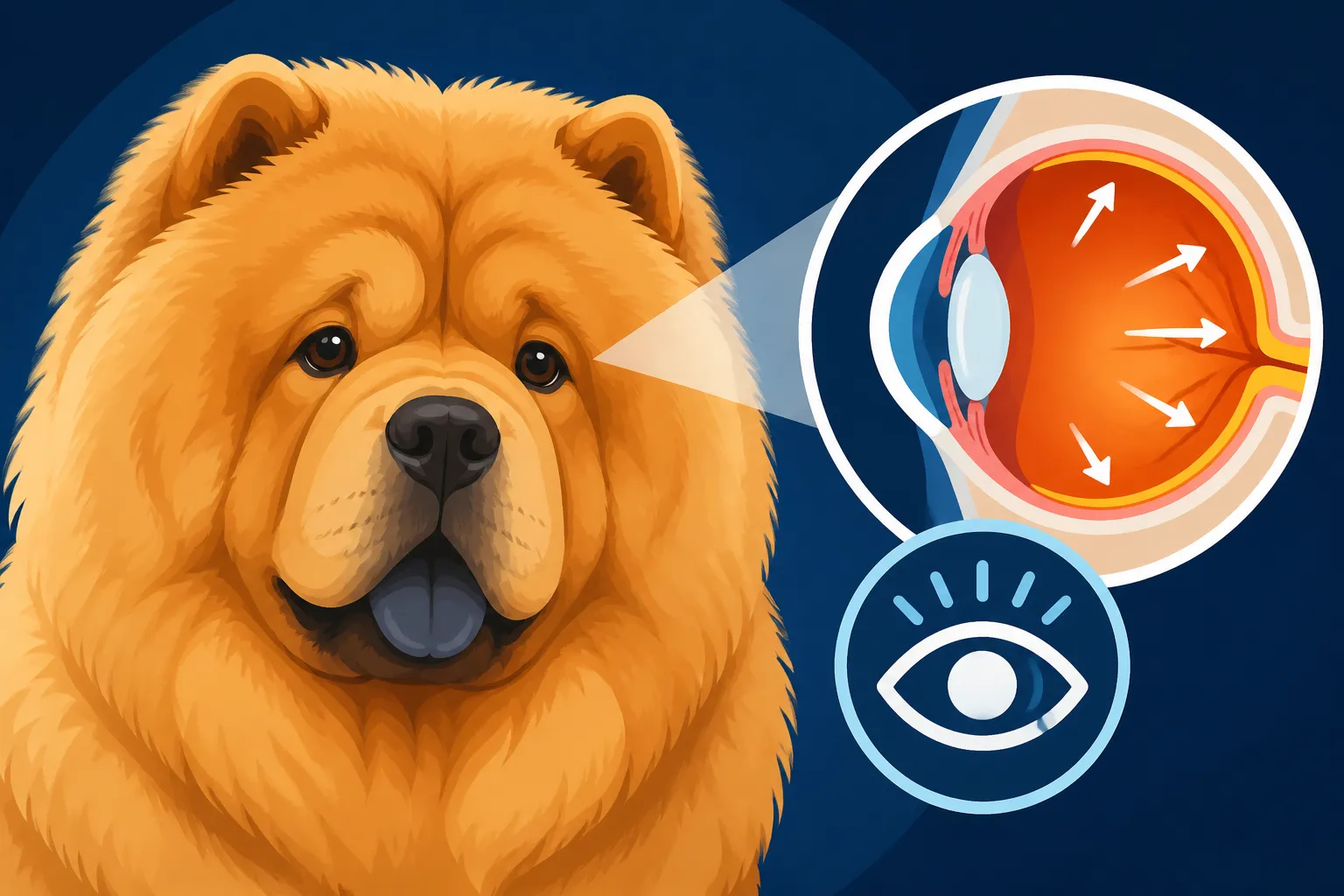
To truly grasp why Chow Chows are prone to closed-angle glaucoma, we need to talk about the iridocorneal angle, often just called the drainage angle. Imagine the eye as a small, pressurized balloon that constantly produces fluid (aqueous humor) to nourish its internal structures. To maintain a healthy pressure, this fluid must also constantly drain out. This drainage happens primarily through a microscopic sieve-like structure located in the angle formed where the iris (the colored part of the eye) meets the cornea (the clear front surface of the eye). This is the iridocorneal angle.
In a healthy eye, this angle is wide and open, allowing fluid to flow freely into the drainage system. Think of it like a storm drain. If the drain is clear and open, water runs away easily. If it's blocked, water backs up. The specific structure of this angle is crucial, and in many breeds, it's genetically predisposed to being narrow or abnormal from birth. Understanding the basics of how What Glaucoma Does to a Chow Chow's Eye can help further explain this complex process.
How a Narrow Drainage Angle Develops
Now that we know what the iridocorneal angle is, let's explore why it's so problematic in Chow Chows. It’s not just a random occurrence; it’s deeply rooted in their genetics and physical build.
Genetic Factors in Angle Narrowing
The primary reason Chow Chows are considered a closed-angle glaucoma breed lies in their genetic makeup. They inherit an abnormality in the development of the pectinate ligament, which is a key part of the drainage angle structure. This condition is often referred to as Pectinate Ligament Dysplasia (PLD) or Goniodysgenesis. Essentially, the "sieve" we discussed earlier is either malformed, underdeveloped, or simply too narrow from the start. It's like the storm drain being built with too small a pipe, or with permanent debris already inside.
This isn't something that happens overnight or due to injury; it's a structural fault present from birth. Many Chow Chows, even those who never develop full-blown glaucoma, will have an observable narrow or abnormal drainage angle when examined by a veterinary ophthalmologist. This inherent structural defect is what sets the stage for a future glaucoma crisis. Regular check-ups with a specialist are vital, and knowing Whether a Chow Chow Needs a Yearly Eye Exam can make all the difference in early detection.
The Role of the Iris and Lens Position
While the pectinate ligament is the main culprit, other factors within the Chow Chow's eye anatomy can exacerbate the problem, making that already narrow drainage angle even more precarious. The iris, the muscle that controls the pupil's size, can be thicker or positioned in such a way that it crowds the angle. Imagine a curtain hanging too close to a door – it makes it harder to pass through.
Furthermore, the lens, which sits behind the iris, can also play a subtle role. As dogs age, their lenses naturally thicken. In a small, tightly packed eye like that of a Chow Chow with an already compromised drainage angle, even slight thickening of the lens can further push the iris forward, reducing the space available for fluid to exit. This contributes to the "closed-angle" aspect, as the iris literally presses against the cornea, physically blocking the drainage pathway. This combination of genetic predisposition and specific anatomical traits makes the Chow Chow's eyes a ticking time bomb for fluid buildup.
The Mechanism of Closed-Angle Glaucoma in Chows
With a predisposed narrow drainage angle, it’s easier to understand how glaucoma can develop and, more importantly, why it progresses so rapidly in Chow Chows. It’s a sudden, acute event, not a gradual decline.
Why Fluid Cannot Escape the Eye
The beauty of a Chow Chow's eye, despite its unique structure, is that it’s usually quite efficient at producing aqueous humor. The problem isn't often a lack of production; it's the inability of the fluid to leave. Because the drainage angle is genetically narrow or obstructed by the iris, the fluid starts to back up. It has nowhere to go. Think of it like a sink with a clogged drain: the faucet is still running, but the water level keeps rising. This rapid accumulation of fluid is what causes the intraocular pressure (IOP) to skyrocket.
This isn't a slow leak; it's a sudden, severe blockage. The body's system for maintaining pressure is completely overwhelmed. The pressure inside the eye becomes incredibly high, pushing on delicate structures like the retina and the optic nerve, which transmits visual information to the brain. This relentless pressure quickly damages these vital components, leading to irreversible blindness. This sudden escalation is why Glaucoma Can Blind a Chow Chow in Days.
The Rapid Increase in Intraocular Pressure
When the drainage angle effectively closes, the internal pressure within the eye can jump dramatically and rapidly. While a normal intraocular pressure might be around 10-20 mmHg, in acute closed-angle glaucoma, it can easily reach 40, 50, or even 60 mmHg. This intense pressure is excruciatingly painful for your dog, often causing severe headaches. Imagine the worst headache you've ever had, combined with intense pressure behind your eyes. Your Chow Chow feels that, and they often try to hide their pain, which makes it even more critical for owners to be vigilant.
This extreme pressure starves the optic nerve and retina of blood flow and oxygen, causing irreversible damage to the cells. It’s a race against time: every hour that the pressure remains high increases the likelihood of permanent vision loss. This acute, dramatic rise in pressure is the defining characteristic of closed-angle glaucoma, contrasting sharply with the slower, more insidious progression of open-angle glaucoma seen in some other breeds. Knowing Why a Chow Chow's Glaucoma Is an Emergency is not an exaggeration – it's a matter of hours for their sight.
Recognizing the Urgency and Genetic Imperative
Given the extreme risk and rapid progression, understanding the signs and the importance of responsible breeding practices are paramount for any Chow Chow enthusiast. It's a heavy burden, but one that comes with loving this unique breed.
Why Glaucoma is a Veterinary Emergency
When a Chow Chow develops closed-angle glaucoma, it is not merely a health concern; it's a dire veterinary emergency that demands immediate attention. Every moment counts. The intense pain and rapid vision loss mean that delay, even for a few hours, can be the difference between retaining some sight and irreversible blindness. If you ever notice symptoms like a dilated pupil that doesn't react to light, a hazy or bluish appearance to the cornea, redness in the white of the eye, excessive tearing, or your Chow Chow pawing at its eye or appearing lethargic and painful, you need to get to an emergency veterinary clinic right away. These are clear Signs a Chow Chow Has Glaucoma.
It's not just about saving sight; it's also about alleviating extreme suffering. Your veterinarian, or ideally a veterinary ophthalmologist, will need to measure the intraocular pressure and start aggressive treatment immediately. This often involves strong eye drops to reduce pressure, systemic medications, and sometimes surgical intervention, such as a laser procedure or even removal of the eye if vision is already lost and pain is unmanageable. The costs can be substantial for such an emergency, and having a robust pet insurance plan like Healthy Paws can significantly alleviate the financial stress during such a critical time. While you hope it never happens, being prepared financially for such an emergency can ensure your beloved Chow Chow gets the best possible care without hesitation. You might also want to understand What a Chow Chow's Eye Pressure Is Measured to know what to expect at the vet.
Breeding Considerations and Health Testing
Because the predisposition to closed-angle glaucoma is largely genetic, responsible breeding plays a crucial role in trying to mitigate this devastating disease. Reputable Chow Chow breeders are acutely aware of this risk and take steps to ensure they are not perpetuating the problem. This includes screening their breeding stock for ocular health. Dogs intended for breeding should undergo regular examinations by a board-certified veterinary ophthalmologist. These specialists can perform a procedure called gonioscopy, which allows them to visually inspect the iridocorneal angle and assess for signs of goniodysgenesis or an abnormally narrow angle.
Breeders committed to the health of the Chow Chow line will be transparent about these screenings and the health history of their breeding animals. They understand that selecting dogs with healthy eye structures is vital to reducing the incidence of glaucoma in future generations. While a clear gonioscopy doesn't guarantee a dog will never develop glaucoma (environmental factors and other unknown genetic modifiers can still play a role), it significantly lowers the risk. When looking for a puppy, it's perfectly acceptable to ask about the parents' eye certifications, as this demonstrates a breeder's commitment to the breed's long-term health. Understanding Which Health Tests a Chow Chow Breeder Should Run is critical for prospective owners.
Here's a quick overview of key differences that contribute to glaucoma risk:
| Feature | Normal Dog Eye (General) | Chow Chow Eye (Predisposed) | Impact on Glaucoma Risk |
|---|---|---|---|
| Eye Set | Typically moderately set | Deep-set, often obscured by folds | Creates crowded orbital space; influences lid/iris position |
| Iridocorneal Angle | Wide and open, efficient drainage | Genetically narrow or malformed (PLD) | Primary cause of restricted fluid outflow |
| Pectinate Ligament | Well-formed, clear | Dysplastic, underdeveloped | Direct structural blockage of the drainage system |
| Iris Thickness/Position | Proportional, clear of angle | Can be thicker, crowding the angle | Further constricts the already narrow drainage pathway |
| Glaucoma Type | Varies (often open-angle or secondary) | Predominantly acute closed-angle | Rapid, severe pressure increase and immediate emergency |
| Pain Level | Can be chronic or acute | Often acutely painful | High intraocular pressure causes intense discomfort |
| Vision Loss Speed | Can be gradual or sudden | Very rapid, often irreversible | Optic nerve damage occurs quickly under high pressure |
Having insurance like Healthy Paws isn't just for accidents; it's also incredibly beneficial for managing chronic conditions or unexpected emergencies like the sudden onset of glaucoma. It provides a safety net, allowing you to focus on your Chow Chow's health rather than worrying about the bills. When discussing options with your vet, especially if long-term medications or multiple surgeries are required, the financial support from a reliable provider like Healthy Paws can be a game-changer.
Ultimately, while the Chow Chow's unique anatomy and genetic predisposition for closed-angle glaucoma present a significant challenge, armed with knowledge, vigilant observation, and prompt veterinary action, you can give your beloved companion the best chance at a pain-free life, and hopefully, preserve their precious sight for as long as possible. The deep bond you share with your Chow Chow makes every effort worthwhile.
Disclaimer
The information provided in this article is for general educational purposes only and should not be considered a substitute for professional veterinary advice. Always consult with a qualified veterinarian or veterinary ophthalmologist for any health concerns or before making any decisions related to your pet's care.